
乡村文化旅游

Search documents
履职进行时|全国人大代表欧阳华:激发新动能,走好共富路
Xin Lang Cai Jing· 2026-02-27 07:11
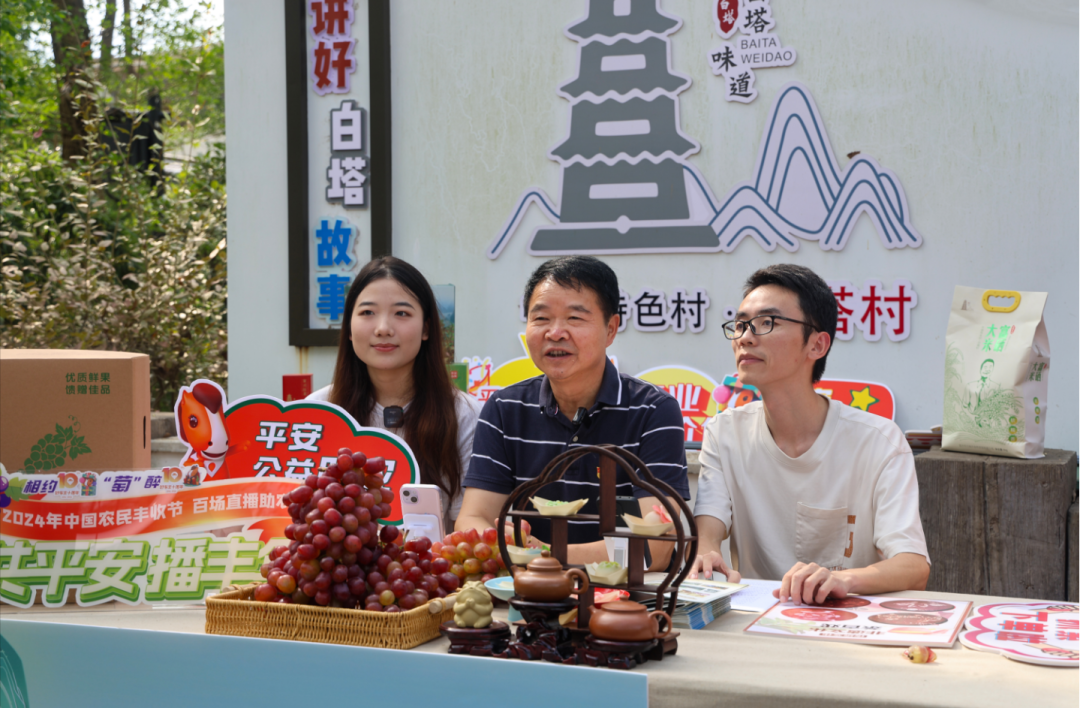
Core Viewpoint - The article emphasizes the importance of grassroots governance and the role of local representatives in addressing community needs, particularly in the context of rural revitalization and enhancing the quality of life for residents [1][3]. Group 1: Rural Governance and Community Engagement - Ouyang Hua, a national representative and the first secretary of the Party branch in Baita Village, actively engages with villagers to gather their needs and bring their voices to the national legislature [1][3]. - Ouyang Hua has focused on key areas such as rural revitalization, ecological governance, and social welfare, prioritizing the urgent needs of the community in his role [3][12]. Group 2: Land Utilization and Economic Development - The article discusses the significance of the "three pieces of land" (contracted land, homestead, and construction land) as essential components for rural economic growth and common prosperity [5][14]. - Ouyang Hua suggests innovative models for utilizing homesteads and expediting the market entry of collective operational construction land to enhance resource allocation and economic benefits for villagers [5][15]. Group 3: Rural Tourism Development - The rural cultural tourism market is experiencing robust growth, with Baita Village developing various tourism projects that attract millions of visitors and boost local economic development [7][17]. - Ouyang Hua advocates for continued investment in policy support, infrastructure, branding, and product development to further enhance rural tourism [7][17]. Group 4: Agricultural Innovation - Baita Village has established eight efficient agricultural sectors and developed a series of specialty agricultural products, such as the "Baita Flavor" brand [8][18]. - The village invested 6 million yuan to build a 60-acre smart greenhouse for red beauty citrus, achieving high yields and significant revenue [8][18]. - Ouyang Hua recommends increasing support for high-value, eco-friendly specialty crops and improving the market circulation system for these products [8][18]. Group 5: Community Representation and Communication - The establishment of the "Ouyang Hua Representative Workstation" has strengthened the connection between the representative and the community, facilitating discussions on rural revitalization [10][20]. - Ouyang Hua has actively engaged with constituents, receiving over 100 visitors and addressing more than 30 community concerns in the past year [10][20].

屏南:让文明可感 让乡风有形
Xin Lang Cai Jing· 2026-01-07 23:22
Core Viewpoint - The news highlights the innovative approaches taken by Pingnan County in China to integrate spiritual civilization construction into rural life through a points-based system and the revitalization of ancient ancestral halls, fostering community engagement and cultural heritage [1][9][10]. Group 1: Points-Based System - The points system in Pingnan is transforming rural life by incentivizing community participation in civil activities, such as environmental cleaning and conflict resolution, thus shifting the mindset from "I have to do" to "I want to do" [2][3]. - The system quantifies abstract civil virtues into measurable actions, allowing villagers to earn points for various contributions, which can be redeemed for goods or influence community welfare [2][3]. - Over 50 points evaluations have been conducted in the county, resolving more than 30 neighborhood disputes, demonstrating the effectiveness of this initiative in enhancing community cohesion [5]. Group 2: Revitalization of Ancestral Halls - The transformation of ancestral halls into multifunctional community centers is a significant aspect of Pingnan's cultural revival, with activities such as legal consultations and cultural performances being held regularly [7][8]. - Five ancient ancestral halls have been repurposed into "civilization halls," serving as cultural landmarks and facilitating community engagement through various programs, including traditional arts and legal education [8]. - These revitalized spaces have hosted over 280 civil practice activities this year, benefiting more than 10,000 residents, thus reinforcing the role of ancestral halls in promoting civil values and community governance [8]. Group 3: Cultural and Economic Integration - The Dragon Pond area serves as a model for integrating cultural heritage with economic development, showcasing how traditional arts can attract tourism and enhance local income [9][10]. - In 2025, the Dragon Pond area received over 1.3 million visitors, generating more than 130 million yuan in tourism revenue, which has positively impacted local residents' disposable income [9]. - The county's approach illustrates that effective cultural construction can drive economic growth, creating a sustainable cycle of community development and cultural preservation [10].
德令哈市培育乡土人才促进乡村振兴
Xin Lang Cai Jing· 2025-12-24 19:52
Core Viewpoint - The article emphasizes the efforts of Delingha City in promoting comprehensive rural revitalization by focusing on local needs, tapping into local resources, and nurturing local talent to drive rural development [1] Group 1: Talent Development - A total of over 900 high-quality agricultural and pastoral training sessions have been conducted as of December 22 [1] - Six local agricultural experts have been recommended for the "Chaidamu Talent: Practical Agricultural Talent" program [1] - The city has organized and mobilized 67 village cadres to obtain higher education qualifications [1] Group 2: Skill Enhancement and Employment - Delingha City has implemented a "school-enterprise mutual hiring" mechanism, employing one agricultural expert for technical guidance and local talent development [1] - A total of 116 university graduates have been assigned to villages, with 54 recent graduates recruited for educational, agricultural, medical, and poverty alleviation work [1] Group 3: Economic Development - The city is leveraging young talent as "leading geese" to integrate various industry resources such as rural cultural tourism, agricultural picking, and farming experiences [1] - There is a positive trend in the development of collective economies in 42 villages, with the proportion of strong villages earning over 500,000 yuan annually continuing to rise [1]
“文化+产业”点亮东山佘村
Xin Lang Cai Jing· 2025-12-21 22:47
Core Viewpoint - The event "Cultural Excellence 'Seeds' at the Grassroots to Beautify Villages and Assist Revitalization" highlights the role of art in rural revitalization, showcasing how cultural initiatives can transform communities and enhance local economies [1] Group 1: Event Overview - The performance began with the dance "Snowy Land of Treasures," which infused the atmosphere with highland charm and warmth during winter [1] - A series of engaging programs followed, leaving a lasting impression on the audience and emphasizing the emotional connection of art [1] Group 2: Cultural Initiatives - She Village, recognized as one of Nanjing's first "Jinling Art Villages," utilizes culture as a tool for rural revitalization [1] - Under the support of provincial, municipal, and district cultural federations, historical buildings in the village have been transformed into art exhibition spaces, facilitating various cultural activities [1] Group 3: Economic Impact - The village has developed unique business models such as village cafes, Hanfu experiences, and intangible cultural heritage workshops, creating a "culture + industry" development model [1] - The collective operating income of She Village increased from 1.973 million yuan in 2020 to 6.8344 million yuan in 2024, demonstrating the practical effectiveness of cultural empowerment [1]