卫星研发制造

Search documents
亚信科技、格思航天打通星载First Call并签署合作备忘录
Xin Lang Cai Jing· 2026-02-09 06:53
Core Viewpoint - The collaboration between AsiaInfo Technology and GES Aerospace marks a significant step in the practical implementation of low-orbit satellite internet technology, transitioning from strategic planning to tangible execution [1][3]. Group 1: Partnership Details - AsiaInfo Technology and GES Aerospace signed a memorandum of understanding to collaborate on low-orbit satellite internet technology [1]. - The partnership aims to leverage complementary strengths, focusing on areas such as "mobile direct satellite connection" and "satellite-based sensing and computing" [3][15]. - The signing ceremony was attended by key executives from both companies, including AsiaInfo's CEO and CTO, and GES Aerospace's General Manager [1][3]. Group 2: Technological Advancements - GES Aerospace specializes in the research and manufacturing of low-cost, high-performance internet satellites, covering satellite design, core component development, and system integration [3][15]. - AsiaInfo Technology possesses extensive capabilities in network construction, NTN (Non-Terrestrial Network) communication payloads, artificial intelligence, and digital twin technologies [3][15]. - The NTN satellite base station developed by AsiaInfo is based on the 3GPP NTN standard, recognized as a leading solution for mobile direct satellite communication [8][18]. Group 3: Strategic Vision - The collaboration is seen as a response to the increasing competition in low-orbit satellite networking and the growing commercial demand for satellite communication [15]. - AsiaInfo's strategic planning includes the evolution towards a 6G integrated space-ground network, aligning with national infrastructure development goals [18]. - The partnership aims to create a seamless digital future, enhancing capabilities in satellite internet and intelligent connectivity [15][18].


美国和印度打造的巨型雷达卫星即将发射
Xin Lang Cai Jing· 2025-07-15 02:33
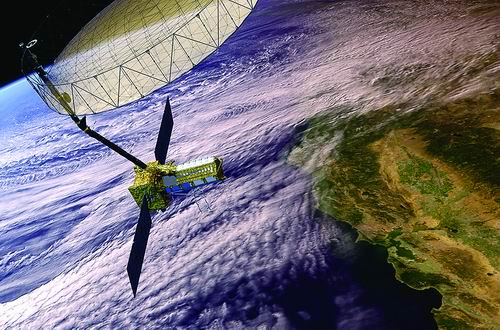
Core Points - The NASA-ISRO Synthetic Aperture Radar Satellite (NISAR) is set to launch on July 26, with a budget of $1.5 billion, and aims to capture detailed data on Earth's geological and environmental changes [2] - NISAR features a 12-meter wide antenna that will unfold in space, allowing it to collect data over a 240-kilometer range and observe nearly all land and ice regions on Earth every 12 days [4] - The satellite will generate up to 140 petabytes of data in its first three years, equivalent to NASA's entire Earth science data archive [4] - NISAR will be the first satellite to conduct radar observations at two different wavelengths, with NASA's radar at 24 cm for penetrating vegetation and ISRO's radar at 9 cm focusing on India and polar regions [4] - The NISAR team plans to create the world's first regularly updated global soil moisture map with a resolution of 200 meters, aiding in irrigation planning and assessments of drought and flooding [5]