
固废资源化利用

Search documents
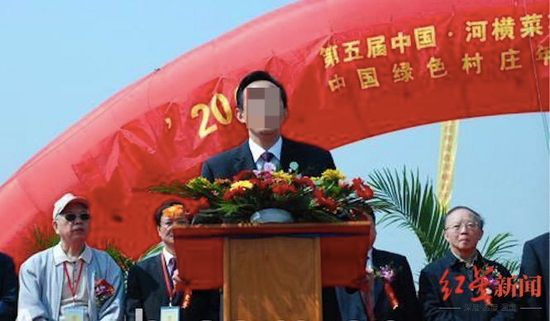
刑释人员任职国有控股企业“高管”,公司创始人举报其“领工资、奖金数年之久”
Xin Lang Cai Jing· 2025-12-27 10:48
Core Viewpoint - The case of Bu Mounshan, a former official convicted of bribery, being appointed as a senior executive in a state-owned enterprise raises serious concerns about compliance with national regulations regarding the appointment of executives in state-owned enterprises [1][2][7]. Group 1: Evidence of Misconduct - Bu Mounshan was sentenced to five years and six months in prison for bribery and was appointed as a senior executive at Taizhou Xiabei New Green Building Materials Technology Co., Ltd. after his release [1][2]. - Wang Zhili, the founder of Xiabei Company, reported this irregularity to various disciplinary inspection and supervisory authorities, highlighting that Bu's appointment contradicts the "Enterprise State-owned Assets Law" and "Regulations on Integrity in State-owned Enterprises" [1][7]. - Evidence indicates that Bu received a salary and bonuses for several years while holding this position, despite his claims of not being a "senior executive" [1][9]. Group 2: Company Background and Changes - Xiabei Company underwent its first mixed-ownership reform in December 2019, where Jindong City Investment acquired a 40% stake by investing 24 million yuan [4][26]. - Following the reform, Bu was appointed as the head of the marketing department shortly after his release from prison, which was formalized in a board resolution [4][26]. - In November 2022, during a second mixed-ownership reform, Jindong City Investment increased its stake to 55%, gaining control over Xiabei Company, and subsequently appointed Bu as a senior executive [5][26]. Group 3: Financial Performance and Challenges - Financial records show that Bu received over 580,000 yuan in salary and bonuses from 2020 to 2023, with the highest amount in 2022 reaching 250,000 yuan [9][29]. - The company's revenue has significantly declined from an average of over 20 million yuan annually before Jindong City Investment's control to only several hundred thousand yuan in the first half of 2025 [19][36]. - The company is facing severe operational challenges, including a complete shutdown and layoffs, as it struggles to maintain its business viability [19][36][40]. Group 4: Regulatory and Government Response - The local government has formed a task force to address the challenges faced by Xiabei Company, but there has been no substantial progress reported [21][40]. - The situation reflects a broader issue of distrust between private and state-owned enterprises, as indicated by the struggles of several mixed-ownership companies in the region [36][40].

从“黑废料”到“绿建材”,用煤基固废制备云砼石
Ke Ji Ri Bao· 2025-10-22 01:04
Core Viewpoint - The establishment of a coal-based solid waste resource utilization production line in Shenmu City, Shaanxi Province, marks a significant step towards the industrialization of coal-based solid waste recycling in China, utilizing waste materials such as fly ash and coal gangue to produce low-carbon building materials [1][2]. Group 1: Production and Technology - The production line has an annual capacity of 600,000 cubic meters of cloud concrete stone, effectively transforming solid waste into high-value building materials [1][2]. - The research team has developed a comprehensive process package for recycling coal-based solid waste into microcrystalline glass, cloud concrete stone, and expanded clay, creating a pathway from "black waste" to "green building materials" [2][3]. - The Shenmu production line is described as a "solid waste digestive system," capable of processing 600,000 tons of solid waste annually [2]. Group 2: Economic and Environmental Impact - The Shenmu cloud concrete stone production line generates an average annual profit exceeding 20 million yuan, demonstrating the economic viability of solid waste resource utilization [3]. - The projects not only showcase the potential for environmental protection and economic benefits to coexist but also highlight the vast market for solid waste resource utilization [3]. - The initiative aligns with China's dual carbon goals, emphasizing the importance of solid waste recycling in environmental governance, energy security, industrial upgrading, and a low-carbon future [3].