
混合所有制改革

Search documents
格力电器大股东减持引发市场关注
Jing Ji Guan Cha Wang· 2026-02-27 03:09
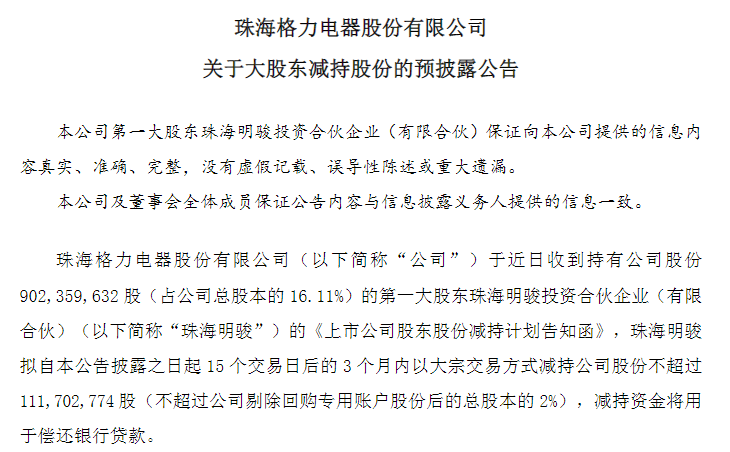
Group 1 - Gree Electric Appliances announced that its largest shareholder, Zhuhai Mingjun Investment Partnership, plans to reduce its stake by up to 2% through block trading to repay upcoming bank loans, marking the first public reduction plan since Hillhouse Capital acquired control in 2020 for 41.662 billion yuan [1] - Zhuhai Mingjun currently holds 902,359,632 shares, accounting for 16.11% of the total share capital, and the reduction will start 15 trading days after the announcement and is expected to be completed within three months [1] - The funds raised from the share reduction will be used entirely to repay bank loans, with the shares coming from an agreement transfer from Gree Group in early 2020 [1] Group 2 - Gree Electric has implemented a high dividend policy over the past six years, distributing a total of 165.8 yuan in cash dividends per 10 shares, amounting to approximately 14.955 billion yuan received by Zhuhai Mingjun from dividends [2] - The company's performance has been under pressure, with a 15.09% year-on-year decline in revenue and a 9.92% drop in net profit for the third quarter of 2025, alongside a 6.50% and 2.27% decline in overall revenue and net profit for the first three quarters [2] - Following the announcement, Gree's stock price fell by 2.34%, reflecting market concerns not only about the share reduction but also about the company's fundamentals, with a potential supply scale of 4.3 billion yuan causing caution among northbound funds and public funds [2] Group 3 - As a model for mixed-ownership reform, Gree's development now relies on capital structure and shareholder dynamics, in addition to product innovation and channel development [3] - The balance between maintaining stable control, driving performance recovery, and meeting capital exit demands will be crucial for Gree to navigate its current challenges [3]

416亿并购案迎来“还款时刻” 高瓴资本首次减持格力电器
Jing Ji Guan Cha Wang· 2026-02-26 11:48
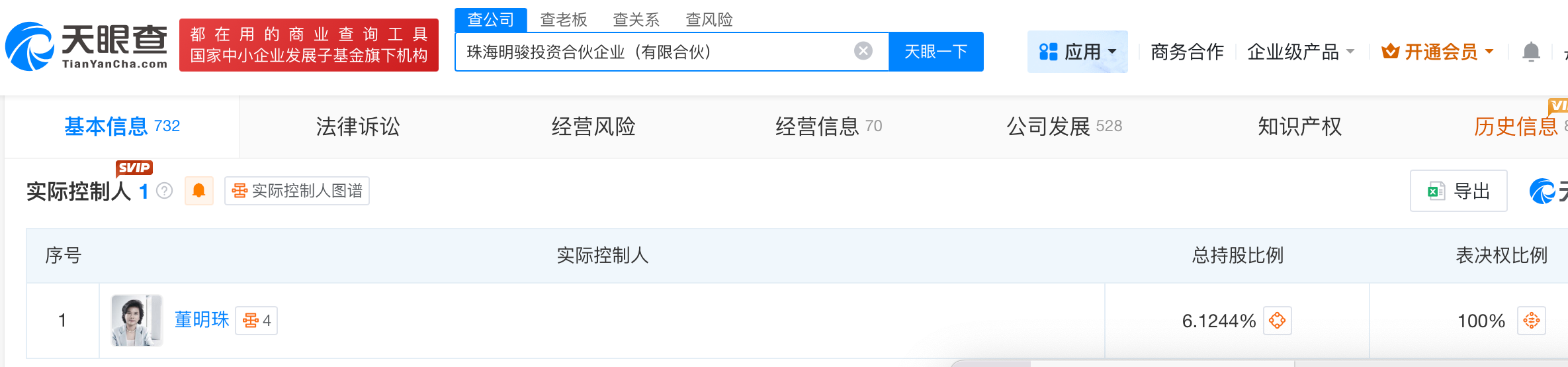
Core Viewpoint - Gree Electric Appliances is initiating a share reduction plan by its largest shareholder, Zhuhai Mingjun Investment Partnership, to repay bank loans, marking the first reduction since Hillhouse Capital's acquisition in 2020. The reduction is driven by a repayment pressure of approximately 25 billion yuan [1][4]. Group 1: Share Reduction and Financial Impact - Zhuhai Mingjun plans to reduce up to 111,702,774 shares, representing 2% of the total share capital after excluding repurchased shares, with an estimated cash inflow of about 4.3 billion yuan [1][8]. - The initial acquisition price was 46.17 yuan per share, with a total transaction value of 41.662 billion yuan for 902,359,632 shares, leading to a current effective holding cost of around 34 yuan per share after accounting for dividends [1][2]. - Despite Gree's generous dividends exceeding 13 billion yuan over six years, there remains a funding gap of nearly 10 billion yuan against the estimated debt repayment of 25 billion yuan [4][7]. Group 2: Market Reaction and Company Performance - Following the announcement, Gree's stock price fell by 2.34% to 37.59 yuan, with a total market capitalization dropping to around 210 billion yuan [1][7]. - Gree's financial performance has shown a decline, with Q3 2025 revenue at 39.855 billion yuan, down 15.09% year-on-year, and a net profit of 7.049 billion yuan, down 9.92% [7][8]. - The company faces rising costs due to copper prices exceeding 100,000 yuan per ton, which could pressure profit margins as Gree has committed to maintaining product prices without passing costs to consumers [7][8]. Group 3: Future Outlook and Strategic Considerations - The potential for further share reductions exists if stock prices remain low, which could create a cycle of reduced share value and additional sell-offs [5][9]. - Gree's valuation is currently low, with a dynamic price-to-earnings ratio below 7, but achieving stability in revenue and gross margins in Q1 2026 could mitigate short-term market concerns [8][9]. - The balance between maintaining control, performance recovery, and capital exit strategies will be crucial for Gree's future, especially given its status as a mixed-ownership reform benchmark [9].

高瓴资本入主格力电器六年后首次减持,资金将用于偿还银行贷款
Jin Rong Jie· 2026-02-26 05:37
Core Viewpoint - Gree Electric Appliances announced that its largest shareholder, Zhuhai Mingjun Investment Partnership, plans to reduce its stake by up to 111,702,774 shares, which is 2% of the total share capital, to repay bank loans [1][3]. Group 1: Shareholder Reduction Plan - Zhuhai Mingjun holds 902,359,632 shares, accounting for 16.11% of Gree's total share capital [1][3]. - The planned reduction will take place within three months after a 15 trading day period from the announcement date [1]. - The estimated amount from this reduction, based on the closing price of 38.49 yuan per share, is approximately 4.3 billion yuan [3]. Group 2: Background and Implications - This is the first reduction plan disclosed by Zhuhai Mingjun since it became Gree's largest shareholder in 2020 [3]. - Gree stated that this action is a normal financial arrangement following the completion of the share lock-up commitment and will not lead to a change in control or significantly impact the company's governance structure [3]. - Zhuhai Mingjun's shareholders include Hillhouse Capital and Zhuhai Gezhen Investment Partnership, with the latter being controlled by Gree's chairman, Dong Mingzhu [3]. Group 3: Financial Context - To repay a total loan of 20.83 billion yuan, Zhuhai Mingjun pledged 721,887,705 shares of Gree as collateral [5]. - The loan agreement was signed with Agricultural Bank, Bank of Communications, and Ping An Bank in April 2021 [5]. - Gree's revenue for the first three quarters of 2025 was 137.18 billion yuan, a decrease of 6.5% year-on-year, while net profit attributable to shareholders was 21.46 billion yuan, down 2.27% year-on-year [6].
格力电器大股东拟减持不超过2%股权
Di Yi Cai Jing· 2026-02-25 12:56
Core Viewpoint - Gree Electric Appliances' major shareholder, Zhuhai Mingjun, plans to reduce its stake by up to 111.7 million shares, which is 2% of the total share capital after excluding repurchased shares, to repay bank loans. This reduction will not change the control of Gree Electric [3]. Group 1 - Zhuhai Mingjun currently holds 16.11% of Gree Electric, having acquired this stake during the mixed-ownership reform six years ago [3]. - The share reduction is set to occur within three months after 15 trading days and is subject to uncertainty [3]. - Gree Electric's stock price increased by 0.36% to 38.49 CNY per share, giving it a market capitalization of 215.6 billion CNY [3]. Group 2 - Zhuhai Mingjun has a background with Hillhouse Capital and is considered a concerted actor with Gree Electric's chairman, Dong Mingzhu [3]. - In January 2020, Zhuhai Mingjun committed to not transferring its shares in Gree Electric for three years following the acquisition [3].
安徽国资敲定入主杉杉股份,控制权变更推动股价连续涨停
Jing Ji Guan Cha Wang· 2026-02-09 08:30
Core Viewpoint - The recent change in control of Shanshan Co., Ltd. to Anhui Wanwei Group marks a significant stabilization phase after years of governance disputes and financial turmoil, with the stock price reflecting market optimism about this transition [2][3][6] Group 1: Control Change and Market Reaction - Shanshan Co., Ltd. experienced a stock price surge, closing at 15.81 yuan per share with a daily increase of 10.02%, leading to a total market capitalization of 35.56 billion yuan following the announcement of a change in its controlling shareholder [2] - The transition of control to Anhui Wanwei Group and the actual controller to the Anhui Provincial State-owned Assets Supervision and Administration Commission is seen as a move towards stability after a tumultuous period marked by family disputes and bankruptcy proceedings [2][3] Group 2: Financial Performance and Recovery - For the first half of 2025, Shanshan Co., Ltd. reported a net profit attributable to shareholders of 207 million yuan, a staggering year-on-year increase of 1079.59%, indicating a strong recovery trajectory [3] - The company anticipates a net profit of 400 million to 600 million yuan for the full year of 2025, driven primarily by its core businesses in lithium battery anode materials and polarizers, which are expected to contribute approximately 900 million to 1.1 billion yuan in net profit [4] Group 3: New Shareholder Background and Implications - Anhui Wanwei Group, a large state-owned enterprise with total assets of 163.3 billion yuan and a net profit of nearly 4 billion yuan in 2024, is expected to provide stability and resource integration for Shanshan Co., Ltd. in the new energy materials sector [4] - The agreement stipulates that Wanwei Group will acquire 13.50% of shares at a price of approximately 4.987 billion yuan, granting it a total voting power of 21.88% [3][4] Group 4: Challenges and Investor Concerns - Despite the positive outlook from the entry of state capital, concerns remain regarding the adaptability of local state management to the fast-paced, market-driven nature of the high-tech materials industry [5] - The relatively low voting power of 21.88% raises questions about potential future control disputes, especially with the backdrop of the company's ongoing challenges in the anode materials sector and the cyclical nature of the polarizer business [5] - Investors are also wary of the quality and transparency of information disclosure, particularly following the previous failed restructuring plan, which highlighted the need for improved communication regarding risks and corporate governance [5][6] Group 5: Future Outlook - The entry of Anhui state capital is viewed as a crucial opportunity for Shanshan Co., Ltd. to regain stability after a tumultuous period, but the market will require clear evidence of improved profitability and shareholder returns to build lasting confidence [6] - The next three years will be critical for the new management to deliver on performance promises, determining whether the company can successfully navigate its recovery journey [6]


安徽国资敲定入主杉杉股份 17.9万股东的“定心丸”还是“新赌局”?
Jing Ji Guan Cha Wang· 2026-02-09 07:59
Core Viewpoint - The recent surge in the stock price of Singshan Co., Ltd. (杉杉股份) is attributed to a significant change in control, with the controlling shareholder transitioning to Anhui Wanwei Group and the actual controller becoming the Anhui Provincial State-owned Assets Supervision and Administration Commission [1][2] Group 1: Control Change Background - The control change was initiated by the sudden death of the founder, Zheng Yonggang, in February 2023, leading to a power struggle between his son and widow [2] - In September 2025, a restructuring investment agreement was signed by a consortium led by Ren Yuanlin, but it failed to gain creditor approval, resulting in the dissolution of the agreement in November 2025 [2][3] Group 2: New Control Agreement - A new restructuring investment agreement was signed on February 6, 2026, with Wanwei Group acquiring 13.50% of shares at approximately 4.99 billion yuan, while retaining 8.38% under the restructured entity [3] - Wanwei Group will control 21.88% of voting rights and is required to pay a deposit of 1.43 billion yuan within seven working days [3] Group 3: Financial Performance and Market Position - Singshan Co. is expected to achieve a net profit of 400 to 600 million yuan in 2025, marking a turnaround from previous losses, with its core businesses contributing significantly to profits [4] - The company has established itself as a key player in the artificial graphite anode materials sector, with a strong customer base including leading battery manufacturers [4] Group 4: Implications of State Ownership - The entry of state-owned capital is anticipated to enhance creditworthiness, reduce financing costs, and introduce policy resources, but it does not guarantee a premium in market valuation [5] - The effectiveness of the new management will depend on their ability to adapt to market dynamics and provide strategic investments rather than merely stabilizing the situation [5] Group 5: Investor Considerations - Investors face challenges regarding the new governance structure, potential control disputes, and the need for transparency in information disclosure [5] - The long-term success of Singshan Co. will hinge on the new management's ability to deliver on performance promises and maintain shareholder trust through clear communication and financial results [5]
【海信视像(600060.SH)】专注显示产业,突破高端市场,领跑全球同行——投资价值分析报告(洪吉然)
光大证券研究· 2026-02-04 23:06
Core Viewpoint - The article emphasizes Hisense's commitment to technology-driven growth and global expansion, positioning itself as a leading provider of display solutions with a focus on large-screen, high-end, and intelligent products [4][5]. Group 1: Company Overview - Hisense is a world-class display solution provider, focusing on "multi-scenario large display" and covering home, commercial, and automotive applications [4]. - The company has a comprehensive layout in LCD, laser display, and LED technologies, making it the only domestic enterprise with such a broad scope [4]. - Projected revenue for 2024 is 58.5 billion yuan, with a net profit of 2.2 billion yuan [4]. Group 2: Market Position in China - In the first half of 2025, Hisense's online and offline retail market shares in China reached 24.1% and 29.6%, respectively, showing significant growth since 2019 [5]. - The launch of the Vidda brand in April 2019 targeted younger consumers with high-quality, cost-effective products, achieving an online retail market share of 11% by 2024 [5]. - Hisense leads the high-end market, with Mini LED TV sales growing at a CAGR of 310% from 2021 to 2024, maintaining a 73% share in the high-end price segment [5]. Group 3: Global Expansion Strategy - Hisense's international strategy, initiated in 2006, has led to overseas revenue growth from 5.8 billion yuan in 2013 to 28 billion yuan in 2024, accounting for 48% of total revenue [6]. - The global market share for Hisense TVs increased from 8.0% in 2020 to 14.9% in the first half of 2025, with a target to become the world's leading TV brand [6][7]. Group 4: Corporate Reforms and Incentives - The mixed-ownership reform in 2020 introduced strategic investors, enhancing operational flexibility and efficiency [8]. - Hisense has implemented two employee incentive plans since 2021, with the 2024 plan involving over 400 employees, aligning shareholder interests with corporate value [8].

中国实践中的利益协调:主体利益共生与算法监管
Jing Ji Guan Cha Wang· 2026-01-29 12:25
Core Insights - The article discusses China's unique governance approach in balancing fairness and efficiency in the digital economy, emphasizing institutional innovation and technological governance to create a symbiotic relationship among various stakeholders [1]. Group 1: Institutional Innovation - The foundation of China's governance practice begins with the restructuring of property rights and distribution patterns, focusing on mixed ownership reform and data rights [1]. - Mixed ownership reform serves as a crucial measure to connect public ownership with market economy, particularly evident in the digital infrastructure sector [2]. - The "three rights separation" model in Shenzhen allows data providers to retain 70% of the revenue from their data, legally affirming their rights as original producers [2]. Group 2: Technological Governance - China emphasizes the regulation of technological externalities while leveraging technology, aiming to balance efficiency and fairness through a regulatory paradigm that incorporates human concerns into automated decision-making [3]. - The "Interim Measures for the Management of Generative Artificial Intelligence Services" addresses core risks associated with algorithm applications, reflecting a clear value orientation [5]. - Algorithm auditing requirements compel platform companies to disclose discriminatory parameters in their algorithms, promoting transparency and integrating fairness into the entire algorithm development and operation process [5]. Group 3: Practical Outcomes - The Shenzhen data exchange has facilitated transactions where data providers earn an average of approximately 12,000 yuan, demonstrating the initial success of value-sharing mechanisms [4]. - The mixed ownership reform at China Unicom led to a significant increase in digital business revenue, rising from less than 10% to over 30% within five years [3]. - Eastern Airlines Logistics, as the first airline to undergo mixed ownership reform, saw a 210% increase in per capita profit, validating the effectiveness of the capital-labor shared development model [3]. Group 4: Theoretical Advancement - China's governance practices are not a collection of isolated policies but a coherent system with a clear internal logic, focusing on restructuring relationships and redefining rights and obligations in digital production [5]. - The integration of technology in enforcing new property rules and regulating capital movements reflects a governance approach that seeks to enhance equitable distribution of benefits among diverse stakeholders [5]. - The ultimate goal of these coordinated efforts is to achieve a more reasonable distribution of interests, benefiting employees, data providers, users, and the government [5].
中国实践中的利益协调(一):主体利益共生与算法监管
Jing Ji Guan Cha Bao· 2026-01-29 03:54
Core Insights - The article discusses China's unique governance approach in balancing fairness and efficiency in the digital economy, emphasizing institutional innovation and technological governance to create a symbiotic relationship among various stakeholders [1]. Group 1: Institutional Innovation - China's governance practice begins with restructuring property rights and distribution patterns, focusing on mixed ownership reform to establish a "capital-labor" community of interests [2]. - The mixed ownership reform connects public ownership with market economy, particularly evident in the digital infrastructure sector [2]. - The innovation of data ownership rights aims to break platform monopolies and protect the rights of data providers, exemplified by Shenzhen's "three rights separation" model, which allocates 70% of data revenue rights to data providers [3]. Group 2: Technological Governance - China emphasizes regulating the negative externalities of technology while leveraging it, creating a regulatory paradigm that balances efficiency and fairness [4]. - The "Interim Measures for the Management of Generative Artificial Intelligence Services" introduced in 2023 addresses core risks associated with algorithm applications [4]. - The algorithm audit system has evolved from passive response to proactive regulation, requiring platforms to disclose records of discriminatory parameters in their algorithms, promoting transparency and fairness in algorithm development and operation [4]. Group 3: Theoretical Advancement - China's governance practices are not a collection of isolated policies but a coherent system with a clear internal logic, focusing on the collaboration of institutions, technology, and distribution [5]. - The exploration of new production relationships in the digital economy aims to actively reconstruct the underlying rules of production relations and optimize capital movement through technological means, ultimately striving for a fairer and more sustainable distribution of interests [5]. - The future direction involves systematizing and normalizing these institutional innovations across broader temporal and spatial dimensions [5]. Group 4: Case Studies - China Unicom's mixed ownership reform in 2017 resulted in a shareholding structure of 53% state capital, 36% strategic investors, and 11% core employee ownership, significantly enhancing innovation capabilities and increasing digital business revenue from under 10% to over 30% within five years [6]. - Eastern Airlines Logistics, as the first "airline mixed reform stock," established a three-party interest community with 10% employee ownership, leading to a 210% increase in per capita profit since the reform [6]. - The Shenzhen Data Exchange facilitated transactions where data providers earned an average of approximately 12,000 yuan, demonstrating the practical implementation of market-oriented data allocation and profit-sharing [6].
在改革中探索产业赋能发展——临沂城投集团转型实践
Qi Lu Wan Bao· 2026-01-28 06:59
Core Viewpoint - The Linyi Urban Investment Group is transforming from a government financing platform focused on urban construction to an industrial operation platform that empowers industrial upgrades, showcasing a unique path for local state-owned enterprise transformation [1] Group 1: Traditional Industry Development - The Linyi Urban Investment Group is leveraging traditional industries as a foundation for its transformation, particularly focusing on the wood industry, which is crucial for regional economic development [2] - The company has invested in the Linyi Sunshine Thermal Power Company to support the wood industry’s green transformation by establishing a 380-kilometer heating network [2] - A partnership with Wanhua Hexiang Board Industry aims to create a high-end wood product supply chain, enhancing the value chain of Linyi's wood industry [2][3] Group 2: Future Industry Initiatives - The company is strategically investing in the computing power industry, establishing the Tianhe Supercomputing Center and Tianhe Industrial Park to support digital economy applications [4] - The Linyi Data Group has been formed to provide comprehensive services in artificial intelligence and data, integrating 200P of computing resources and over 30 large models [4][5] - The Yimeng New Quality Industrial Park is being developed to focus on high-end equipment manufacturing and new energy sectors, attracting various innovative projects [5] Group 3: Innovative Investment and Resource Gathering - The Linyi Urban Investment Group is enhancing its investment attraction efforts by establishing the Linyi (Shanghai) Offshore Collaborative Innovation Center to connect with the Yangtze River Delta region [6] - An innovative "Fund + Base + Flying Land" investment model has been created to streamline the investment process and attract high-tech enterprises [7] - By the end of 2025, the three industrial parks are expected to have introduced 34 projects, generating an estimated annual output value of over 8.4 billion [7]