城市环境治理

Search documents
告别“一阵风”!成都“净优亮美”专项行动回应市民关切:好风景要成“家常饭”
Si Chuan Ri Bao· 2025-11-28 06:28
Core Insights - The "Clean, Orderly, Bright, and Beautiful" initiative in Chengdu has made significant progress in improving urban and rural environments, with over 23,000 projects completed this year [1][2][3] Group 1: Urban Improvements - The initiative has transformed public spaces, such as the renovation of public toilets and the revitalization of traditional streets, enhancing the aesthetic appeal and functionality of urban areas [1][2] - Specific achievements include the rectification of over 22,000 environmental sanitation issues and the establishment of 2,270 waste classification points, achieving a 100% harmless disposal rate for urban waste [3] Group 2: Rural Enhancements - In rural areas, the initiative has introduced community cleaning programs and an "environmental points supermarket," incentivizing residents to participate in environmental activities [2] - The rural sanitation improvement has reached a 98.3% effective treatment rate for wastewater, with comprehensive coverage of village environment rectification [3] Group 3: Ongoing Challenges and Future Plans - Despite the successes, there are concerns about the sustainability of these improvements, prompting city officials to focus on establishing long-term management mechanisms [4] - Future efforts will aim to integrate the initiative into daily urban management, addressing ongoing community needs and ensuring that improvements are maintained [4]
苏台高速桥下:“盲点”变“亮点”
Su Zhou Ri Bao· 2025-09-04 00:33
Core Points - The transformation of the area under the Su-Tai Expressway bridge in Tong'an Town, Suzhou High-tech Zone, is a result of the ongoing "Clean and Beautiful City" initiative, which has successfully removed abandoned vehicles and created over 300 square meters of public space [1][2] - The local authorities have implemented a three-pronged governance model focusing on cleaning, restoration, and regular inspections to enhance urban management and improve living conditions [2] Summary by Sections - **Environmental Improvement**: The area previously occupied by "zombie cars" has been cleared, leading to the establishment of a new green space with fast-growing grass seeds suitable for the local climate [1] - **Preventive Measures**: Protective posts have been installed to prevent vehicles from entering the area, and a regular inspection mechanism has been established to maintain the cleanliness and order of the environment [2] - **Future Plans**: The local government aims to continue focusing on long-term management of underutilized spaces to enhance environmental quality and provide a more livable urban space for residents [2]
各地防暑度夏有“凉”方 新科技新技术助力城市迎战高温“烤”验
Yang Shi Wang· 2025-07-13 10:17
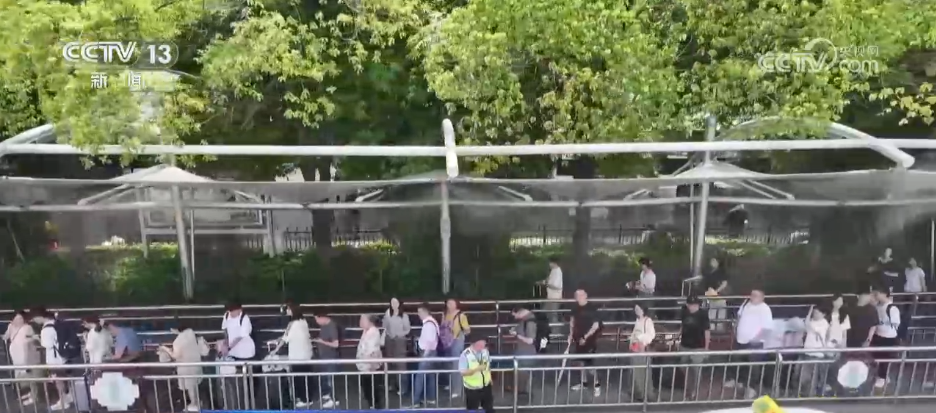
Group 1 - Hubei province has experienced a persistent heatwave since July, with average temperatures reaching 30.9°C, which is 3.7°C higher than the historical average for the same period [1][3] - In Wuhan, outdoor temperatures are around 32°C to 33°C, but the perceived temperature is even higher, with ground temperatures exceeding 50°C [3][5] - Cooling measures include the installation of shade canopies and misting systems at transportation hubs, significantly reducing ground temperatures to below 40°C [5][9] Group 2 - Volunteer service booths provide free cooling supplies, such as anti-heat medications and chilled beverages, to travelers [7] - The city employs multiple misting trucks daily to enhance cooling and dust suppression efforts on urban roads [9] - The Wuhan Zoo has also implemented cooling measures for animals during the heatwave [11] Group 3 - In Tianjin, urban planning incorporates ecological systems to mitigate high temperatures, with the Tianjin Eco-City achieving a temperature range from 17.4°C to 52°C [11][13] - The Eco-City features a zero-carbon building with extensive solar panels and energy-saving systems, contributing to reduced carbon emissions [15][18] - The integration of water systems and green spaces in the Eco-City has resulted in a 50% blue-green space ratio, effectively lowering temperatures [17][20]