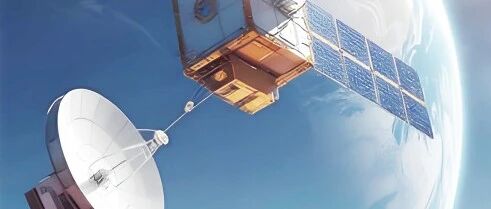
太空太阳能

Search documents
太空太阳能开启科技竞争新赛道
中国能源报· 2026-03-08 00:34
Core Viewpoint - Space solar energy technology is gaining strategic importance as it can provide stable and clean energy, crucial for meeting the increasing electricity demand driven by the surge in artificial intelligence (AI) deployment [1][3]. Group 1: Technological and Economic Feasibility - The World Economic Forum indicates that space solar energy is technically and economically feasible, but initial costs remain high. With appropriate policy and financial support, small space solar projects could achieve cost advantages over other commercial power sources by 2040 [5]. - Space solar energy involves deploying solar collection devices in satellite orbit, converting sunlight into electricity, and transmitting it to ground stations via microwaves or lasers. This technology can significantly reduce Europe's reliance on land-based renewable energy by up to 80% and lower energy storage needs by over two-thirds, potentially saving €35.9 billion annually [5][6]. Group 2: Advantages Over Ground-Based Solutions - Compared to ground-based solutions that require large-scale storage systems, space solar energy systems need significantly fewer critical minerals to provide the same continuous power. This makes space solar energy a key component in addressing rising energy demands and climate crises [6]. - Space solar energy can provide uninterrupted clean power, overcoming the intermittency issues faced by terrestrial solar and wind energy, which are dependent on weather and time [8]. Group 3: Market Restructuring and Demand Growth - Space solar energy is expected to reshape electricity demand patterns, grid structures, and the strategic future of ground electricity markets. Current demand is primarily driven by spacecraft self-supply, which accounts for over 90% of the need, with potential expansion into space computing centers [9]. - According to Musk's plans, Tesla and SpaceX aim to achieve an annual solar capacity of 100 gigawatts specifically for space applications, supporting the goal of deploying 100 gigawatts of space computing [11]. If successful, the long-term market value of space solar energy could reach ¥5.6 trillion, marking it as a significant growth area in the renewable energy sector [11]. Group 4: Challenges and Industry Development - The space photovoltaic industry is still in the early stages of technological validation and commercialization. Transitioning from ground to space solar energy is not straightforward due to the extreme conditions in space, which require advanced technology and materials [12]. Factors such as high costs of space-grade materials and slow development of standards and certification processes may hinder the growth of the space solar energy sector [12].