太阳能热发电

Search documents
特写:用太阳能烧陶瓷的科学家
Xin Hua She· 2025-12-16 11:20
Core Insights - The article highlights the innovative work of Wang Zhifeng, a researcher at the Chinese Academy of Sciences, in expanding the applications of solar energy, particularly in ceramics production and space exploration [4][5][6]. Group 1: Solar Energy Innovations - Wang Zhifeng is developing a zero-carbon ceramic firing process using solar energy, which was showcased at the 27th UN Climate Change Conference, demonstrating China's advancements in solar thermal technology [4][5]. - The solar energy application has been extended to lunar exploration with a proposed "lunar solar power generation plan," aiming to utilize solar energy on the moon [4][5]. - In 2024, Wang's team successfully developed the world's first supercritical carbon dioxide solar thermal power generation unit, which operates at high temperatures and can provide continuous power even in adverse weather conditions [5][6]. Group 2: Industry Growth and Development - The solar thermal power industry in China is experiencing significant growth, with installed capacity reaching 838.2 megawatts by the end of 2024, accounting for 10.6% of the global market [6]. - The implementation of China's first energy law on January 1, 2024, emphasizes the active development of solar thermal power, supported by government policies [6]. - Wang Zhifeng's contributions have been pivotal in the development of solar thermal power in China, which was once a niche sector when he entered the field 30 years ago [6][7].


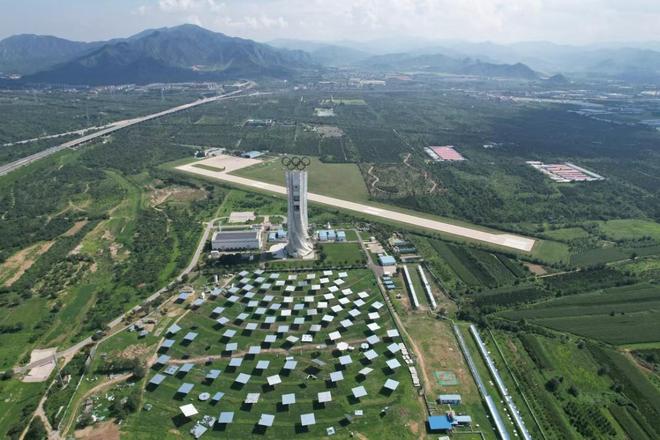
光热逐梦人|王志峰研究员数十年坚守,点亮全球能源革命之光
Sou Hu Cai Jing· 2025-12-06 05:10
Core Insights - The recent recognition of Dr. Wang Zhifeng with the 2025 Science and Technology Achievement Award highlights China's growing influence in the renewable energy sector, particularly in solar thermal power [1][19] - Dr. Wang's extensive contributions to solar thermal power technology, including the establishment of national standards and pioneering projects, underscore the importance of innovation in addressing energy challenges [2][6][19] Research Contributions - Dr. Wang has focused on critical issues in solar thermal power, such as the coupling of intermittent solar energy with stable energy demand, leading to the development of a technology roadmap that includes four generations of advancements [5][19] - His leadership in major projects has resulted in significant milestones, including Asia's first tower solar power plant and the world's first solar supercritical carbon dioxide power plant, which have redefined global perceptions of solar thermal technology [6][12][19] Industry Impact - The establishment of the first national standard for solar thermal power, led by Dr. Wang, has provided a unified terminology framework that is crucial for the industry's standardized development [6][19] - The projects initiated by Dr. Wang's team have not only demonstrated technological feasibility but have also contributed to the creation of a fully domestic industrial chain, mitigating risks associated with reliance on foreign technology [19] Educational Influence - Dr. Wang's dual role as a scientist and educator emphasizes the importance of integrating theoretical knowledge with practical applications, fostering a new generation of researchers in the renewable energy field [14][16] - His teaching methods and curriculum have been recognized for their excellence, successfully training numerous professionals in the solar energy sector [16]

浙江可胜技术递表港交所 业务依赖大客户
Zhong Guo Zheng Quan Bao· 2025-09-26 14:46
Core Viewpoint - Zhejiang Kesheng Technology Co., Ltd. has submitted its listing application to the Hong Kong Stock Exchange, primarily generating revenue from services related to molten salt tower solar thermal power projects, with significant reliance on a few major clients [1][2]. Revenue Dependency - The company’s revenue from its top five clients accounted for 99.9%, 99.9%, 88.5%, and 99.9% of total revenue for the years 2022, 2023, 2024, and the first half of 2025, respectively [2] - Revenue from the single largest client represented 93.3%, 84.8%, 22.3%, and 28.5% for the same periods [2]. Financial Performance - The company reported revenues of 20.85 million yuan, 858 million yuan, 2.189 billion yuan, and 981 million yuan for the years 2022, 2023, 2024, and the first half of 2025, respectively [2] - Net profits were -91 million yuan, 248 million yuan, 540 million yuan, and 233 million yuan for the same periods [2]. Supplier Relationships - The procurement amounts to the top five suppliers accounted for 50.7%, 52.9%, 44.4%, and 37.4% of the total material procurement costs for the years 2022, 2023, 2024, and the first half of 2025, respectively [3]. Research and Development - The company’s R&D expenditures were 33 million yuan, 38 million yuan, 62 million yuan, and 27 million yuan for the years 2022, 2023, 2024, and the first half of 2025, respectively [4]. Fund Utilization - The raised funds will be used for expanding the R&D center, enhancing core technology research, promoting molten salt energy storage technology, purchasing equipment for production, upgrading operational facilities, and supporting daily operations and future business development [4]. Industry Dependency - The solar thermal power industry is highly dependent on policy support, and any changes in renewable energy targets or support policies could significantly impact revenue and growth prospects [5].
浙江可胜技术递表港交所,业务依赖大客户
Zhong Guo Zheng Quan Bao· 2025-09-26 14:36
Core Viewpoint - Zhejiang Kesheng Technology Co., Ltd. has submitted its listing application to the Hong Kong Stock Exchange, primarily generating revenue from services related to molten salt tower solar thermal power projects, with significant reliance on a few major clients [1][2]. Group 1: Revenue and Client Dependency - The majority of the company's revenue comes from providing services for molten salt tower solar thermal power projects, with additional income from photovoltaic tracking brackets and other materials [1][2]. - Revenue from the top five clients accounted for 99.9%, 99.9%, 88.5%, and 99.9% of total revenue for the years 2022, 2023, 2024, and the first half of 2025, indicating a heavy reliance on major clients [2]. - The revenue from the single largest client represented 93.3%, 84.8%, 22.3%, and 28.5% of total revenue for the same periods, highlighting the risk associated with client concentration [2]. Group 2: Financial Performance - The company reported revenues of 20.85 million yuan, 858 million yuan, 2.189 billion yuan, and 981 million yuan for the years 2022, 2023, 2024, and the first half of 2025, respectively [2]. - Net profits for the same periods were -91 million yuan, 248 million yuan, 540 million yuan, and 233 million yuan, showing a transition from a loss to profitability [2]. Group 3: Supplier Dependency - The procurement amounts to the top five suppliers accounted for 50.7%, 52.9%, 44.4%, and 37.4% of the total material procurement costs for the years 2022, 2023, 2024, and the first half of 2025, indicating a significant reliance on a limited number of suppliers [3]. Group 4: Research and Development - The company incurred R&D expenses of 33 million yuan, 38 million yuan, 62 million yuan, and 27 million yuan for the years 2022, 2023, 2024, and the first half of 2025, reflecting ongoing investment in technology [4]. - The funds raised will primarily be used to expand the R&D center, enhance core technology research, and strengthen the company's professional R&D team [4].
可胜技术港股IPO:客户集中度接近100% 业绩增速大幅放缓是否后劲乏力? 生产高度依赖外包毛利率持续下滑
Xin Lang Zheng Quan· 2025-09-26 09:24
Core Viewpoint - Kesheng Technology Co., Ltd. has submitted an application for listing on the Hong Kong Stock Exchange, aiming to raise funds for core technology research, innovative molten salt energy storage technology deployment, and smart production facilities to enhance operational efficiency [2][4]. Financial Performance - From 2022 to 2024, Kesheng Technology's revenue surged from 20.85 million to 2.189 billion, with a compound annual growth rate of 924.64%. Net profit transitioned from a loss of 91.25 million to a profit of 540 million, indicating rapid growth [2][9]. - However, in the first half of 2025, revenue and net profit growth significantly slowed, raising questions about the sustainability of high growth rates [2][9]. - The company's revenue heavily relies on the sale of concentrated solar power systems, with 99.6%, 95%, and 99% of total revenue from these systems in 2023, 2024, and the first half of 2025, respectively, indicating a highly concentrated product structure [9][10]. Profitability Concerns - Approximately 60% of Kesheng Technology's net profit in 2023 came from the sale of several joint ventures, suggesting potential "water" in profitability [2][10]. - The company reported significant other income, which included government subsidies and interest income, contributing to net profit in the reporting period [10][11]. Customer and Supplier Risks - Kesheng Technology has a high customer concentration, with revenue from the top five customers accounting for about 99.9% in most years, indicating a significant dependency risk [12][13]. - The company has seen a substantial increase in accounts receivable and contract assets, which accounted for over 33% of total assets as of June 30, 2025, raising concerns about potential impairment risks [12][13]. Operational Model - The company operates on a light asset model, focusing on core technology output and high-value system assembly, which helps reduce initial fixed asset investments [14][15]. - However, reliance on outsourced production poses risks related to supply chain coordination, quality control, and operational execution, which could impact financial performance [15][16]. Cost and Margin Trends - Rising prices of key materials like reflective glass and molten salt could increase production costs, squeezing profit margins. The company's gross margin has shown a declining trend, from 36.1% in 2023 to 31.7% in 2024, with a slight recovery to 31.9% in the first half of 2025 [16].
浙江可胜技术招股书解读:营收增长100倍,净利率降5.15个百分点
Xin Lang Cai Jing· 2025-09-24 06:29
Core Viewpoint - Zhejiang Kesheng Technology Co., Ltd. is pursuing an IPO in Hong Kong, with its prospectus revealing significant revenue growth and a return to profitability, although net profit margins have declined [1]. Business Model - The company focuses on solar thermal power generation and molten salt energy storage, providing core technologies and key equipment for molten salt tower solar power plants, along with consulting and operational support services [2]. - Kesheng operates a light asset model, outsourcing standardized component manufacturing while concentrating on high-value areas such as core technology output and system assembly [3]. Financial Data - Revenue has seen explosive growth, with total revenue increasing from 20.85 million in 2022 to 857.89 million in 2023, and further to 2.189 billion in 2024, driven by rapid project order increases [7]. - Customer concentration is high, with the top five customers accounting for 99.9% of revenue in 2022 and 2023, dropping to 88.5% in 2024, and returning to 99.9% in the first half of 2025 [5]. - The company turned a net loss of 91.26 million in 2022 into a net profit of 248.33 million in 2023, reaching 540.06 million in 2024, with 233.05 million in the first half of 2025 [7]. - Gross margins fluctuated, with rates of 2.4% in 2022, 36.1% in 2023, and 31.7% in 2024, indicating challenges in cost control and market competition [6]. Business Type - The primary revenue source is the molten salt tower solar power station business, which accounted for 99.6% of revenue in 2023, 95.0% in 2024, and 99.0% in the first half of 2025 [8][16]. Industry Challenges - The solar thermal power industry is highly dependent on government support, with potential policy changes posing risks to demand and revenue [9]. - The company faces significant risks from customer concentration, primarily relying on a few state-owned enterprises, which could adversely affect financial performance if demand decreases [10]. - Rapid technological advancements in the solar thermal industry require the company to keep pace to maintain competitiveness [11]. - The light asset model introduces supply chain risks, including quality control and operational risks due to reliance on third-party manufacturers [12]. Competitive Landscape - Kesheng holds a strong market position, with a market share of 57.9% in installed capacity and 55.0% in project numbers among solar thermal concentrator suppliers from 2021 to 2024, but faces increasing competition from larger state-owned enterprises [13]. Management and Governance - The management team has extensive industry experience, but details on the incentive mechanisms for retaining key talent are limited, which could impact long-term stability [17].
中广核光热技术公司车晟:光热项目发展趋势与成本分析
Sou Hu Cai Jing· 2025-08-12 01:11
Group 1 - China General Nuclear Power Group (CGN) has established a comprehensive platform in the solar thermal field through its subsidiary, China General Nuclear Thermal Technology (Beijing) Co., Ltd., which integrates technology, management, and services [1] - The company has a registered capital of 150 million yuan and covers the entire chain from thermal power production to energy storage technology services [1] - The establishment of this company is expected to support internal projects and provide external technical solutions, creating new profit growth points [1] Group 2 - Che Sheng, the director of the system integration research institute at CGN, has been involved in solar thermal power technology research since 2013 and has contributed to several national industry standards [1] - The company has successfully applied for the second batch of green low-carbon advanced technology demonstration projects from the National Development and Reform Commission, based on the 300,000 kW molten salt trough solar thermal power project in Delingha [1] - CGN has been awarded five invention patents and one utility model patent, along with several innovation awards from various organizations [1] Group 3 - The 2025 China Solar Thermal Power Conference will be held in Xi'an on August 13-14, where Che Sheng will present a report on "Trends and Cost Analysis of Solar Thermal Projects" [3] - The conference is organized by several prominent organizations and aims to promote the industrialization of solar thermal power through technological innovation [3] - The agenda includes expert reports, high-level dialogues on the development of solar thermal power during the 14th Five-Year Plan, discussions on cost reduction and efficiency improvement measures, and debates on long-term energy storage policies [3]

同聚中原·共赢未来,2026中部(河南郑州)太阳能利用光热展览会
Sou Hu Cai Jing· 2025-07-22 15:20
Core Insights - The Chinese solar thermal power industry is experiencing rapid growth, becoming a significant driver of global clean energy transition, with a cumulative installed capacity of 838.2 MW by the end of 2024, accounting for 10.6% of the global total [2] - Strong government support through various policies has facilitated the development of the solar thermal power sector, leading to 34 ongoing projects with a total capacity of 3,300 MW and 37 planned projects with approximately 4,800 MW [2] - The industry chain has reached a scale with around 440,000 entities involved, predominantly private enterprises, indicating a diversified market structure and significant technological innovation [3] Industry Development Stages - The solar thermal power industry in China has undergone three clear stages: the demonstration phase (2015-2020), the scale-up phase (2020-2030), and the anticipated large-scale commercialization phase post-2030 [7] - Successful demonstration projects have laid a solid foundation for future growth, with expectations of rapid capacity expansion and cost reduction in the upcoming years [7] Strategic Significance - The development of the solar thermal power industry is strategically important for reducing dependence on fossil fuels, creating job opportunities, and enhancing China's competitiveness in the global energy sector [8] - The industry is expected to play a crucial role in achieving carbon peak and carbon neutrality goals, with projections indicating that installed capacity could exceed 10 GW by 2030 [13] Future Outlook - The ongoing push for carbon neutrality and the construction of new power systems will provide broader development opportunities for solar thermal power [13] - The industry is expected to complement other renewable energy sources, improving overall efficiency and economic viability [13]