
开源产业

Search documents
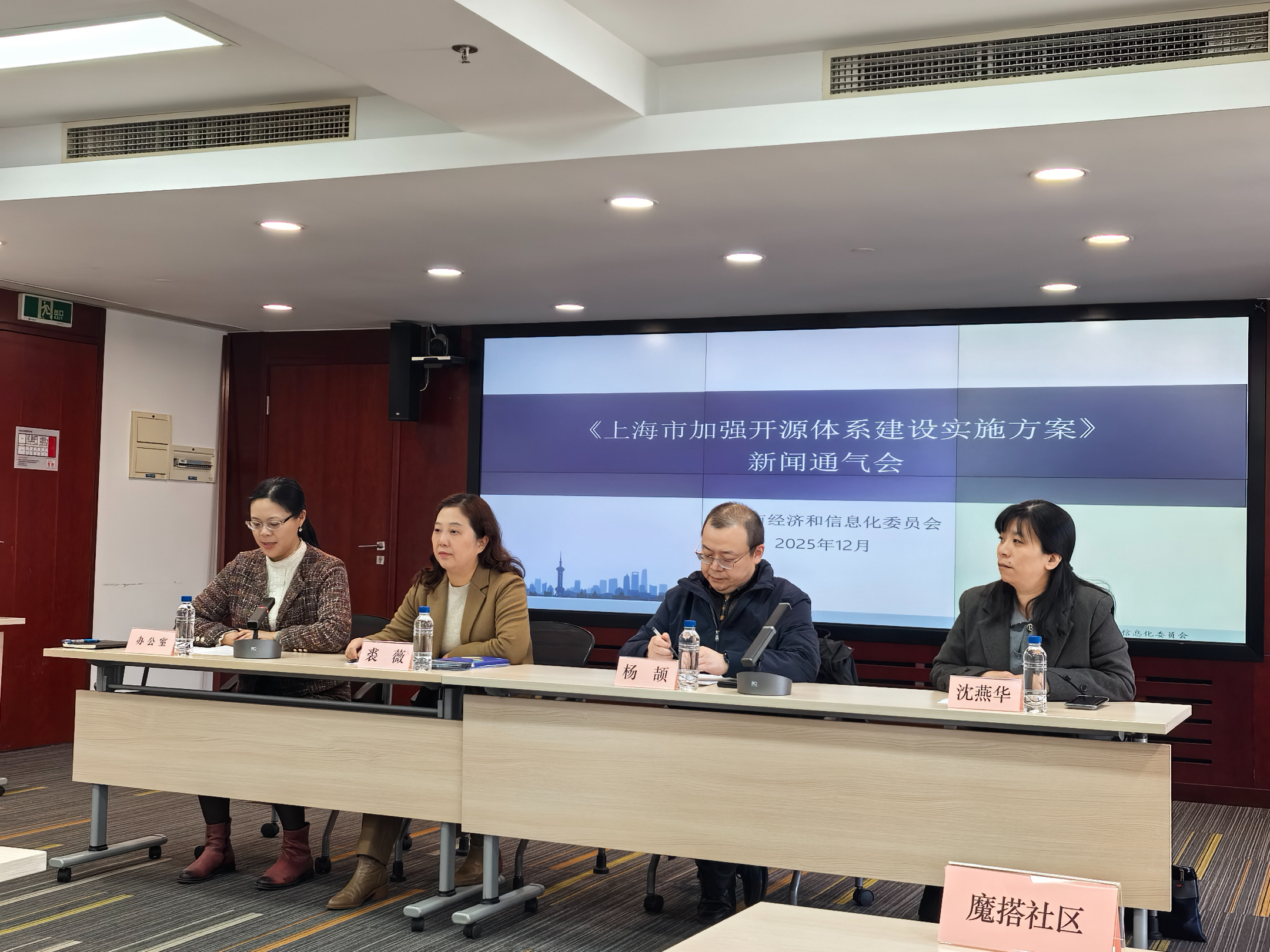
上海加快打造全球“开源”高地
Xin Lang Cai Jing· 2025-12-25 13:18
Core Insights - Shanghai is accelerating the construction of an open-source innovation hub with national service and international competitiveness, aiming to establish a comprehensive open-source system by 2027 [1][2] - The initiative emphasizes the importance of open-source as a core engine for technological innovation, moving beyond mere code sharing to a collaborative and open approach to innovation [1] Group 1: Implementation Plan - The "Implementation Plan" aims to build a complete technical support system, a robust service framework, and a well-structured talent pool, targeting the cultivation of 100 commercial open-source enterprises and over 200 quality open-source projects by 2027 [1][2] - By 2030, the plan envisions a significant role for open-source in leading industrial innovation and enhancing supply chain resilience, fostering an environment that actively promotes open-source contributions [1] Group 2: Financial Support and Incentives - Shanghai will implement the "Open Source Basic Capability Foundation Project," providing up to 20 million yuan (approximately 2.8 million USD) in funding for key open-source tool development projects starting in 2026 [2] - The city plans to reward outstanding open-source projects annually with direct financial incentives, with the maximum reward reaching 5 million yuan (approximately 700,000 USD), and aims to select at least 50 quality open-source entrepreneurial projects each year [2] Group 3: Talent Development - The plan includes establishing a talent evaluation mechanism focused on "open-source contributions," integrating high-quality contributions into academic and professional evaluation systems [3] - Shanghai supports the integration of open-source courses in universities and the establishment of internship programs in collaboration with open-source companies, aiming to attract global open-source talent [3]
培育1—2个具有国际影响力开源社区!上海开源新政发布
Guo Ji Jin Rong Bao· 2025-12-25 13:17
Core Viewpoint - Shanghai has officially issued the "Implementation Plan for Strengthening Open Source System Construction," aiming to establish a comprehensive open source ecosystem by 2027, with significant contributions to industry innovation and resilience by 2030 [1][2]. Group 1: Goals and Objectives - By 2027, Shanghai aims to build a complete open source system with a robust technical support framework, a well-rounded service system, a reasonable talent structure, and a thriving open source industry, including the cultivation of 100 commercial open source enterprises and over 200 quality open source projects [1][5]. - The plan envisions creating 1-2 internationally influential open source communities and gathering over 3 million open source developers [1]. Group 2: Strategic Focus Areas - The plan emphasizes a triad of "technology, talent, and enterprises" to foster a sustainable open source innovation ecosystem [5]. - On the technology side, Shanghai will focus on supporting "hard open source" projects in key areas like artificial intelligence and critical software, transitioning from a "usage ecosystem" to a "leading ecosystem" [5]. - Talent initiatives will include enhancing the environment for attracting global developers, establishing a positive incentive system, and strengthening open source education in universities [5][11]. Group 3: Implementation Strategies - Shanghai will implement five major enhancement projects, including reducing barriers to "using open source" and improving service capabilities of open source platforms [6]. - A new open source platform aimed at overseas users is expected to launch next year, enhancing global intellectual resource connectivity [6]. - The plan includes financial support for key open source tools, with up to 20 million yuan allocated for foundational development tool projects [6]. Group 4: Incentives and Support Mechanisms - The open source project cultivation initiative aims to activate intrinsic motivation for "contributing to open source," with annual awards for outstanding projects reaching up to 5 million yuan [7]. - The plan encourages the commercialization of open source results and supports the establishment of collaborative investment mechanisms for promising open source entrepreneurial projects [7]. Group 5: Ecosystem Development - The plan aims to create a vibrant open source community in Shanghai, connecting developers, suppliers, and customers to enhance interaction and collaboration [8]. - The establishment of incubators focusing on "open source MCN models" will provide deep empowerment through technical flow, community operation, and commercial closure [8]. Group 6: Future Directions - Shanghai will enhance coordination efforts to ensure the effective implementation of the plan, encouraging regions like Pudong and Yangpu to explore open source mechanisms and talent aggregation [13]. - The initiative invites domestic and international tech companies, innovative institutions, and individual developers to contribute to building Shanghai as a global open source hub [13].

2025 OSCAR开源产业大会举办 公布OSCAR“开源+”典型案例入选结果
Zheng Quan Ri Bao Wang· 2025-10-29 09:25
Core Insights - The 2025 OSCAR Open Source Industry Conference was held in Beijing, focusing on the theme "Trustworthy Open Source Fuels Infinite Industries and Intelligent Domains for the Future" [1] - The conference aimed to explore the development model of China's open source ecosystem and accelerate the implementation of open source governance capabilities in industry enterprises [1] Group 1: Industry Characteristics - China's open source industry is characterized by three significant features: supply-side achieving "quantity and quality improvement," breakthrough progress in key technology areas; demand-side deepening "integrated applications," with traditional industries actively upgrading governance; and ecological side improving "standard leadership," with multi-party collaboration strengthening the development foundation [2] - The China Communications Standards Association has initiated over 20 industry standards and group standards related to open source, covering areas such as open source security, projects, communities, and governance [1][2] Group 2: Assessment and Evaluation - The China Academy of Information and Communications Technology (CAICT) released the latest results of the Trusted Open Source series assessments, including evaluations for governance maturity, project assessment, community maturity, software product evaluations, and commercialization assessments [2] - A total of 141 products or projects from 14 categories have passed the trusted open source assessments to date [2] Group 3: Encouragement of Participation - To accelerate the adoption of open source technology in the Chinese market, CAICT and the China Internet Association launched the OSCAR "Open Source +" typical case collection activity, covering categories such as open source commercialization, influential individuals, AI applications, and risk governance [2]