智慧水利

Search documents
“十五五”智慧水利行业深度研究及趋势前景预测专项报告
Xin Lang Cai Jing· 2026-02-03 12:52
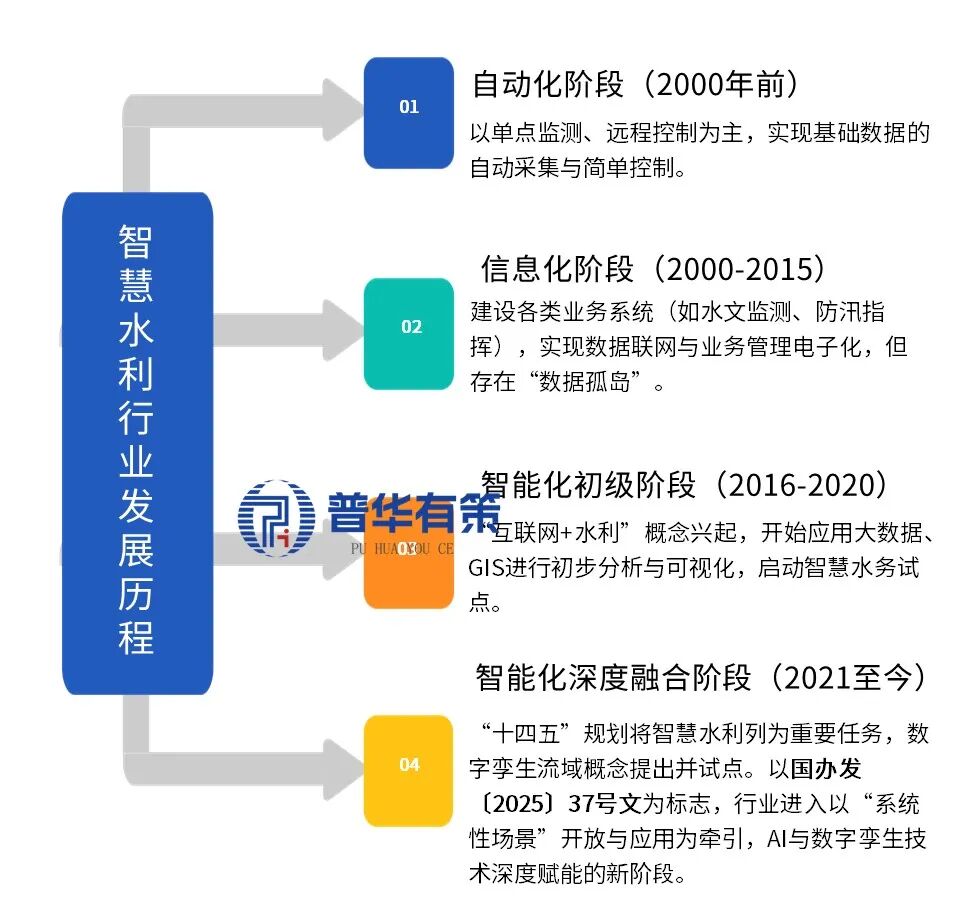
Group 1 - The core concept of smart water conservancy integrates new information technologies such as cloud computing, IoT, big data, artificial intelligence, and digital twins to enhance water resource management and ensure national water security [1][4][30] - Since the 14th Five-Year Plan, smart water conservancy has been elevated to a strategic level for ensuring national water security and building a digital China, with policies evolving from top-level planning to specific scene-driven innovations [4][22] - The industry chain of smart water conservancy is characterized by a "three-layer driving" model, where policy and demand influence from top to bottom, while technological breakthroughs support from the bottom up [5][22] Group 2 - Future technological development will focus on deep coupling of AI with hydrological physical mechanisms, leading to the emergence of specialized water models based on the Transformer architecture [7][23] - The industry value focus is shifting from project construction to long-term data operation, model services, and knowledge empowerment, with continuous optimization of forecasting accuracy and safety diagnosis services becoming core business models [8][24] - New application scenarios are emerging alongside traditional ones, such as digital twin-based water rights trading and automated control for efficient agricultural irrigation [9][25] Group 3 - The market competition in smart water conservancy will transition from individual enterprises to ecological alliances, emphasizing the need for interdisciplinary talent proficient in both hydrology and advanced technologies [10][26] - Significant barriers exist for new entrants, including stringent qualification requirements for government projects and the necessity for proven performance in similar projects [12][28] - Long-term service providers have accumulated vast amounts of high-quality data, creating a strong ecological stickiness that is difficult for newcomers to replicate [13][29] Group 4 - The report by Beijing PwC Consulting provides a comprehensive analysis of the smart water conservancy industry, reviewing its evolution from automation to intelligent twins and emphasizing the current scene innovation-driven development [30] - The report constructs an industry chain model that details the competitive landscape and key players across upstream sensing devices, midstream platform algorithms, and downstream application services [30] - The industry is expected to experience explosive growth marked by the construction of digital twin watersheds and the application of large-scale water models, driven by the integration of AI technologies [30]

我市新增20家院士(专家)创新工作站
Xin Lang Cai Jing· 2026-01-12 18:00
Core Insights - Chengdu is set to establish 20 new academic (expert) innovation workstations by 2025, bringing the total to 300 across the city, with 171 high-level experts introduced over the past five years [1][2] Group 1: Innovation Workstations - The newly established workstations will focus on key industries such as artificial intelligence, new materials, biomedicine, and low-altitude economy, aligning with Chengdu's "9+9+10" modernization industrial system [2] - Each new workstation will receive a one-time funding of 250,000 yuan to support their operations [2] Group 2: Expert Engagement - A total of 31 experts, including Chinese Academy of Engineering academician Deng Longjiang, have been signed to collaborate on 33 projects through the new workstations [2] - Many of the newly signed experts are from external universities and research institutions, enhancing the diversity of expertise available to local industries [2] Group 3: Achievements and Future Plans - Chengdu has implemented over 400 industry-academia-research cooperation projects in the last three years, resulting in nearly 1,500 authorized patents and over 200 standards developed [3] - The iWater Smart Water Platform is highlighted as a key collaborative tool for advancing digital transformation in the water management sector [3]
与江河同频|星图亿水2025年度答卷
Xin Lang Cai Jing· 2025-12-31 16:02
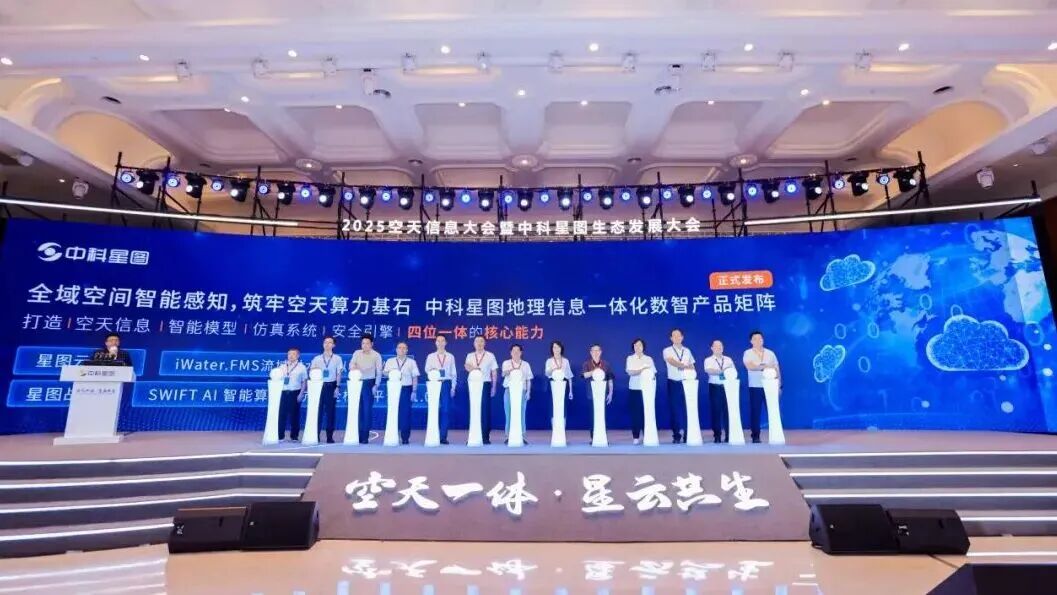
Core Insights - The company, Star Map Yishui, has made significant advancements in its business landscape and core patented technologies in 2025, emphasizing a commitment to "precision, efficiency, and intelligence" in water management [21][22] Business Expansion and Technological Innovation - In 2025, the company launched the iWater.FMS flood simulation system to enhance watershed monitoring and management capabilities, providing efficient technical support for flood forecasting and real-time risk analysis [23] - The establishment of provincial academician and doctoral innovation workstations in Chengdu aims to deepen the integration of industry, academia, and research, strengthening core technology development and high-end talent reserves [25] Quality Development and Certifications - Star Map Yishui was recognized as a CS3-level enterprise in the eighth batch of information system construction and service capability standards, marking a significant upgrade from CS2 [27] - The company also obtained secondary qualifications for electronic and intelligent engineering contracting and safety production licenses, enhancing its recognition in solution capabilities and project delivery compliance [27] Smart Equipment and Applications - In April 2025, the company introduced a new generation of intelligent unmanned boats equipped with high-precision sensors and autonomous navigation systems, significantly improving field efficiency and data accuracy [29] Regional Market Development - The new Henan Meisheng Work Area was officially launched in August 2025, focusing on software development, intelligent water conservancy equipment testing, and system integration to support localized product iteration and project delivery [31] Industry Collaboration and Knowledge Sharing - The company actively participated in various industry events in 2025, including hosting a technical seminar on the information construction of the Kashgar irrigation area and attending the China Geography Society's annual meeting to share practices in watershed perception and model integration [33]