机械设备(申万)

Search documents
有色金属板块主力资金净流出超85亿元
Shang Hai Zheng Quan Bao· 2025-09-16 04:39
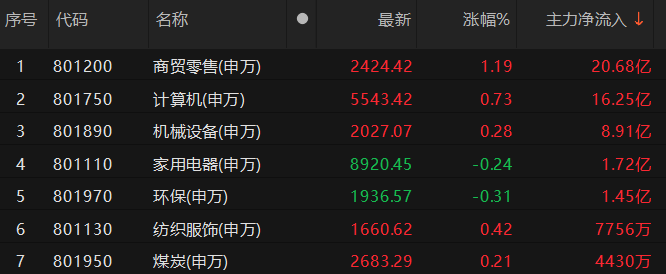
Core Insights - As of September 16, 10:30 AM, major sectors such as retail, computer, and machinery equipment saw significant net inflows of capital, with the retail sector alone attracting over 2 billion yuan [1] - Conversely, sectors like non-ferrous metals, electric equipment, and pharmaceutical biology experienced substantial net outflows, with the non-ferrous metals sector seeing a net outflow exceeding 8.5 billion yuan [1] Sector Summaries Net Inflows - Retail sector (申万): 20.68 billion yuan, with a price increase of 1.19% [2] - Computer sector (申万): 16.25 billion yuan, with a price increase of 0.73% [2] - Machinery equipment sector (申万): 8.91 billion yuan, with a price increase of 0.28% [2] Net Outflows - Non-ferrous metals sector (申万): -85.19 billion yuan, with a price decrease of 3.03% [2] - Electric equipment sector (申万): -71.14 billion yuan, with a price decrease of 0.98% [2] - Pharmaceutical biology sector (申万): -22.45 billion yuan, with a price decrease of 0.74% [2]

模型提示市场情绪平稳,大盘风格占优——量化择时周报20250523
申万宏源金工· 2025-05-26 03:41
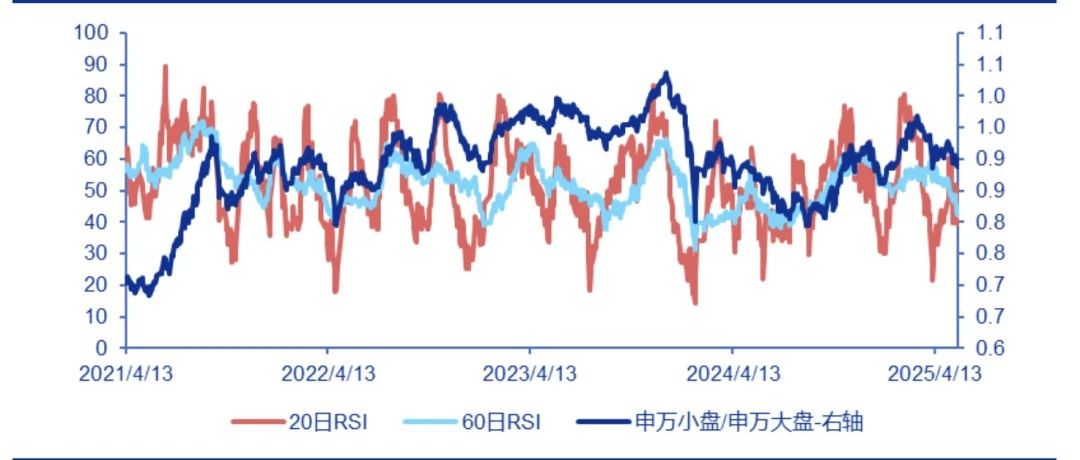
Group 1 - The market sentiment score is currently stable, with the sentiment structure indicator fluctuating around the 0 axis within the range of [-6, 6]. As of May 23, the market sentiment indicator has risen, indicating a bullish outlook [1][3] - The sentiment indicators have not shown significant changes compared to the previous week, with trading volume and investment themes being crucial for further sentiment improvement. The market risk appetite has decreased, and the industry trend scores remain negative [3][11] - The total trading volume for the week was approximately 1.18 trillion RMB, with a daily trading volume of 974.53 million shares on Friday [5] Group 2 - The industry trend scores continue to be negative, indicating a lack of investment themes and weak industry performance. The sectors with the highest gains include pharmaceuticals, comprehensive, automotive, and coal, while the sectors with the largest declines include electronics, computers, communications, and machinery [11][13] - The short-term trend scores for various industries have shown significant increases, particularly in the household appliances sector, which saw a rise of 24% [17][18] - The current model indicates a preference for large-cap stocks, with the growth style continuing to dominate despite a strengthening value trend [17][19]