海洋测绘

Search documents
宁波海洋中心开展海滩剖面地形测量
Zhong Guo Zi Ran Zi Yuan Bao· 2026-01-10 02:18
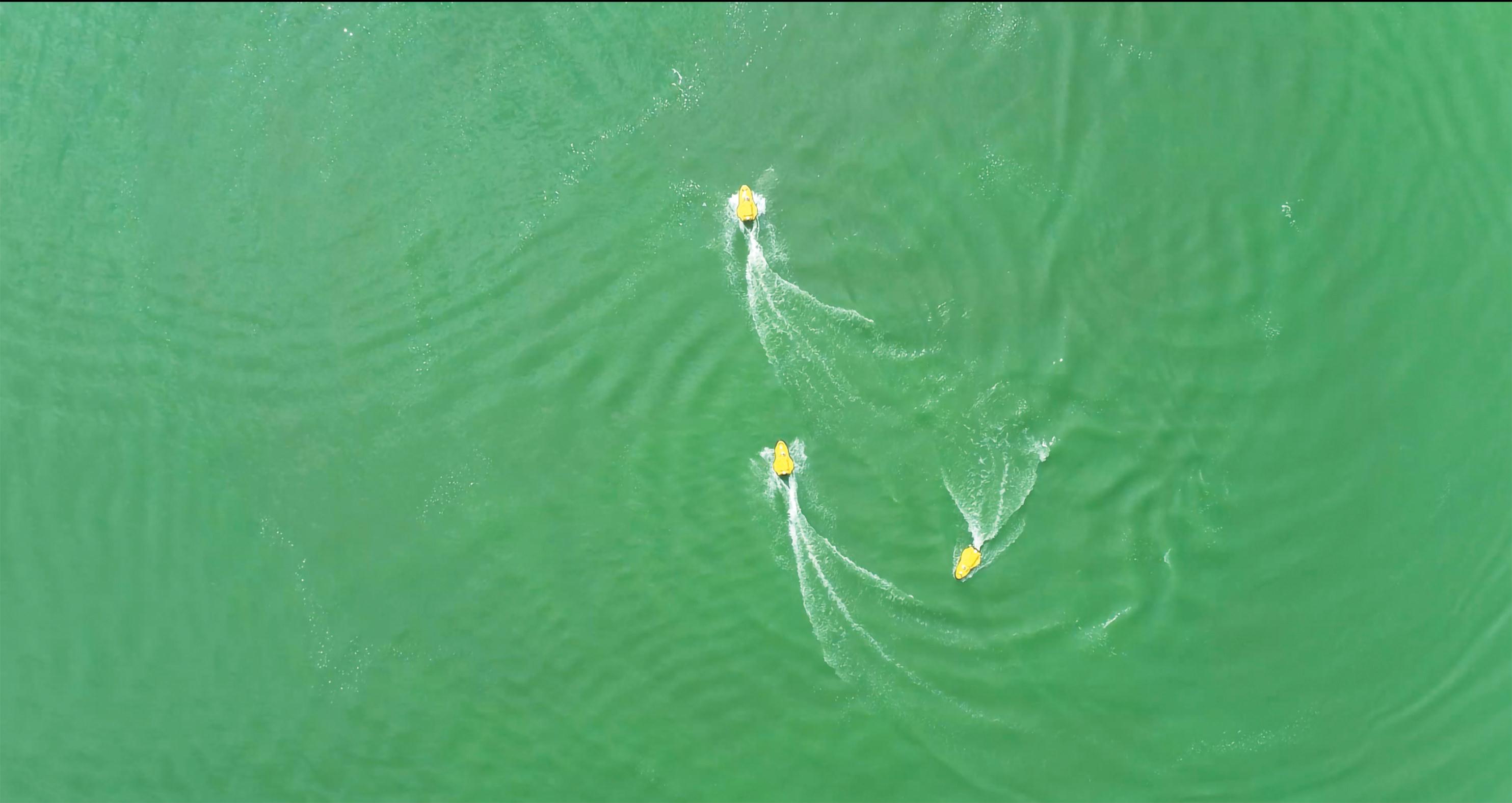
Core Viewpoint - The recent deployment of unmanned vessels equipped with multi-beam depth measurement systems by the technical team at the Ningbo Marine Center of the Ministry of Natural Resources marks a significant advancement in marine surveying efficiency and safety [1] Group 1: Technological Advancements - The use of unmanned vessels has replaced traditional manual operations, which were less efficient and posed safety risks [1] - The unmanned vessel system allows for real-time monitoring of the vessel's trajectory and data flow through remote terminals linked to shore-based systems [1] - The multi-beam system functions like an "underwater CT," providing comprehensive and high-density surveys of underwater topography, resulting in the collection of extensive and reliable data in a single operation [1] Group 2: Operational Safety - During the operation, technicians utilized telescopes to monitor the unmanned vessel's navigation route, ensuring awareness of potential risks from surrounding ships, buoys, fishing nets, and reefs [1] - The measures taken ensured the safety and orderly progression of the task [1] Group 3: Implications for Marine Surveying - This measurement task represents a breakthrough in the business application of unmanned vessels in topographic surveying [1] - The data obtained will support practical work such as coastline change analysis and storm surge disaster assessment, enhancing the productivity and accuracy of marine surveying efforts [1] - The task highlights the advantages of intelligent equipment in marine surveying and contributes to the accumulation of experience for future related work [1]
江苏“十四五”期间安排1.3亿元支持近海水下测绘工作
Xin Hua Ri Bao· 2026-01-05 22:18
Core Viewpoint - Since the "14th Five-Year Plan," Jiangsu Province's Finance Department has allocated a total of 130 million yuan to support the natural resources sector in enhancing marine capabilities, establishing a data foundation for marine development and utilization [1] Group 1: Funding and Data Acquisition - The funding of 130 million yuan has been used to obtain underwater geographic information data from nearshore areas, addressing the previous lack of precise underwater topographic data [1] - The project team has successfully acquired 21,000 square kilometers of underwater geographic information data and key nautical chart elements in regions such as Lianyungang and Nantong [1] Group 2: Technical Achievements - The project has completed over 141,000 kilometers of underwater topographic measurement lines, equivalent to circling the Earth's equator three and a half times, resulting in centimeter-level precision underwater topographic data [1] Group 3: Applications and Impact - The acquired data supports ecological restoration of coastal areas and spatial site selection for coastal industries, providing refined temporal and spatial data support [1] - In the field of coastal safety barrier construction, the results provide high-precision topographic data for the research of the provincial sea dike upgrade project, significantly enhancing the scientific and safety aspects of engineering planning [1]
突破难点构建岛陆统一高程基准
Zhong Guo Zi Ran Zi Yuan Bao· 2025-11-20 03:12
Core Viewpoint - The project aims to unify the historical reference benchmarks of tidal stations with the 1985 National Elevation Benchmark, enhancing the accuracy and reliability of elevation control systems for various applications [1] Group 1: Project Overview - The project involves the technical design review of the tidal station leveling measurement service for six stations: three on land (Gaolan, Dongping, Shapa) and three on islands (Guishan, Shangchuan Island, and Wailianding) [1] - The review meeting was organized by the Zhuhai Ocean Center of the Ministry of Natural Resources, with participation from various expert units [1] Group 2: Technical Significance - The project employs global navigation satellite system elevation measurement and leveling methods to accurately transfer the 1985 National Elevation Benchmark to the six tidal stations [1] - The project is recognized for its advanced precision indicators, which are considered to be at a leading level domestically [1] Group 3: Applications and Recommendations - The unified and high-precision elevation control results will support core activities such as marine disaster prevention, ecological monitoring, and natural resource management [1] - Experts recommend promoting and applying the project results due to its significant theoretical and practical value [1]
海上“企”明星|“天眼”测海
Zhong Guo Zi Ran Zi Yuan Bao· 2025-07-07 02:49
Core Viewpoint - The article highlights the evolution and technological advancements of Ningbo Shanghang Surveying and Mapping Co., Ltd. (Shanghang Surveying) in the field of marine surveying, showcasing its transition from traditional methods to modern, high-precision techniques that significantly enhance operational efficiency and data accuracy [2][4][10]. Group 1: Technological Advancements - Shanghang Surveying has developed proprietary software for magnetic anomaly inversion, achieving a positioning accuracy within 5 centimeters for underwater cable surveys [2]. - The company transitioned from manual depth measurement methods to advanced technologies such as multi-beam sonar and unmanned vessels, completing in one day what previously took weeks [2][5]. - The integration of drone technology with unmanned boats has improved surveying precision from meter-level to centimeter-level, enabling real-time data transmission and 3D modeling [6][9]. Group 2: Historical Context - The company’s history dates back to 1984, when traditional methods relied on lead weights for depth measurement, which were inefficient and inaccurate [4]. - The introduction of microwave positioning technology in the 1990s marked a significant turning point, allowing for precise positioning of construction vessels [4]. - By the 21st century, the advent of global positioning systems revolutionized the industry, reducing the manpower required for surveying tasks [5]. Group 3: Contributions to Industry - Shanghang Surveying has played a crucial role in various port construction projects, both domestically and internationally, including in Cambodia and Uruguay, enhancing maritime safety and operational efficiency [6][9]. - The company has developed patented technologies that support coastal water quality monitoring and pollution prevention, contributing to environmental sustainability [9]. - Its innovations have positioned Shanghang Surveying as a leader in the marine surveying sector, transitioning from a service provider to a standard setter in the industry [7][10]. Group 4: Future Directions - The company is leveraging digital twin technology and big data analytics to enhance urban planning and environmental monitoring, showcasing its commitment to integrating advanced technologies into its operations [11][12]. - The launch of the "Comprehensive Information Management System" aims to provide real-time monitoring for port operations, further solidifying its role in the digital transformation of the marine surveying industry [12].