碳化硅粉末

Search documents
行业聚焦:全球碳化硅粉末行业头部生产商市场份额及排名调查(附核心企业名单)
QYResearch· 2026-02-10 09:20
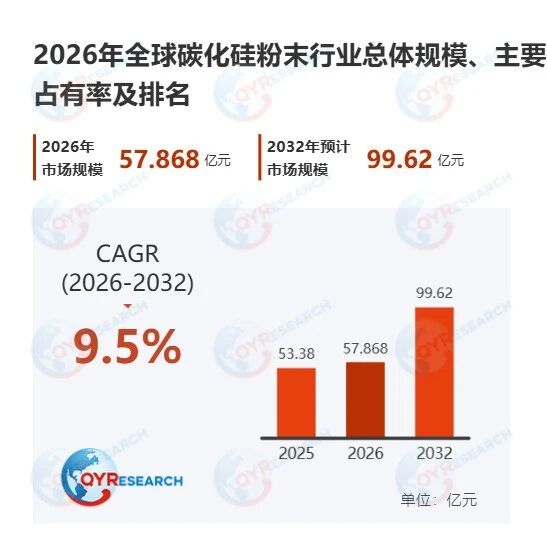
Core Viewpoint - Silicon Carbide (SiC) powder is a high-performance synthetic ceramic material known for its exceptional hardness, high thermal conductivity, excellent chemical stability, and wide bandgap characteristics, making it essential for next-generation technologies such as power electronics, electric vehicles, renewable energy systems, and aerospace applications [2]. Supply Chain Dynamics and Key End Users - The global SiC powder supply chain is characterized by technology-intensive upstream synthesis processes and diverse downstream applications. Key suppliers include Fiven, Washington Mills, and Shin-Etsu Chemical, each with proprietary technologies to control purity and particle morphology [3]. - Major end users of high-purity SiC powder include semiconductor substrate manufacturers like Wolfspeed and SK Siltron, who require low impurity levels and stable quality, often entering long-term supply agreements [3]. - The gross margin for SiC powder typically ranges from 25% to 30%, but may be pressured during periods of intense price competition in the commodity abrasive sector [3]. Market Size and Growth Projections - By 2025, the global production of SiC powder is expected to reach 133,000 tons, with an average market price of $5.90 per kilogram. The market is projected to grow to $1.47 billion by 2032, with a compound annual growth rate (CAGR) of 9.6% [4][5]. - The ceramic sector currently accounts for approximately 52.3% of the demand for SiC powder, while standard-grade SiC powder represents about 76.1% of the product type market share [7][8]. Key Drivers - The demand for SiC powder is driven by its wide range of applications, including lithium-ion batteries, where silicon-based nanoparticles can significantly enhance performance [10]. - The growth of power modules in electric vehicles highlights the attractive value proposition of compound semiconductors [10]. - The expanding applications of SiC as a sintering material and in metal surface coatings further contribute to its demand across various industries [10]. Major Obstacles - The diverse specifications required for different end uses create challenges for manufacturers in managing multiple SKUs while maintaining stable output and cost competitiveness [11]. - High energy consumption during synthesis and impurity control remain ongoing operational challenges [11]. Industry Development Opportunities - The acceleration of electric vehicles is driving the development of structural ceramics and composite materials, increasing the demand for high-purity SiC powders [13]. - The growth of technical ceramics supports the development of high-purity ultrafine powders suitable for advanced manufacturing processes [13]. - The semiconductor-grade products, while consumed in smaller quantities, have the highest specifications for impurity control, prompting suppliers to invest in purification and contamination control technologies [13].