艺术史研究

Search documents
一部“复调”的立体绘画史
Xin Lang Cai Jing· 2026-01-23 21:56
Core Perspective - The publication of "Chinese Painting: From Yuan to Qing" by Professor Wu Hong marks the conclusion of his trilogy on "Chinese Painting," establishing a new benchmark for art historical writing through its expansive vision and meticulous analysis [1] Group 1: Historical Context and Narrative Structure - Wu Hong employs a "polyphonic" narrative that interweaves institutions, materials, regions, and communities, providing a multidimensional analysis of painting activities during the Yuan, Ming, and Qing dynasties [1] - The book analyzes Ming painting by first addressing the "Hongwu Discontinuity," reflecting the historical reality of a break in early Ming painting activities and emphasizing a view of history that connects seemingly fragmented narratives into an organic whole [1] Group 2: Conceptual Framework of Literati Painting - Wu Hong argues that "literati painting" is not a static concept but a dynamic practice where literati continuously innovate in style, subject matter, and technique, which are then absorbed by professional painters, fostering the evolution of literati painting [2] - The boundaries between literati painting, court painting, and commercial painting are fluid, characterized by ongoing interaction rather than rigid separation [2] Group 3: Expanding the Scope of Art Historical Narratives - Wu Hong broadens the narrative by including previously overlooked groups and phenomena, discussing not only renowned artists but also significant cases from lesser-known figures, thereby enriching the understanding of Chinese painting traditions [2] - In the Qing painting section, he addresses various styles and movements, including court painting, Yangzhou school, and female artists, highlighting the self-reflection of Chinese painting traditions and their initial intersection with global visual systems [2] Group 4: Materiality and Functionality in Art - Wu Hong challenges the narrow focus on scroll paintings by exploring the roles of murals, folding fans, and other formats in different social and cultural contexts, emphasizing their unique functions [3] - A dedicated chapter on murals discusses their connection to specific artists, such as Zhu Haogu, thereby underscoring the importance of understanding the production mechanisms and social motivations behind these artworks [3] Group 5: Historical Contextualization - The foundation of Wu Hong's "three-dimensional" writing lies in the restoration of historical context, utilizing primary texts from contemporaneous artists to reconstruct the original environment of painting creation and reception [3] - By referencing contemporaneous accounts, such as those of Wang Taizheng regarding the painter Hong Ren, Wu Hong corrects romanticized misconceptions about artists' social networks and interactions [3] Group 6: Visual Interpretation and Communication - Wu Hong's keen visual perception and eloquent expression provide readers with an accessible approach to understanding and interpreting images [4]
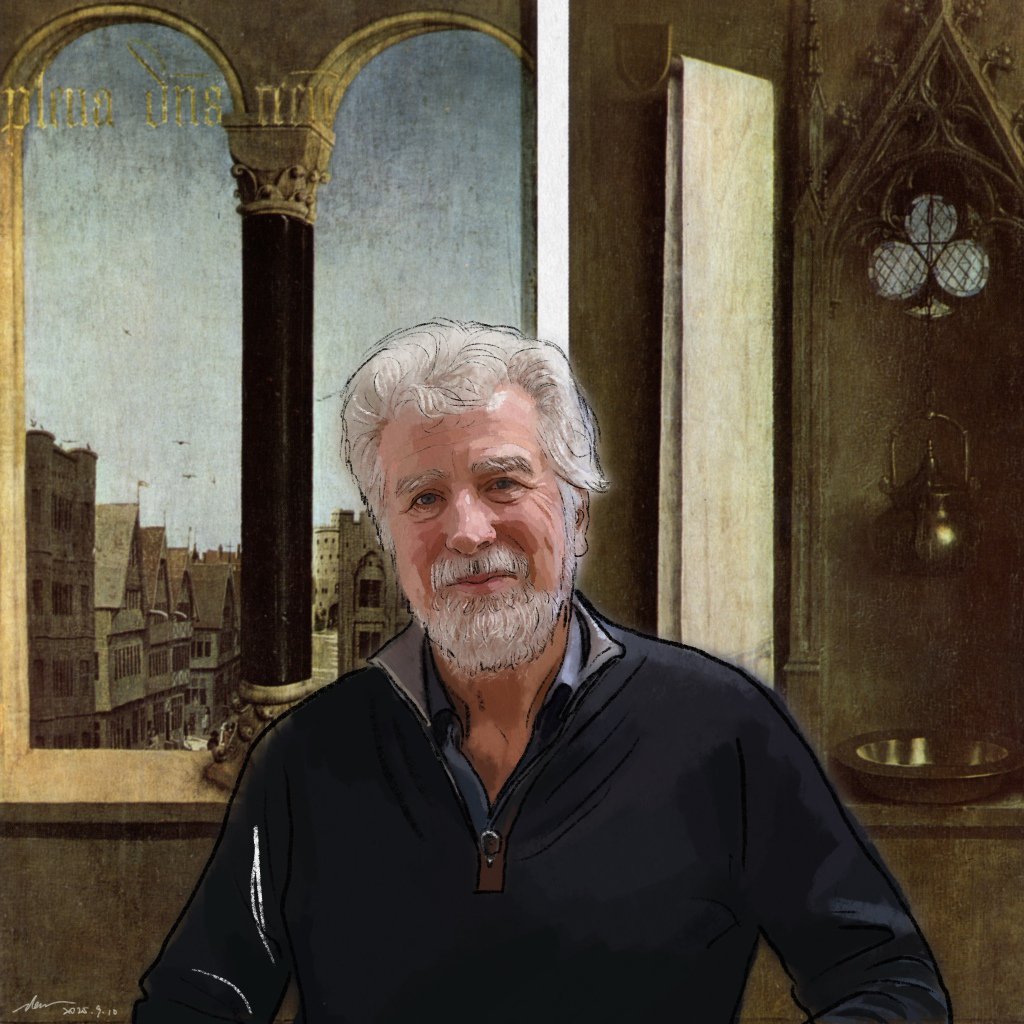
斯托伊奇塔谈作为思想实验的图像史
Xin Lang Cai Jing· 2025-09-14 01:46
Group 1 - Stojanica is a prominent art historian from Romania, known for his works that integrate various academic approaches, including post-structuralism and semiotics, to create a new narrative in art history [1] - His significant works, "The Birth of the Painting: The Early Modern European Meta-Painting" and "The Pygmalion Effect," have been translated into Chinese, providing a comprehensive understanding of his academic contributions [1] - "The Birth of the Painting" employs structural analysis and semiotic theory to reinterpret 15th and 16th-century European painting, linking it to contemporary art theories and religious movements [1][5] Group 2 - Stojanica's later work, "The Pygmalion Effect," explores the historical relationship between sculpture and its models, as well as the dynamic between images and life, reflecting a broader narrative approach [1][11] - His academic journey began in Romania, influenced by a family background in medicine and art, leading to a focus on art history as a substitute for his initial interest in underwater archaeology [5][7] - The influence of key figures in French and German art theory, such as Hans Belting and Louis Marin, has shaped Stojanica's scholarly voice, positioning him as a significant contributor to contemporary French art history [1][14][16] Group 3 - Stojanica's works are interconnected, with a common thread focusing on how art narratives reflect self-reflection and the dichotomy of artistic representation [11][12] - His engagement with the concept of "hybridity" in cultural identity is evident in his writings, as he navigates the complexities of being a non-native French speaker in the academic landscape [20][21] - The dialogue between his works and those of contemporaries like Gombrich highlights differing interpretations of the Pygmalion myth, emphasizing the complexity of representation in art [33][34] Group 4 - Stojanica's exploration of media in art history has evolved, with a focus on the materiality of painting and the interplay between different artistic mediums [39][42] - His recent works reflect a critical engagement with contemporary art practices, suggesting that historical artworks remain relevant and can inform modern artistic discourse [44][45] - The ongoing discourse around decolonization in art history and the global shift challenges traditional Western narratives, prompting a reevaluation of cultural perspectives in Stojanica's research [47][48]