
Autonomous Vehicle

Search documents
Uber, Wayve and Nissan plan to launch a robotaxi service in Tokyo this year
TechCrunch· 2026-03-12 14:58
Group 1 - Wayve, a U.K.-based autonomous vehicle software company, has secured $1.2 billion in funding and is partnering with Uber and Nissan to launch a robotaxi service in Tokyo, with a pilot set for late 2026 [1] - The collaboration involves Wayve integrating its AI-powered self-driving software into a Nissan Leaf, which will be accessible on Uber's ride-hail network, marking Uber's first robotaxi partnership in Japan [2] - Wayve's autonomous software is designed to operate on any vehicle and hardware without relying on HD maps, while the company is also working on a robotaxi service in London and integrating driver-assistance technology in Nissan vehicles for production in 2027 [3] Group 2 - Uber is actively forming partnerships globally to establish itself as the leading app for hailing self-driving taxis, having formed over 25 partnerships to date [4] - Recently, Uber announced plans to introduce Zoox's purpose-built robotaxi on its app in Las Vegas later this year, further expanding its robotaxi offerings [4]



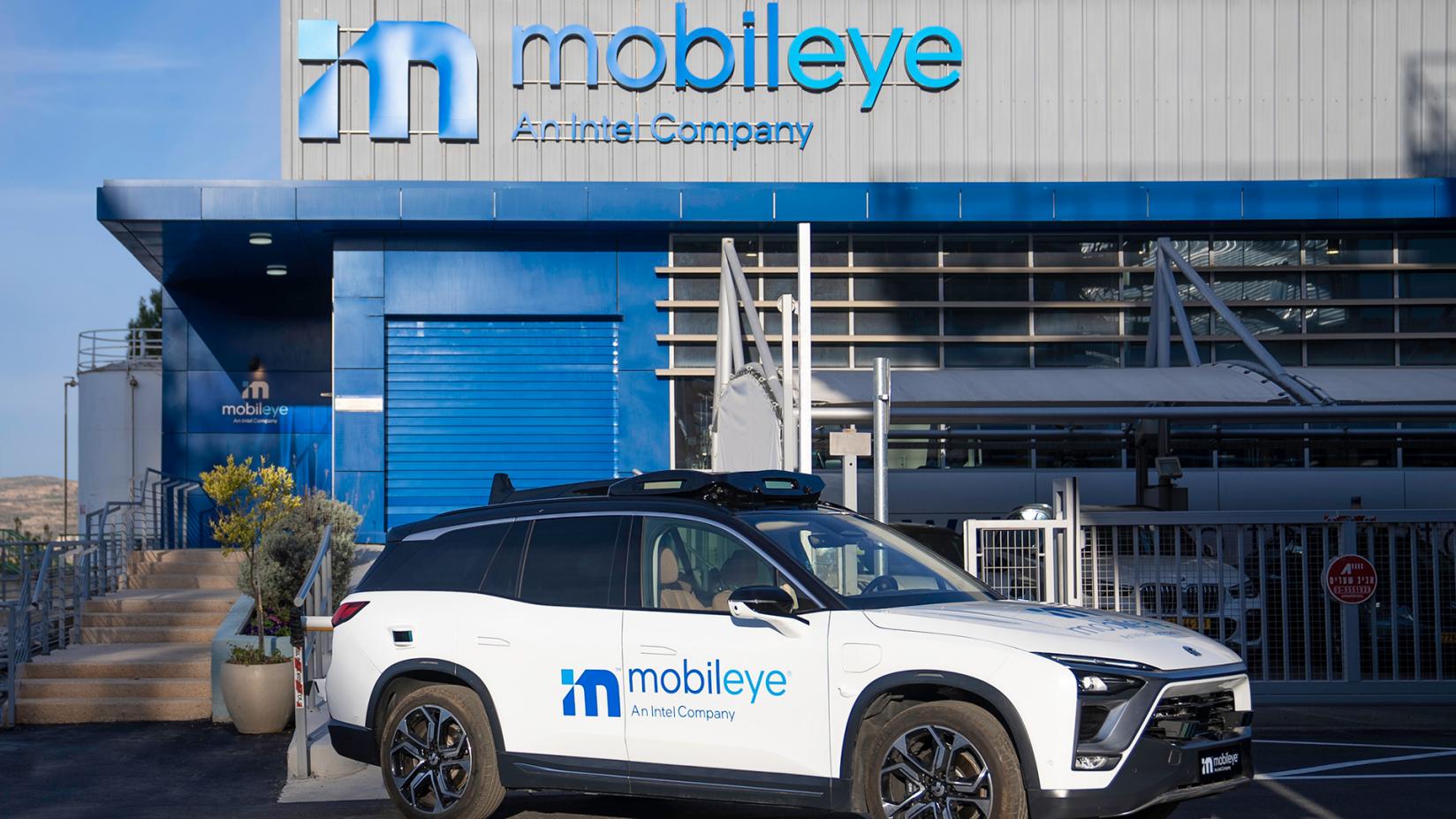
Mobileye Global Inc. (NASDAQ:MBLY) Faces Downgrade Ahead of Financial Results Release
Financial Modeling Prep· 2026-01-12 19:00
Core Viewpoint - Mobileye Global Inc. is a significant player in the autonomous driving technology sector, focusing on advanced driver-assistance systems and autonomous vehicle technologies, competing with companies like Tesla and Waymo [1] Group 1: Company Performance - Wolfe Research downgraded Mobileye to a "Peer Perform" rating on January 12, 2026, with the stock priced at $11.55 at that time [2] - Despite the downgrade, Mobileye's stock price increased by 2.76%, reaching $11.55, with fluctuations between $11.09 and $11.65 during the trading day [3] - Over the past year, Mobileye's stock has experienced a high of $20.18 and a low of $10.04, indicating significant volatility [3] Group 2: Market Metrics - Mobileye's market capitalization is approximately $9.4 billion, reflecting its substantial market presence [4] - The trading volume for Mobileye today is 10.6 million shares, indicating active investor interest [4][5]

中国物流行业_自动驾驶应用或带来 200 个基点的净利润率提升空间
2025-11-16 15:36
Summary of the China Logistics Sector Conference Call Industry Overview - **Industry**: China Logistics Sector - **Focus**: Impact of autonomous driving (AD) technologies on logistics, particularly through the use of robovans and robotrucks [1][3] Key Insights - **Market Potential**: The logistics industry in China is expected to see a significant transformation due to the adoption of autonomous driving technologies, with estimates suggesting a potential 200 basis points (bp) increase in net profit margin (NPM) [1] - **Fleet Expansion**: The total fleet size of robovans and robotrucks is projected to grow from approximately 5,000 units to around 40,000 units by the end of 2025, indicating a three to six-fold increase [3][4] - **Cost Reduction**: The integration of robovans and robotrucks is anticipated to lower parcel logistics costs by about 10% from 2024 to 2030, which could enhance NPM by 2% and return on equity (ROE) by 5% [3][5][7] Technological Advancements - **Robovan Deployment**: Robovans are currently being tested in over 100 cities in China, with a focus on short-haul transport. They have achieved a 45% cost saving compared to traditional minivans [4][5] - **Robotruck Capabilities**: Robotrucks are equipped with commercialized Level 2+ AD functions, which are expected to reduce costs by 10% compared to traditional trucks [4][5] Financial Metrics - **Profitability Outlook**: The combination of robovans and robotrucks could lead to profit increases of 17% to 130% for parcel firms compared to 2024 levels [5][7] - **Current Valuation**: Parcel companies are trading at a price-to-earnings (PE) ratio of 14x for 2026 estimates, reflecting a recovery in pricing since the recent price war [5][7] Market Dynamics - **Cost Structure**: Transportation accounts for over 54% of logistics costs in China, with short-haul and last-mile deliveries comprising 60% of total costs [10][12] - **Labor Challenges**: The logistics sector faces labor shortages, with couriers working long hours for low wages, complicating efforts to reduce delivery fees [19][24] Regulatory Environment - **Policy Support**: The Chinese government is promoting the integration of AI and autonomous driving in logistics, with several policies aimed at facilitating the deployment of unmanned vehicles [61][62][63] Competitive Landscape - **Preferred Companies**: J&T Global Express and STO Express are highlighted as preferred investments due to their potential for larger profit increases from AD solutions [3][5][7] - **Market Share**: Major parcel firms like ZTO and SF are rapidly expanding their fleets of robovans, with ZTO planning to introduce an additional 10,000 units [58][59] Challenges and Risks - **Technological Bottlenecks**: Despite advancements, robovans still face challenges such as the need for manual loading and unloading, and the requirement for detailed route mapping [60] - **Compliance Risks**: The operation of robovans is currently limited by road access rights, which are still being developed across various cities [61] Conclusion The China logistics sector is on the brink of a significant transformation driven by autonomous driving technologies, with substantial cost-saving potential and profitability improvements expected. However, challenges related to technology, labor, and regulatory compliance remain critical factors to monitor.
Kodiak AI and ZF Partner on Steering for 100 Kodiak-Powered Driverless Trucks
Globenewswire· 2025-11-04 14:00
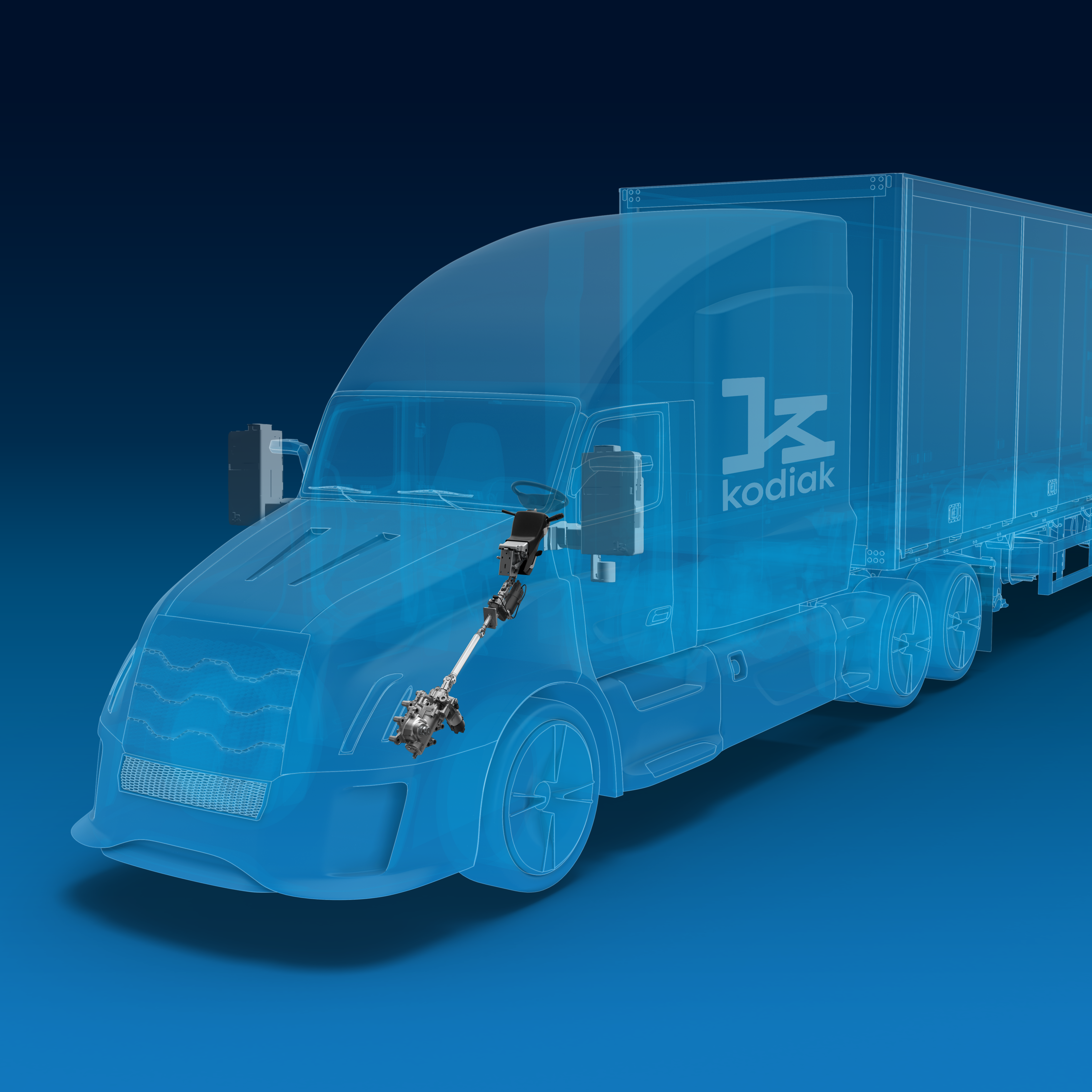
Core Insights - Kodiak AI has expanded its partnership with ZF to enhance its autonomous vehicle technology by purchasing 100 redundant steering systems, which will support the growth of its trucking business [1][4][5] - ZF's advanced steering technologies, including the redundant ReAX adaptive electronic steering assist system, are crucial for the safety and scalability of Kodiak's autonomous trucking solutions [3][4][6] - The integration of redundant steering components allows Kodiak's trucks to maintain control in case of a primary actuator failure, ensuring safe operations [5][6][7] Company Overview - Kodiak AI, founded in 2018, specializes in AI-powered autonomous vehicle technology aimed at addressing challenges in transporting goods safely [9] - The company has achieved significant milestones, including deploying customer-owned and operated driverless trucks in commercial service [9] - Kodiak's vision is to lead in autonomous ground transportation, focusing on safety, efficiency, and environmental responsibility [7][9] ZF Overview - ZF is a global technology company that provides advanced mobility products and systems for various vehicle types, including commercial vehicles and passenger cars [8] - In fiscal 2024, ZF reported sales of €41.4 billion and operates 161 production locations across 30 countries [9] - ZF's innovations in steering systems are pivotal for the development of safe and efficient autonomous vehicle solutions [3][4][6]
X @Bloomberg
Bloomberg· 2025-10-22 11:20
Uber and Nebius are committing as much as $375 million to develop Avride, the Dutch cloud infrastructure company’s autonomous vehicle subsidiary https://t.co/7YnuGswnm4 ...
Why Pony AI Stock Galloped Today
Yahoo Finance· 2025-09-15 16:53
Group 1 - Pony AI's shares increased by as much as 12% in early trading, settling at a 10% rise by midday, despite no clear news driving this movement [1] - The company claims to be a global leader in the commercialization of autonomous mobility, although this designation appears relative [3] - Pony AI has a market capitalization exceeding $5 billion but reported revenues of less than $86 million over the past year, resulting in losses of nearly $320 million [4] Group 2 - Revenue growth for Pony AI has been slow, with only a 25% increase over the last two and a half years, translating to less than 10% annual growth [4] - The company's losses have more than doubled during the same period [5] - Pony AI recently announced a partnership with Qatar's largest transportation provider, Karwa, to launch a robotaxi service, which is currently being tested in Doha [6] Group 3 - Pony AI has approximately $600 million in cash and a cash burn rate of $140 million per year, giving it about four years to achieve profitability [7] - Analysts from The Motley Fool Stock Advisor have identified ten stocks they believe are better investment opportunities than Pony AI [8][10]
Hyundai's eVTOL startup Supernal pauses work following CEO and CTO departures
TechCrunch· 2025-09-07 19:19
Core Insights - Supernal, Hyundai's electric air taxi startup, has paused its aircraft program following significant leadership changes and staff reductions [1][3][5] - The company had recently conducted its first test flight but was still working towards its first untethered test flight before the pause [2][4] - The departure of CEO Jaiwon Shin and CTO David McBride has raised concerns about the startup's future and its planned commercial service launch in 2028 [3][4][8] Company Developments - Supernal's leadership transition includes David Rottblatt, who is currently overseeing business operations as Interim COO [6] - The company plans to appoint new leadership with expertise in business operations to advance Urban Air Mobility (UAM) solutions [6] - The startup had previously laid off dozens of employees and closed its Washington, D.C. headquarters, indicating ongoing operational challenges [5] Industry Context - The electric air taxi industry is experiencing significant upheaval, with some startups like Joby making progress while others, such as Lillium, have ceased operations [4] - Supernal's struggles mirror those of other Hyundai-backed ventures, such as Motional, which faced major restructuring and layoffs after losing funding from a partner [9][10]