Biomedical Engineering

Search documents
Humacyte (NasdaqGS:HUMA) FY Conference Transcript
2026-03-10 18:02
Humacyte FY Conference Summary Company Overview - **Company**: Humacyte (NasdaqGS:HUMA) - **Industry**: Biotechnology, specifically in the field of bioengineered vascular conduits Key Points and Arguments Product Launch and Market Entry - Humacyte launched its first-in-class product into the market in 2025, focusing on vascular trauma, dialysis, and CABG (coronary artery bypass grafting) [9][10] - The company experienced a learning curve regarding the time required for approval from Value Analysis Committees (VAC), which is longer than anticipated due to post-COVID spending consciousness in hospitals [9][10] - The current Average Selling Price (ASP) of the product is approximately $17,000-$20,000, with adjustments made to facilitate administrative processes in hospitals [10] Clinical and Economic Validation - Humacyte has achieved a VAC approval rating of over 70%, indicating strong clinical and health economic arguments for its product [9][10] - Publications in 2025 demonstrated that even at higher price points, the product saves money for trauma centers by avoiding amputations and infections [22] - The product's outcomes in patients without available veins are comparable to traditional vein treatments, enhancing its value proposition [23] Focus on Education and Training - The company is increasing its focus on educating surgeons and hospital staff about the new product, as many surgeons have never used a new conduit in their careers [11] - A growing medical science liaison team is being established to support this educational effort [11] Upcoming Trials and Regulatory Engagement - A Phase 3 trial comparing Humacyte's vessel to the gold standard fistula for dialysis access has shown positive 1- and 2-year data, with plans to publish results soon [24][25] - An interim read on a second trial focusing on women is expected in a few months, which could lead to a supplemental Biologics License Application (BLA) later in 2026 [25][32] Strategic Partnerships - Humacyte has a significant relationship with Fresenius, the largest provider of renal care services globally, which supports both financial and collaborative efforts [34][36] - Fresenius holds distribution rights for Humacyte's product outside the U.S., while Humacyte retains distribution rights within the U.S. [36] Market Dynamics and Future Outlook - The trauma market is concentrated with about 200 Level I Trauma Centers in the U.S., allowing for effective coverage with a small sales force [59] - The dialysis market is expected to be at least three times the size of the trauma market, providing significant revenue potential [59] - R&D costs are expected to decrease as clinical trials wind down, while sales are anticipated to ramp up, particularly in the trauma and dialysis markets [60] Financial Projections - The company expects to see an increase in sales as it expands its commercial team for dialysis, while R&D costs will continue to decline [60] Additional Important Insights - The product addresses a critical need for patients who struggle with traditional dialysis access methods, particularly women, who experience higher failure rates with fistulas [26][27] - The company is actively engaging with CMS to secure favorable reimbursement terms, aiming for a pass-through reimbursement at ASP plus six [33] This summary encapsulates the key discussions and insights from Humacyte's FY conference, highlighting the company's strategic direction, product validation, and market opportunities.

NeuralNetworks for Real-World Impact: Curiosity to Innovation | Geetika Srivastava | TEDxIETLucknow
TEDx Talks· 2026-01-26 17:37
[प्रशंसा] गुड मॉर्निंग जीनियस गुड मॉर्निंगम जीनियस राइट यस मैम गुड मॉर्निंग एंड जीनियस गुड मॉर्निंग मैम सो आई वुड लव टू कॉल यू ऑल ऑफस आर द टू व्हाट सी एंड दे आर द ओनली वन हु कैन सर्वाइव द हार्डेस्ट ऑफ़ द एवरीबडी फियर अबाउट एआई दे नॉट नो व्हाट एक्स जॉब गोइंग टू चेंज आई नो वन थिंग फॉर शो दिस दे आर गोइंग टू रीड इन देम [प्रशंसा] सशन फॉर एवरीथिंग एवरीबडी स्टडिंग हाउ आई डू दिस हाउ आई डू दैट बट यू हैव एआई सलूशन फॉर इट एवरीबडी इन योर फैमिली मेंबर देसी समथिंग से दे वांट देयर प्रोफेशनल फोटो दे वांट देर आईडी कार्ड टू ब ...


登上Nature头条:西湖大学最新研究,在水熊虫身上绘制世界最小“纹身”
生物世界· 2025-05-04 00:37
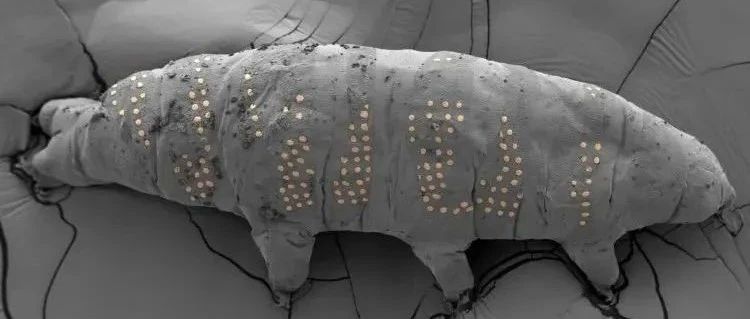
Core Viewpoint - The research from Westlake University demonstrates the innovative application of ice lithography technology to create the world's smallest "tattoo" on living tardigrades, showcasing the intersection of semiconductor manufacturing techniques and biology [4][10]. Group 1: Research Overview - The study, led by teams from Westlake University, successfully applied ice lithography to directly write micro-nano scale patterns on the surface of living tardigrades [4][8]. - The method involves covering the tardigrade with a nano ice film and using an electron beam to etch specific patterns, which remain visible even after the tardigrade is revived from its dormant state [8][10]. Group 2: Technical Details - Ice lithography allows for the creation of patterns as small as 72 nanometers, with high adhesion stability even after external stresses such as stretching and washing [8][10]. - This technique overcomes traditional micro-nano fabrication challenges, such as shape retention and toxicity, making it compatible with biological systems [8]. Group 3: Potential Applications - The high precision of this method suggests potential applications in biomedical engineering, including microbial sensors, biomimetic devices, and living micro-robots [10]. - The research team is also exploring the possibility of applying this technique to even smaller organisms, such as bacteria, for similar "tattoo" applications [10].