微纳制造技术与生物科学交叉融合

Search documents
Nature发布年度最佳科学图片,西湖大学“纹身水熊虫”入选
生物世界· 2025-12-16 04:11
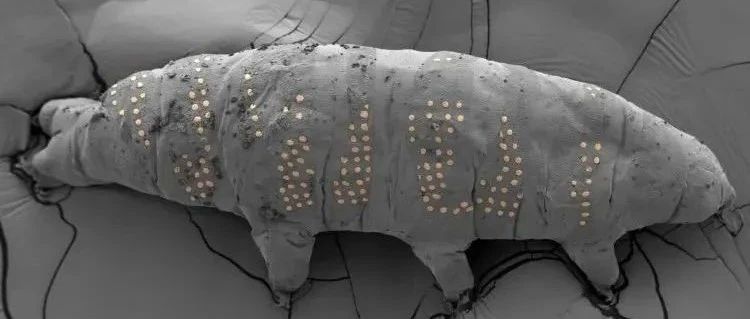
Group 1 - The article highlights the intersection of science and art through stunning scientific images selected by the journal Nature for 2025 [3] - A skydiver is captured in a silhouette against the sun's surface, showcasing the meticulous planning and execution by astronomer Andrew McCarthy and skydiver Gabriel Brown [6] - Researchers have created the world's smallest "tattoo" on a water bear using electron beams, demonstrating the potential for applications in biomedical engineering and micro-manufacturing [9][10][13] Group 2 - A lab-grown human kidney organoid has been developed, mimicking the structure of a real kidney and capable of filtering blood when implanted in mice, marking a significant step towards artificial kidneys [18] - Rare "red sprites" were photographed over New Zealand, caused by electrical discharges in the atmosphere, showcasing the beauty of natural phenomena [20] - The article discusses the recovery of Kenya's black rhinos due to conservation efforts, highlighting the challenges of safely handling these powerful animals [26] Group 3 - Scientists have built a "time machine" in Brazil to study how forest ecosystems adapt to climate change by pumping CO2 into the canopy, relevant for upcoming climate conferences [32] - The article features stunning images of celestial phenomena, including the Three Leaf Nebula and the Reef Lagoon Nebula, captured by the world's largest digital camera [34] - The impact of urban density and extreme weather on wildfire spread in California is discussed, emphasizing the increasing frequency of such disasters due to climate change [37]

登上Nature头条:西湖大学最新研究,在水熊虫身上绘制世界最小“纹身”
生物世界· 2025-05-04 00:37
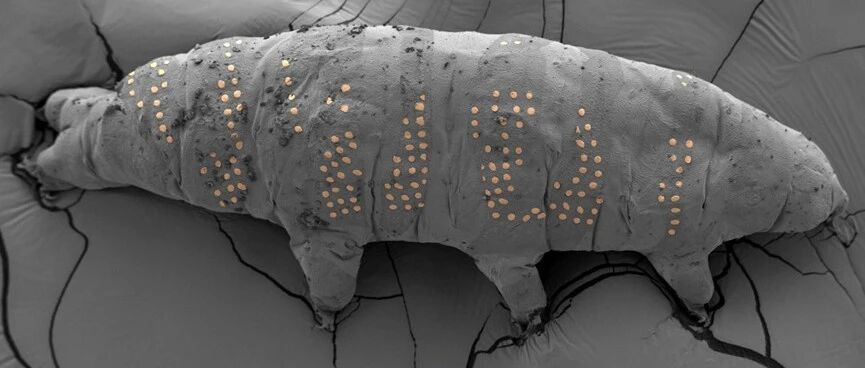
Core Viewpoint - The research from Westlake University demonstrates the innovative application of ice lithography technology to create the world's smallest "tattoo" on living tardigrades, showcasing the intersection of semiconductor manufacturing techniques and biology [4][10]. Group 1: Research Overview - The study, led by teams from Westlake University, successfully applied ice lithography to directly write micro-nano scale patterns on the surface of living tardigrades [4][8]. - The method involves covering the tardigrade with a nano ice film and using an electron beam to etch specific patterns, which remain visible even after the tardigrade is revived from its dormant state [8][10]. Group 2: Technical Details - Ice lithography allows for the creation of patterns as small as 72 nanometers, with high adhesion stability even after external stresses such as stretching and washing [8][10]. - This technique overcomes traditional micro-nano fabrication challenges, such as shape retention and toxicity, making it compatible with biological systems [8]. Group 3: Potential Applications - The high precision of this method suggests potential applications in biomedical engineering, including microbial sensors, biomimetic devices, and living micro-robots [10]. - The research team is also exploring the possibility of applying this technique to even smaller organisms, such as bacteria, for similar "tattoo" applications [10].