Charging Infrastructure

Search documents
Blink Charging Stock Falls After Revenue Miss, Weak 2026 Outlook
Benzinga· 2026-03-27 13:56
Group 1: Financial Performance - Blink reported an adjusted loss of 11 cents per share, in line with the consensus estimate [2] - Revenue for the quarter was $27.04 million, missing the consensus estimate of $28.56 million [2] - Service revenue increased 62.0% year-over-year to $14.7 million, accounting for 54% of total revenue, up from 32% in the prior-year period [2] - Product revenue declined 35.7% year-over-year to $11.04 million, while other revenue fell 25.5% to $1.33 million [2] Group 2: Cash Position and Cost Management - Blink ended the quarter with $39.6 million in total cash, cash equivalents, and marketable securities [3] - The company has reduced cash burn by 85% since the first quarter to approximately $2 million per quarter [3] Group 3: Strategic Initiatives - The company completed a $20 million public equity offering in December 2025, which strengthened liquidity and supports continued investment in its DC fast charging network [4] Group 4: Future Outlook - Blink expects fiscal-year 2026 revenue of $105.00 million to $115.00 million, compared to the consensus estimate of $128.25 million [5] Group 5: Stock Performance and Trends - Blink is trading 9.6% below its 20-day simple moving average (SMA) and 36.9% below its 100-day SMA, indicating a downward trend [6] - Shares are down 39.41% over the past 12 months and are closer to their 52-week lows than highs [6] - The RSI is at 45.03, suggesting neutral territory with easing downside momentum, while MACD indicates a bullish configuration [7] Group 6: Current Share Price - At the time of publication, Blink shares are trading 8.20% lower at 56 cents [8] - Key resistance level is at $1.00, while key support is at 50 cents [8]



春节假期充电焦虑有效缓解
Jing Ji Ri Bao· 2026-02-27 22:23
Core Insights - The number of electric vehicle (EV) users and charging activities significantly increased during the Spring Festival holiday, with a record high of 602.10 million charging instances and 14,976.75 million kilowatt-hours of charging, marking a 52.01% increase in daily charging volume compared to the previous year [2] Group 1: Technological Advancements - Continuous improvements in new energy vehicle and charging technology have led to enhanced vehicle quality, performance, and charging efficiency, with mainstream electric models now offering a range of 400 to 700 kilometers, and some high-end models exceeding 800 kilometers [3] - The adoption of 800V high-voltage platforms and the expansion of ultra-fast charging networks have made it possible to charge vehicles to 80% in just 15 minutes, alleviating range anxiety for drivers [3] Group 2: Charging Infrastructure Development - As of the end of last year, there were 71,500 electric vehicle charging guns installed at highway service areas, covering over 98% of these areas, with approximately 10,000 high-power charging facilities addressing the issues of slow charging and long wait times [3] - The charging network's optimization is crucial for long-distance travel, ensuring that electric vehicle users can meet their energy needs during peak travel times [3] Group 3: Enhanced Service and Emergency Response - The Ministry of Transport and the National Energy Administration have implemented a Spring Festival support plan that includes identifying busy charging areas and deploying mobile emergency charging equipment to meet driver needs [4] - The upgraded "e-road smooth" app provides real-time charging station information, improving resource utilization by allowing charging stations to proactively guide vehicles [4] Group 4: Future Infrastructure Goals - According to the "Three-Year Doubling Action Plan for Electric Vehicle Charging Facility Service Capacity (2025-2027)," the goal is to establish 28 million charging facilities nationwide by the end of 2027, providing over 300 million kilowatts of public charging capacity to support more than 80 million electric vehicles [5] - The large-scale deployment of new infrastructure will not only bolster the development of the new energy vehicle industry but also accelerate the construction of a new power system, enhancing the dual advantages in the electric vehicle and energy supply sectors [5]

今年将建设公共领域新能源汽车充电设施3000个
Xin Hua Wang· 2026-02-23 03:11
Core Viewpoint - The city of Hangzhou plans to construct or upgrade 3,000 public electric vehicle charging facilities this year to address the increasing demand for charging infrastructure as the number of electric vehicles rises [3][4]. Group 1: Charging Infrastructure Development - The city aims to enhance the coverage of public charging facilities by focusing on various locations such as residential areas, office zones, commercial centers, tourist spots, and service areas along highways [4]. - The construction will incorporate advanced technologies, such as high-power charging and improved amenities like lounges and vending machines, to reduce waiting times for electric vehicle owners [4]. - A notable example includes the newly built supercharging station at the Hangzhou Shide Interchange, which utilizes liquid-cooled supercharging technology to optimize charging times and includes various customer service features [4]. Group 2: Technological Integration and User Convenience - The "Hangzhou Parking" app has been launched, integrating data from 6,500 parking lots and 51,000 charging stations, allowing users to easily find available charging spots and compare prices [5]. - The app's "one-click find charging" feature is expected to be fully operational across the city by the second quarter of this year, enhancing user convenience [5]. Group 3: Future Planning and Expansion - By the end of 2025, Hangzhou aims to have a total of 554,000 charging facilities, leading the province and ranking among major cities nationwide [6]. - The city has already established 40,38 public charging facilities last year, exceeding its target, with a significant number located in rural areas [6]. - A specialized plan for electric vehicle charging facilities has been developed, focusing on the integration of transportation, parking, and electricity planning to support the growth of the electric vehicle industry [7].
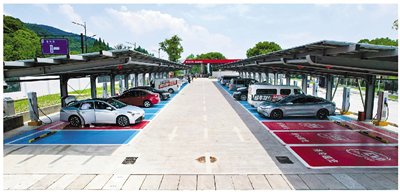
Allego and HORNBACH to create at least 160 fast-charging stations at 20 DIY stores in 2026
Globenewswire· 2025-09-23 10:00
Core Insights - Allego and HORNBACH are collaborating to establish 20 fast-charging hubs in the Netherlands, resulting in at least 160 charging stations with speeds up to 150 kW, addressing the increasing demand for electric vehicle charging options [1][4]. Group 1: Partnership Details - The partnership aims to provide convenient charging solutions for customers while they shop at HORNBACH stores, enhancing the shopping experience for both residential and professional customers [2][3]. - The rollout of the charging hubs is set to begin in Q1 2026, with all locations expected to be operational by Q4 2026 [1]. Group 2: Market Context - The collaboration responds to the growing popularity of electric vehicles and the challenges posed by grid congestion, which is a significant barrier to the expansion of charging infrastructure [1][4]. - Allego's approach includes integrating battery storage and intelligent load balancing to manage grid congestion, allowing for high charging speeds even in areas with limited grid capacity [4]. Group 3: Company Background - Allego is a leading Charging Point Operator in Europe, focusing on public fast charging, with over 10,000 AC charging points and 57 fast-charging hubs in the Netherlands [6]. - HORNBACH is a well-established DIY store chain with a history of over 140 years, operating 18 stores in the Netherlands and recognized as the Best DIY Store in the country for 2024 [7].

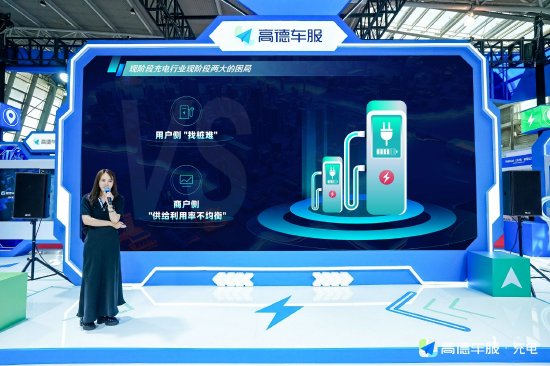
高德发布充电桩“上图”数字化解决方案,与华为数字能源达成生态合作协议
Xin Lang Ke Ji· 2025-05-15 10:28
Core Insights - Gaode Map's subsidiary, Gaode Chefu, launched two new products, "e Station Tong" and "Zhuang Dian Tong," aimed at providing digital operation solutions for all types of charging pile operators, contributing to a nationwide digital charging ecosystem [2][3] - As of the end of 2024, the number of new energy vehicles in China is expected to reach 31.4 million, with a total of 12.818 million charging piles built, achieving an optimized vehicle-to-pile ratio of 2.45:1 [2] - Challenges such as uneven distribution of charging piles, fragmented operators, and information gaps between users and charging resources persist, leading to difficulties in locating charging stations [2] Product Details - "e Station Tong" is a standardized service interface product for brand charging pile operators, facilitating direct connectivity between operators and Gaode Map [2] - "Zhuang Dian Tong" is designed for charging pile operators, allowing them to integrate with Gaode Map without the need to build their own platform [2] Strategic Partnerships - During the exhibition, Gaode Map signed an ecological cooperation agreement with Huawei Digital Energy, with Huawei's supercharging services becoming one of the first digital partners of "Zhuang Dian Tong" [3] - The charging ecosystem of Gaode Chefu now covers over 30 million new energy vehicle owners, with nearly 300,000 online public stations and a public charging station coverage rate of 98.5% [3] - More than 300 brand operators have joined Gaode Map, with 12 brands, including Telecharge and Star Charging, becoming digital partners of "Zhuang Dian Tong" to promote the digitalization of the charging ecosystem [3]