
新能源汽车充电设施

Search documents
交通运输部:春节高速服务区新能源车日均充电超90万次
2 1 Shi Ji Jing Ji Bao Dao· 2026-02-28 04:08
Core Insights - The penetration rate of new energy vehicles (NEVs) is increasing, leading to a growing demand for charging infrastructure, especially during peak travel periods like the Spring Festival [1][2] - Despite a 34% increase in daily traffic of NEVs on national highways compared to the 2025 Spring Festival, the number of particularly busy charging service areas has decreased by 48% [1] - As of the end of January, there are 74,600 charging facilities (charging guns) built in highway service areas across the country, with approximately 17,000 mobile charging facilities added during the Spring Festival [1] Charging Infrastructure Development - By the end of January 2026, the total number of electric vehicle charging infrastructure (guns) in China reached 20.698 million, a year-on-year increase of 49.6% [1] - Public charging facilities account for 4.801 million guns, with a 31.2% year-on-year growth, and a total rated power of 226 million kilowatts [1] - Private charging facilities reached 15.897 million guns, growing by 56.1%, with a total installed capacity of 138 million kilovolt-amperes [1] Regional Initiatives - Various regions are enhancing charging guarantees to meet the concentrated charging demand during the Spring Festival, with Hunan increasing the layout of charging facilities and deploying intelligent mobile charging robots [2] - Anhui has achieved full coverage of charging and battery swap facilities at 131 service areas through a combination of high-power fast charging and smart scheduling [2] - Henan has implemented full coverage of charging facilities at 205 highway service areas, with 464 supercharging piles installed in high-traffic areas for rapid charging capabilities [2] Future Plans - The Ministry of Transport plans to accelerate the construction of charging facilities in highway service areas, focusing on busy areas and increasing the proportion of high-power charging facilities [2] - The strategy includes real-time monitoring and dynamic adjustments to improve charging service capabilities and reduce waiting times for vehicle owners during peak periods [2]
回乡三年,“候鸟人群”见证湘中乡镇充电站从1到9|新春走基层
Di Yi Cai Jing Zi Xun· 2026-02-23 08:17
Core Insights - The rapid expansion of electric vehicle charging infrastructure in rural areas is significantly improving the charging experience for users, particularly during peak travel times like the Spring Festival [1][4][6] Group 1: Charging Infrastructure Growth - As of December 2025, China's electric vehicle charging facilities exceeded 20 million, reaching 20.092 million, with public charging facilities at 4.717 million and private facilities at 15.375 million [2] - The annual increase in charging infrastructure for 2025 was 7.274 million, representing a year-on-year growth of 72.3% [2] - The expansion of the charging network has accelerated dramatically, with the time taken to grow from 1 million to 2 million facilities reduced to just 18 months [2] Group 2: Structural Improvements - The distribution of charging facilities is becoming more balanced, with the share of public charging stations in top regions decreasing from 71.3% in 2022 to 65.7% in 2025, indicating a more equitable allocation of resources [2] - By the end of 2025, 19 provinces in China achieved "full coverage" of charging facilities in rural areas [2][3] Group 3: Policy and Market Drivers - The Hunan provincial government has integrated charging station construction into its "village connectivity project," aiming for comprehensive coverage of charging stations in rural areas [3] - The combination of policy support and market demand is fundamentally enhancing the charging experience for travelers during the Spring Festival [4] Group 4: User Experience - During the Spring Festival, the total charging volume on highways reached 15.2805 million kilowatt-hours, a year-on-year increase of 116.32%, with an average daily charging volume of 11.8008 million kilowatt-hours, up 63.05% [4] - Reports indicate that charging wait times have significantly decreased, with most users experiencing immediate access to charging stations [4][6] Group 5: Future Projections - The National Energy Administration plans to implement a "three-year doubling" action for charging facility service capacity, aiming to establish 28 million charging facilities by the end of 2027, which is expected to drive over 200 billion yuan in investment [6]

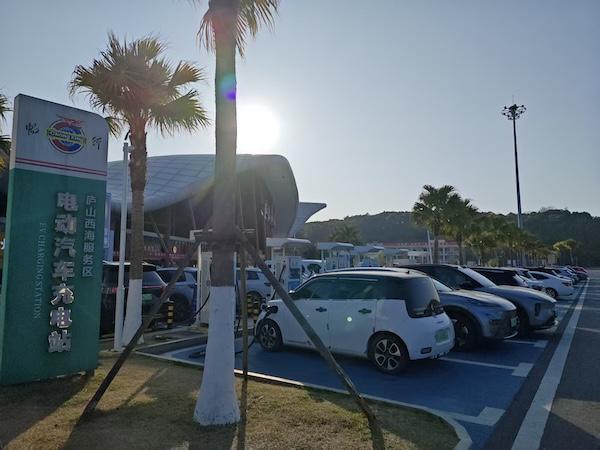
今年将建设公共领域新能源汽车充电设施3000个
Xin Hua Wang· 2026-02-23 03:11
Core Viewpoint - The city of Hangzhou plans to construct or upgrade 3,000 public electric vehicle charging facilities this year to address the increasing demand for charging infrastructure as the number of electric vehicles rises [3][4]. Group 1: Charging Infrastructure Development - The city aims to enhance the coverage of public charging facilities by focusing on various locations such as residential areas, office zones, commercial centers, tourist spots, and service areas along highways [4]. - The construction will incorporate advanced technologies, such as high-power charging and improved amenities like lounges and vending machines, to reduce waiting times for electric vehicle owners [4]. - A notable example includes the newly built supercharging station at the Hangzhou Shide Interchange, which utilizes liquid-cooled supercharging technology to optimize charging times and includes various customer service features [4]. Group 2: Technological Integration and User Convenience - The "Hangzhou Parking" app has been launched, integrating data from 6,500 parking lots and 51,000 charging stations, allowing users to easily find available charging spots and compare prices [5]. - The app's "one-click find charging" feature is expected to be fully operational across the city by the second quarter of this year, enhancing user convenience [5]. Group 3: Future Planning and Expansion - By the end of 2025, Hangzhou aims to have a total of 554,000 charging facilities, leading the province and ranking among major cities nationwide [6]. - The city has already established 40,38 public charging facilities last year, exceeding its target, with a significant number located in rural areas [6]. - A specialized plan for electric vehicle charging facilities has been developed, focusing on the integration of transportation, parking, and electricity planning to support the growth of the electric vehicle industry [7].
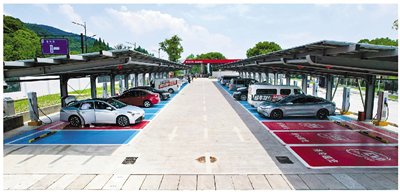
政策问答·回应关切|城际出行充电如何更便捷高效
Ren Min Ri Bao· 2026-02-03 06:19
Core Insights - The article discusses the measures being taken to improve charging services for electric vehicles (EVs) on highways in China, particularly during peak travel periods like the Spring Festival [1][2]. Group 1: Charging Infrastructure Development - By the end of 2025, China aims to have a total of 71,500 electric vehicle charging facilities in highway service areas, with 20,000 new facilities added in 2025 alone [1]. - Over 98% of highway service areas have established charging facilities, achieving near-complete coverage except for a few high-altitude areas [1]. - The Ministry of Transport has issued a notification to double the service capacity of charging facilities in highway service areas by 2027, focusing on increasing the number of fast and ultra-fast charging stations [2]. Group 2: Enhancements in Charging Facilities - The new charging facilities will include over 40,000 units with a capacity of 60 kW or more, combining both fast and ultra-fast charging options [2]. - At least 25% of newly constructed charging facilities will be high-power charging stations, with existing facilities being upgraded to include high-power options [2]. - Approximately 10,000 high-power charging facilities are expected to be established in highway service areas by the end of 2025 [2]. Group 3: Power Supply and Management - There is a focus on enhancing power supply capacity for charging networks, ensuring that new and existing service areas can meet the electricity demands of charging facilities [3]. - The integration of intelligent operation and maintenance platforms for charging facilities is being prioritized to improve monitoring and fault handling capabilities [2].
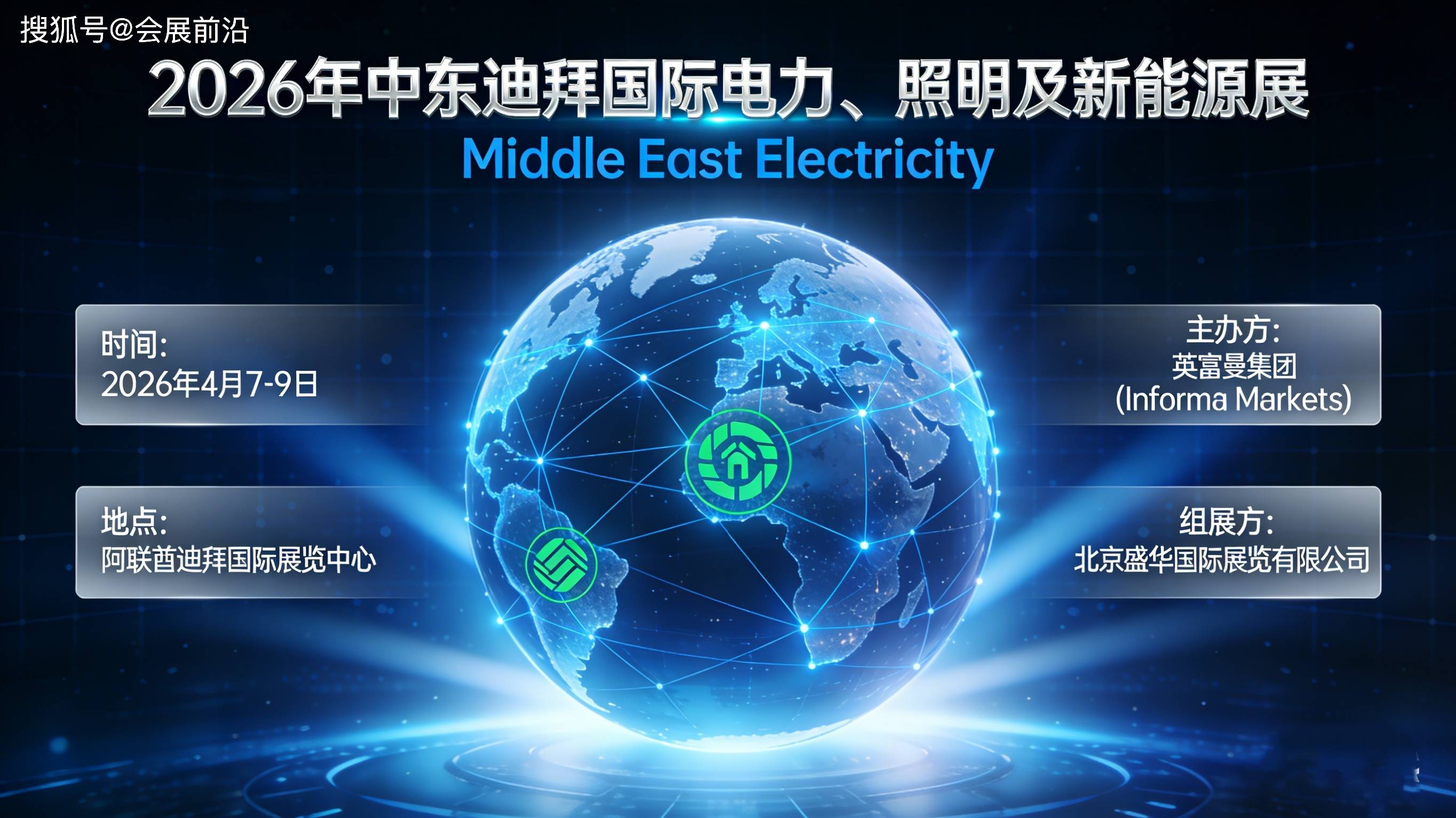
Welcome to《2026年中东迪拜国际电力|能源展》官方网站
Sou Hu Cai Jing· 2025-12-13 12:20
Group 1 - The Middle East Electricity 2026 exhibition is a premier event in the region for the power, lighting, and renewable energy sectors, organized by Beijing Shenghua International Exhibition Co., Ltd. [1] - The event will take place from April 7 to 9, 2026, at the Dubai World Trade Centre in the UAE [1]. - The exhibition covers various segments including power generation equipment, transmission and distribution equipment, power automation systems, indoor and outdoor lighting fixtures, smart lighting control systems, and renewable energy technologies such as solar, wind, and hydropower [4]. Group 2 - The Middle East has experienced rapid economic growth and urbanization, leading to increased demands for stable and reliable power supply [6]. - Countries in the region are investing heavily in renewable energy to address climate change and achieve sustainable development goals, which will drive significant demand for power equipment, lighting products, and renewable technologies in the coming years [6]. - China possesses advanced technology, a mature industrial system, and a wide range of products in the power, lighting, and renewable energy sectors, making its offerings competitive in the Middle Eastern market [8].
北京房山:以案说法,为充电桩依法安“家”
Ren Min Wang· 2025-10-17 00:55
Core Viewpoint - The Beijing Fangshan District People's Court held a press conference to report on the management of disputes related to the construction of electric vehicle charging facilities in rural areas, highlighting three typical cases and proposing actionable recommendations for improving the management of these facilities [1]. Group 1: Court Proceedings and Recommendations - The court has conducted extensive grassroots research and solicited suggestions from various representatives and social needs to propose feasible recommendations for managing electric vehicle charging facilities [1]. - The court has sent judicial suggestions to villages and towns with high incidence of related issues, emphasizing the need for improved management and construction of charging facilities [1]. - In collaboration with relevant departments, the court has developed management documents, including a template for personal electric vehicle charging facility installation and usage management rules, a flowchart for installation processes, and a commitment letter [1]. Group 2: Case Highlights - The three cases reported involved disputes arising from non-compliance with charging station installation standards, occupation of public parking spaces, and illegal parking for charging [1]. - The court emphasized that property rights holders should handle neighborly relations based on principles of productivity, convenience, mutual assistance, and fairness, urging applicants for charging stations to exercise their rights within reasonable and legal limits [1]. - It was noted that neighboring parties should tolerate minor inconveniences in the absence of substantial harm [1].
2024年度新能源汽车充电基础设施奖补资金开始申报
Zheng Zhou Ri Bao· 2025-08-14 00:40
Core Viewpoint - Zhengzhou has initiated the application process for the 2024 annual subsidy for new energy vehicle charging infrastructure, covering various sectors including public services and logistics [1] Group 1: Subsidy Eligibility and Conditions - The subsidy targets charging facilities built and operational between January 1, 2024, and December 31, 2024, that connect to the provincial smart service platform [1] - Public charging facilities must have a total installed capacity of over 600 kW or consist of more than 20 charging piles to qualify for construction subsidies [1] - For operational subsidies, public fast charging facilities must maintain an average online rate of at least 90%, while those at highway service areas and along major roads must achieve a 95% average online rate [1] Group 2: Subsidy Standards - For public service charging facilities, a construction subsidy of 20% of the total investment in main equipment (charging piles, transformers, switch cabinets, cables) is provided [2] - Other public charging facilities receive a construction subsidy of 10% of the total investment in main equipment [2] - Operational subsidies for qualifying public fast charging facilities are set at 0.03 yuan per kWh, with a cap of 100,000 kWh per year per pile; for facilities at highway service areas, the rate is 0.1 yuan per kWh with the same cap [2] Group 3: Application and Review Process - Companies applying for construction subsidies must submit applications through the provincial charging smart service platform, with initial document reviews conducted by county-level authorities [3] - Approved applications must be submitted by August 25, with final reviews and reports due by September 15 [3] - A provincial joint working group will verify the submitted materials and may conduct on-site checks if necessary [3]