Computer Graphics

Search documents
3DGS论文原理与论文源码学习,尽量无痛版
自动驾驶之心· 2025-12-06 03:04
Core Insights - The article discusses the development and application of 3D Gaussian Splatting (3DGS) technology, emphasizing its significance in the field of autonomous driving and 3D reconstruction [3][9]. Group 1: Course Overview - The course titled "3DGS Theory and Algorithm Practical Tutorial" aims to provide a comprehensive learning roadmap for 3DGS, covering both theoretical and practical aspects [3][6]. - The course is designed for individuals interested in entering the 3DGS field, focusing on essential concepts such as point cloud processing and deep learning [3][6]. Group 2: Course Structure - Chapter 1 introduces foundational knowledge in computer graphics, including implicit and explicit representations of 3D space, rendering pipelines, and tools like SuperSplat and COLMAP [6][7]. - Chapter 2 delves into the principles and algorithms of 3DGS, covering dynamic reconstruction and surface reconstruction, with practical applications using the NVIDIA open-source 3DGRUT framework [7][8]. - Chapter 3 focuses on the application of 3DGS in autonomous driving simulations, highlighting key works and tools like DriveStudio for practical learning [8][9]. - Chapter 4 discusses important research directions in 3DGS, including COLMAP extensions and depth estimation, along with insights on their industrial and academic relevance [9][10]. - Chapter 5 covers Feed-Forward 3DGS, detailing its development and algorithmic principles, including recent works like AnySplat and WorldSplat [10]. - Chapter 6 provides a platform for Q&A and discussions on industry demands and challenges related to 3DGS [11]. Group 3: Target Audience and Requirements - The course is aimed at individuals with a background in computer graphics, visual reconstruction, and familiarity with technologies like NeRF and 3DGS [15]. - Participants are expected to have a basic understanding of probability theory, linear algebra, and proficiency in Python and PyTorch [15].

打破显存墙:谢赛宁团队提出CLM,单卡RTX 4090「撬动」1亿高斯点
机器之心· 2025-11-11 08:40
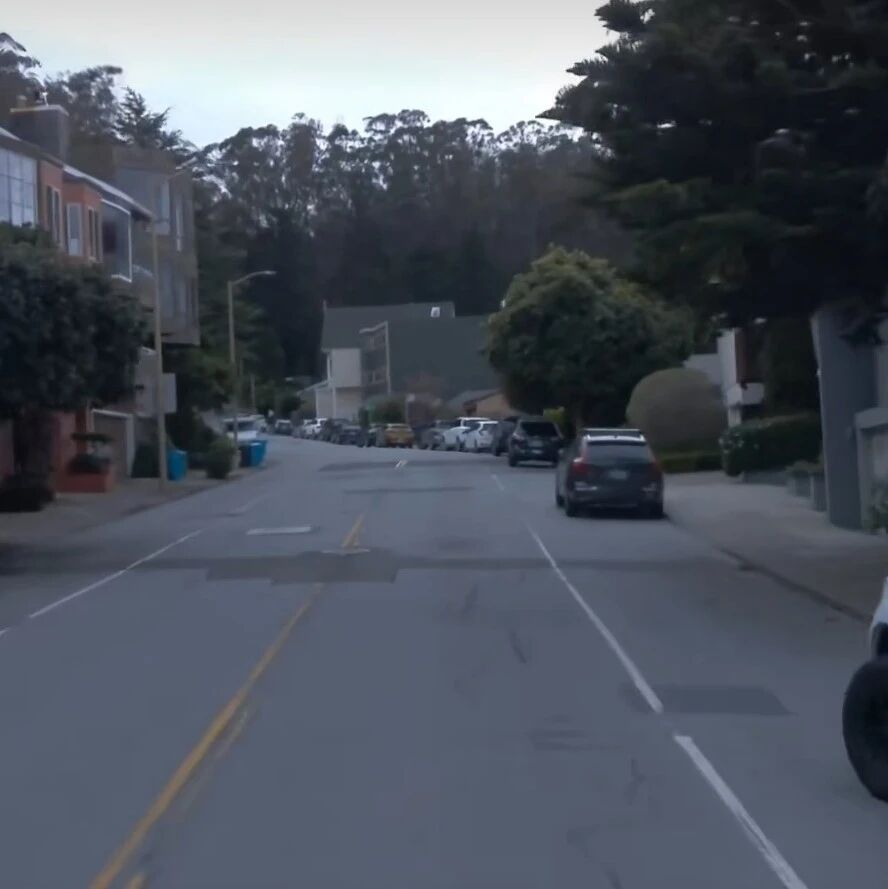
Core Insights - 3D Gaussian Splatting (3DGS) is an emerging method for novel view synthesis that utilizes a set of images with poses to iteratively train a scene representation composed of numerous anisotropic 3D Gaussian bodies, capturing the appearance and geometry of the scene [2][4] - The CLM system proposed by the team allows 3DGS to render large scenes using a single consumer-grade GPU, such as the RTX 4090, by addressing GPU memory limitations [6][8] Group 1: 3DGS Overview - 3DGS has shown revolutionary application potential in fields such as 3D modeling, digital twins, visual effects (VFX), VR/AR, and robot vision reconstruction (SLAM) [5] - The quality of images rendered using 3DGS depends on the fidelity of the trained scene representation, with larger and more complex scenes requiring more Gaussian bodies, leading to increased memory usage [5] Group 2: CLM System Design - CLM is designed based on the insight that the computation of 3DGS is inherently sparse, allowing only a small subset of Gaussian bodies to be accessed during each training iteration [8][20] - The system employs a novel unloading strategy that minimizes performance overhead and scales to large scenes by dynamically loading only the necessary Gaussian bodies into GPU memory while offloading the rest to CPU memory [8][11] Group 3: Performance and Efficiency - The implementation of CLM can render a large scene requiring 102 million Gaussian bodies on a single RTX 4090 while achieving top-tier reconstruction quality [8] - Each view typically accesses only 0.39% of the Gaussian points, with a maximum of 1.06% for any single view, highlighting the sparse nature of the data [23] Group 4: Optimization Techniques - The team utilized several unique characteristics of 3DGS to significantly reduce communication overhead associated with unloading, including pre-computing the accessed Gaussian sets for each view and leveraging spatial locality to optimize data transfer between CPU and GPU [12][17] - The microbatch scheduling optimization allows for overlapping access patterns between consecutive batches, enhancing cache hit rates and reducing redundant data transfers [24][25] Group 5: Results and Impact - CLM enhances the training capacity of 3DGS models by up to 6.1 times compared to pure GPU training baselines, enabling the training of larger models that improve scene reconstruction accuracy while lowering communication and unloading overhead [27]

7DGS 炸场:一秒点燃动态世界!真实感实时渲染首次“七维全开”
自动驾驶之心· 2025-08-23 16:03
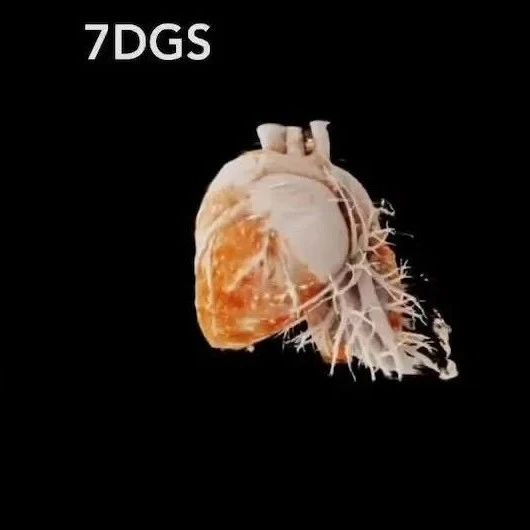
Core Insights - The article introduces 7D Gaussian Splatting (7DGS), a novel framework for real-time rendering of dynamic scenes that unifies spatial, temporal, and angular dimensions into a single 7D Gaussian representation [2][44] - The method addresses the challenges of modeling complex visual effects related to perspective, time dynamics, and spatial geometry, which are crucial for applications in virtual reality, augmented reality, and digital twins [3][44] Technical Contributions - 7DGS models scene elements as 7D Gaussians, capturing the interdependencies between geometry, dynamics, and appearance, allowing for accurate modeling of phenomena like moving specular highlights and anisotropic reflections [3][10] - The framework includes an efficient conditional slicing mechanism that projects the high-dimensional Gaussian representation into a format compatible with existing real-time rendering processes, ensuring both efficiency and fidelity [10][38] - Experimental results demonstrate that 7DGS outperforms previous methods, achieving a peak signal-to-noise ratio (PSNR) improvement of up to 7.36 dB while maintaining rendering speeds exceeding 400 frames per second (FPS) [10][44] Methodology - The 7D Gaussian representation is defined to encode spatial, temporal, and directional attributes, allowing for a comprehensive modeling of complex dependencies across these dimensions [18][19] - The article details a conditional slicing mechanism that enables efficient integration of temporal dynamics and perspective effects into traditional 3D rendering workflows [23][31] - An adaptive Gaussian refinement technique is introduced to dynamically update Gaussian parameters, enhancing the representation of complex dynamic behaviors such as non-rigid deformations [32][36] Experimental Evaluation - The framework was evaluated across multiple datasets, including heart scans and dynamic cloud simulations, with metrics such as PSNR, structural similarity index (SSIM), and rendering speed reported [39][41] - Results indicate that 7DGS achieves superior image quality and efficiency compared to existing techniques, reinforcing its potential for advancing dynamic scene rendering in the industry [44]
SIGGRAPH 2025奖项出炉:上科大、厦大入选最佳论文
机器之心· 2025-06-12 03:23
Core Points - The SIGGRAPH conference, organized by ACM SIGGRAPH since 1974, is a leading event in the field of graphics and imaging technology, covering various areas such as animation, simulation, rendering, and machine learning [2][3]. Group 1: Best Paper Awards - This year, five best papers were awarded, with significant contributions from domestic institutions including Shanghai University of Science and Technology, Huazhong University of Science and Technology, Xiamen University, and Tsinghua University [5]. - Paper 1: "Shape Space Spectra" focuses on the feature analysis of differential operators and introduces a shape-space feature analysis method applicable in various fields such as sound synthesis and elastic dynamics simulation [6][8]. - Paper 2: "CAST: Component-Aligned 3D Scene Reconstruction From an RGB Image" presents a novel method for 3D scene reconstruction from a single RGB image, addressing challenges in quality and domain limitations [9][13]. - Paper 3: "TokenVerse: Versatile Multi-Concept Personalization in Token Modulation Space" introduces a method for multi-concept personalization using pre-trained text-to-image diffusion models, allowing for seamless integration of complex visual elements [18][21]. - Paper 4 discusses variance reduction techniques for Monte Carlo integration, introducing a ratio control variable to improve estimation accuracy [25]. - Paper 5: "Transformer IMU Calibrator" presents a dynamic calibration method for inertial motion capture systems, breaking the static assumption in IMU calibration and expanding application scenarios [26]. Group 2: Honorable Mentions - Several papers received honorable mentions, including works from institutions like the University of California, San Diego, and Google, focusing on various advancements in graphics and imaging technology [27][28]. - Notable mentions include "Lifting the Winding Number" and "A Monte Carlo Rendering Framework for Simulating Optical Heterodyne Detection," showcasing innovative approaches in their respective fields [30]. Group 3: Test of Time Award - The Test of Time Award was established to recognize impactful research from 2013-2015, with four papers selected for their significant contributions to the industry [32]. - Awarded papers include "Unified Particle Physics for Real-Time Applications," which introduced a unified dynamics framework for real-time visual effects, and "Learning Visual Similarity for Product Design With Convolutional Neural Networks," which helped shape future research directions in computer graphics [33][34].