Drug Makers

Search documents
3 Drug Stocks to Buy at a Discount
Yahoo Finance· 2025-12-27 21:48
Core Insights - The pharmaceutical industry is characterized by rapid changes and significant developments, exemplified by Novo Nordisk's introduction of GLP-1 weight loss drugs and Eli Lilly's competitive offerings [1][3] - Novo Nordisk has received approval for a GLP-1 pill, expected to launch in early 2026, which could restore its leadership position in the market [4][6] - The market dynamics are influenced by the performance of established companies like Bristol Myers Squibb, Merck, and Pfizer, which may present contrarian investment opportunities [2][7] Company Developments - Novo Nordisk's stock experienced a surge following the approval of its GLP-1 pill, although it remains over 50% below its peak value [6] - Eli Lilly has taken the lead in the GLP-1 market, showcasing the competitive nature of the pharmaceutical sector [7] - The approval of the GLP-1 pill by Novo Nordisk could significantly impact the weight loss drug market and the company's market position [3][4] Market Trends - The pharmaceutical sector is marked by innovation and competition, with companies frequently shifting in and out of favor based on drug portfolios and patent timelines [5] - Pfizer's high dividend yield of 6.8% is seen as risky due to its payout ratio exceeding 100%, indicating caution for income investors [7] - The evolving landscape of GLP-1 drugs highlights the potential for significant shifts in market leadership among pharmaceutical companies [1][6]

Nikkei ends at three-week low on profit-taking as second half of fiscal year begins
The Economic Times· 2025-10-01 08:45
Market Overview - The Nikkei share average closed at 44,550.85, down 0.85%, marking its lowest close since September 11, and has lost for four consecutive sessions [1][5] - The broader Topix index fell 1.37% to 3,094.74 [1][5] - A significant sell-off occurred as investors took profits from the recent rally that had boosted the Nikkei [1][2] Company Performance - Tokyo Electron, a chip-making equipment manufacturer, experienced a notable surge of 27.6% in September, its largest monthly gain since February 2024, contributing significantly to the Nikkei's record high last month [3][5] - On the day of the report, Tokyo Electron's stock fell by 2.09%, while SoftBank Group, a technology start-up investor, declined by 2.38%, becoming the largest detractors from the Nikkei [4][5] - Advantest, a chip-testing equipment maker, saw a slight increase of 0.17%, following overnight gains in the U.S. chip index [5] Sector Performance - The Tokyo Stock Exchange's 33 industry sub-indexes saw declines, with the bank index dropping 3.07%, making it the worst-performing sector [5] - Major banks such as Mitsubishi UFJ Financial Group and Mizuho Financial Group fell by 3.17% and 3.83%, respectively [5] - The real estate firm index decreased by 2.83%, while drug manufacturers rose by 0.95%, with Otsuka Holdings and Chugai Pharmaceutical increasing by 5.22% and 3.86%, respectively [5] - Overall, 91% of the 1,600 stocks trading on the TSE's prime market fell, while only 7% rose [5]




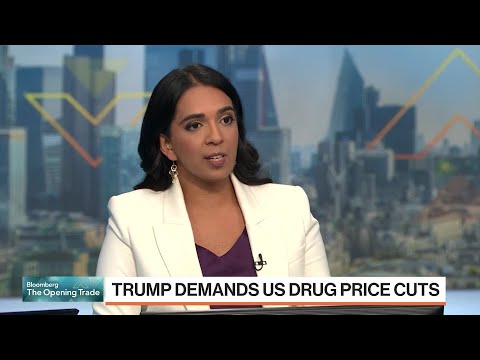
Swiss Pharmaceuticals React to Trump's 39% Tariffs
Bloomberg Television· 2025-08-04 13:32
Regulatory & Policy Impacts - Swiss pharmaceuticals face uncertainty due to tariffs sentiment and drug pricing policies [1] - A 39% impact is not immediate, providing a short stay of execution, but manufacturing relocation to the US is anticipated to appease US sentiment [2] - Swiss pharmaceuticals contribute significantly to the trade deficit between Switzerland and the EU, requiring negotiation [2] - The most favored nation drug pricing threat impacts Swiss pharmaceutical companies [3] - Previous attempts at most favored nation drug pricing were stopped by courts due to procedural technicalities [4] - Drug makers are keen to negotiate direct-to-patient drug pricing proposals, potentially benefiting both drugmakers and the US administration [5] Pricing & Market Strategy - The ability to cut drug prices depends on the scope of the cuts, with Medicaid being more manageable than across-the-board cuts [6] - The US administration aims for Europeans to pay more for drugs, seeking to maintain pharmaceutical company profits [7] - Relocating consumer base is a potential strategy, but could negatively impact patients' access to drugs [8] - Pharmaceutical companies may avoid launching drugs in Europe if forced to raise prices unsustainably, limiting patient access to innovative medicines [9]