Electric Aviation

Search documents
Vertical Aerospace secures financing package of up to $850 million
Reuters· 2026-03-30 14:31
Group 1 - Vertical Aerospace has secured a financing package of up to $850 million, leading to a more than 4% increase in its US-listed shares [1] - The company raised $50 million in equity capital and anticipates an additional $30 million soon, aiming for approximately $160 million in working capital to fund operations through 2026 [2] - The financing package includes access to up to $800 million in capital through 2027 and beyond, intended to support flight testing, certification, and initial production of its Valo aircraft [3] Group 2 - The financing is part of a broader industry trend where air taxi startups are investing heavily to secure regulatory approvals and commercialize eVTOL aircraft, addressing the demand for faster and more sustainable urban transportation [4] - Vertical Aerospace has partnered with Mudrick Capital Management and Yorkville Advisors Global to assemble the financing package, with Mudrick extending Vertical's convertible debt and Yorkville providing about $250 million in convertible preferred shares [5]



Why Vertical Aerospace (EVTL) Is Expanding Its Valo Supplier Network Ahead of Certification
Yahoo Finance· 2026-03-29 20:52
Core Insights - Vertical Aerospace Ltd. (NYSE:EVTL) is recognized as a penny stock with the potential for a significant rise, estimated at 1000 percent [1] - The company has selected Isoclima S.p.A. as a strategic supplier for its Valo aircraft, enhancing its supplier network [1][2] - Vertical Aerospace is focused on certification and scaling production of its Valo aircraft, with an expected net cash outflow of approximately $195 million over the next 12 months [3] Group 1 - Vertical Aerospace has partnered with Isoclima to provide a full transparency suite for the Valo aircraft, which includes pilot and passenger canopies and glazing systems [1] - The partnership aims to ensure supply stability and technical continuity as the Valo aircraft progresses through certification and production [2] - The Valo aircraft is a piloted, four-passenger eVTOL, with around 1,500 pre-orders across four continents [4] Group 2 - Transition testing for the Valo aircraft is currently underway, with a focus on certification and production scaling [3] - The company has operationalized its battery pilot production line, indicating progress in its manufacturing capabilities [3] - Vertical Aerospace's investment in flight testing, certification, and manufacturing is expected to lead to significant cash outflows in the coming year [3]
Vertical Aerospace .(EVTL) - 2025 Q4 - Earnings Call Presentation
2026-03-24 12:30
2025 Full Year Earnings Confidential. ©Vertical Aerospace Group Ltd 2026. All rights reserved. Disclaimer The following presentation has been prepared by Vertical Aerospace Ltd. ("Vertical," "Company," "we" or "our"). This presentation may not be reproduced or distributed, in whole or in part. No Representations and Warranties The information contained in this presentation is derived from various internal and external sources, is preliminary in nature and is subject to change, and any such changes may be ma ...
Surf Air Mobility Q4 Earnings Call Highlights
Yahoo Finance· 2026-03-13 04:07
Core Insights - Surf Air Mobility is transitioning from a stabilization phase to a growth-focused strategy in 2026, with an emphasis on improving operational performance and expanding its on-demand charter segment [4][7]. Financial Performance - In Q4 2025, the company reported revenue of $26.4 million, which was within the guidance range of $25.5 million to $27.5 million, but represented a 9% sequential decline from Q3 due to a 16% decrease in scheduled service revenue [8][9]. - For the full year 2025, revenue totaled $106.6 million, down 11% from 2024, primarily due to a 15% decline in scheduled service revenue, partially offset by a 3% increase in on-demand charter revenue [10]. - The full-year Adjusted EBITDA loss was $41.7 million, an improvement of 5% compared to a $44.1 million loss in 2024, attributed to exiting unprofitable routes and better on-demand charter margins [11]. Growth Initiatives - The company has raised its 2026 revenue guidance to reflect a growth of 20% to 30% year-over-year, excluding early-stage electric aircraft contributions [2][7]. - Surf Air plans to begin the commercial rollout of its SurfOS platform in 2026, starting with BrokerOS and then OperatorOS, with most software revenue expected in the second half of the year [6][16]. Strategic Partnerships - Surf Air has entered a partnership with BETA Technologies, placing a firm order for 25 electric aircraft with an option for 75 more, targeting demonstration flights in 2026 [5][19]. - The company has extended its partnership with Palantir through a five-year exclusive agreement to develop software solutions for Part 135 stakeholders [17]. Operational Improvements - The company achieved controllable completion and on-time metrics at all-time highs since going public, with a controllable completion factor of 98% and on-time departures of 72% in Q4 2025 [12][19]. - The on-demand charter segment is positioned as a growth driver, with revenue growth in 2025 attributed to better sourcing discipline and a shift towards longer-haul trips [13][14]. Future Outlook - For 2026, the company is guiding revenue between $128 million to $138 million and an Adjusted EBITDA loss of $40 million to $50 million, reflecting investments in SurfOS and other strategic initiatives [25].

BETA Technologies, Inc. (NYSE:BETA) - A Leader in Electric Aviation
Financial Modeling Prep· 2026-03-09 00:00
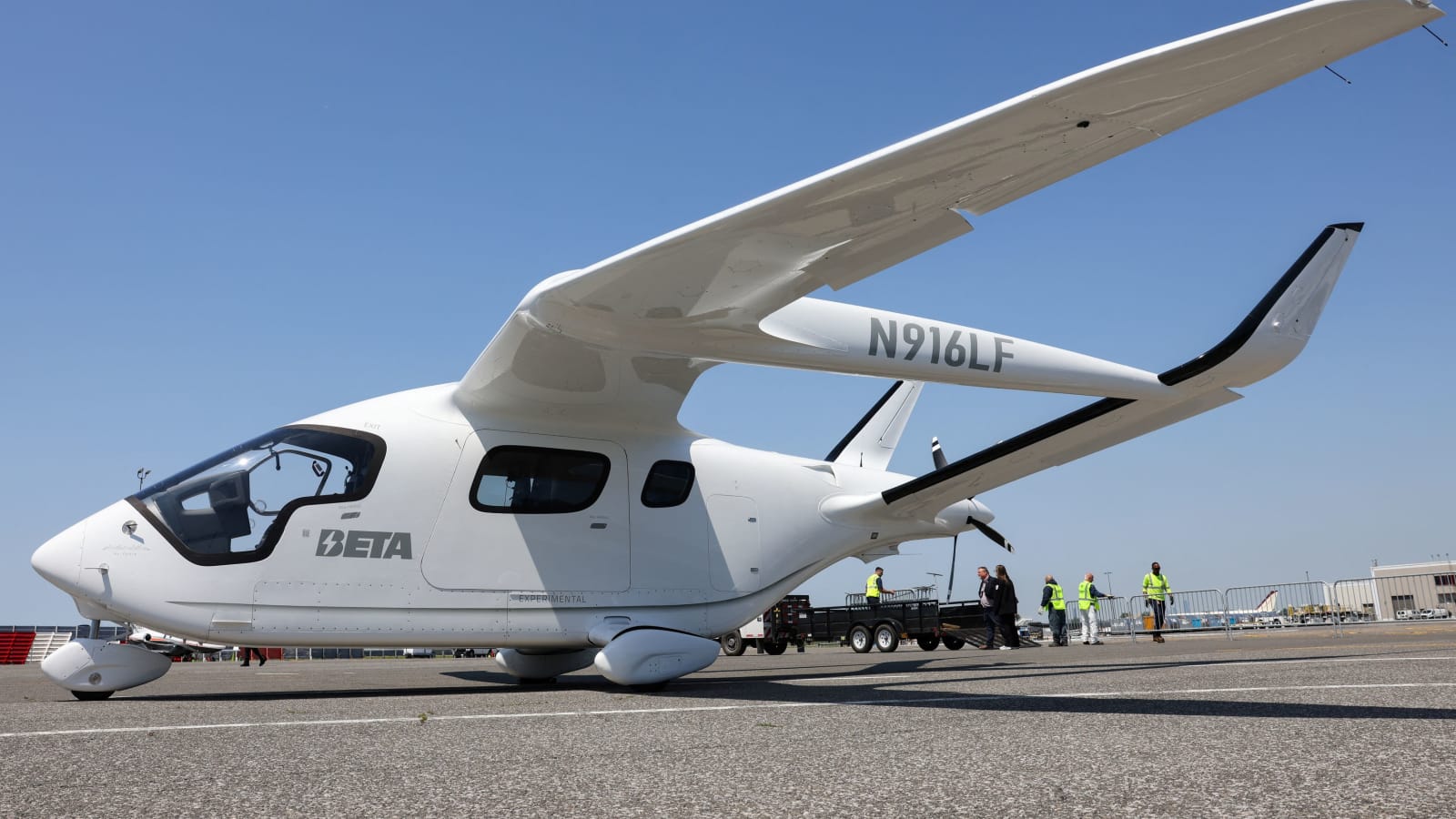
Core Viewpoint - BETA Technologies, Inc. is establishing itself as a significant player in the electric aviation industry through its development of electric aircraft and propulsion systems, targeting various sectors such as cargo, logistics, medical operations, and passenger services [1] Price Target Adjustments - The consensus price target for BETA's stock has been revised from $35.86 to $24, reflecting a more conservative outlook due to changing market conditions or company performance [2][5] - Goldman Sachs analyst Anthony Valentini has set a higher price target of $47 for BETA, indicating strong confidence in the company's future growth prospects [3][5] Strategic Partnerships - BETA's collaborations with major industry players like Amazon and GE Aerospace enhance its growth potential in the electric aviation sector [4][5] - The recent increase in BETA's stock price, following Amazon's stake disclosure, may not align with fundamental valuations, yet these partnerships are crucial for the company's growth trajectory [4]
'Future forward now': Uber, Joby Aviation team up for air taxi service
Youtube· 2026-02-27 09:00
Core Viewpoint - Uber is collaborating with Joby Aviation to launch Uber Air, allowing users to book electric air taxis through the Uber app, starting in Dubai later this year [1][3]. Company Overview - Joby Aviation is an electric vehicle takeoff and landing company that aims to provide a seamless multimodal transportation experience by integrating air taxi services with traditional Uber rides [3][4]. - The air taxis will be piloted by humans, and users will have the ability to rate their flight experience [5]. Service Details - The booking process will be integrated into the Uber app, where users can select their destination and choose the Joby air taxi service as the first option [2][3]. - The service aims to significantly reduce travel time, with journeys potentially taking only 5 to 10 minutes compared to traditional road traffic [5]. Pricing Strategy - Joby Aviation targets to offer air taxi services at a price comparable to Uber Black, which is approximately $3 per mile [6]. - An example provided indicates that a flight from JFK to Manhattan could cost around $260, similar to current Uber Black rates [7]. Aircraft Features - Joby’s electric air taxis are designed to be quieter, faster, and equipped with advanced safety features, including triple redundant flight computers and multiple propellers [8]. Market Launch and Expansion - The initial launch will occur in Dubai, with plans to expand to select early entry markets in the U.S. after FAA approval [10][11]. - Joby Aviation is currently manufacturing additional aircraft to support this expansion and has received strong support from the White House for its initiatives [12]. Pilot Training - Joby Aviation has established a Flight Academy to train pilots for its new aircraft, utilizing flight simulators developed in collaboration with a global leader in flight simulation [13][14].



Amazon Bets Big on BETA: Why Analysts See 50% Upside
Yahoo Finance· 2026-02-13 18:55
Core Insights - BETA Technologies is distinguishing itself in the electric aviation sector, with a stock increase of approximately 16% reaching around $19.50, amidst challenges faced by competitors [4] - Amazon has acquired a 5.3% passive stake in BETA, amounting to about 11.75 million shares, making it the second-largest external shareholder after GE Aerospace [5][6] - Analysts at Jefferies have upgraded BETA stock to a Buy rating, indicating strong confidence in its commercialization prospects [5] Group 1: Amazon's Investment - Amazon's investment is a strategic validation of BETA's operational philosophy, focusing on logistics rather than passenger transport [6] - The acquisition supports Amazon's goal of decarbonizing its global delivery network [10] - BETA's design of the ALIA CX300 eCTOL aircraft allows for a simpler path to FAA certification, enhancing its market position [9] Group 2: BETA's Competitive Advantage - BETA's focus on a conventional take-off and landing aircraft provides a pragmatic approach compared to competitors developing complex urban air taxis [7] - The company has a solid liquidity position, offering the longest financial runway in the industry for manufacturing and certification [8] - Analysts foresee significant upside potential for BETA driven by federal program awards and advancements in electric motor technology [8]
Should You Buy Beta Technologies Stock as Amazon Reveals Higher 5.3% Stake?
Yahoo Finance· 2026-02-12 14:44
Core Viewpoint - Amazon's investment in Beta Technologies signals confidence in the company's technology and market potential, leading to a significant rally in BETA shares by over 20% this week [1] Investment Implications - The 5.3% stake from Amazon provides institutional validation and a pathway to commercial scalability for BETA, enhancing its credibility and access to capital [4] - The partnership with Amazon secures a high-profile anchor customer, which can serve as a primary deployment ground for BETA's eVTOL aircraft [4] Market Performance - Despite the recent surge, BETA shares are still down more than 30% from their year-to-date high [2] - Jefferies analysts believe BETA shares are oversold and expect a price target of $30, indicating a potential upside of approximately 50% [7] Financial Outlook - BETA has transitioned from a speculative startup to a critical hardware supplier with tangible revenue streams, supported by a $1 billion contract with Eve Air Mobility [6] - Amazon's investment helps mitigate risks in the aerospace sector and reinforces the viability of BETA's technology, which is scheduled for certification in 2026 [5] Analyst Consensus - The consensus rating for BETA stock is a "Strong Buy," with a mean target of $37, suggesting a potential upside of around 100% from current levels [10]

Vertical Aerospace Signs Strategic MoU with AHQ Group and Saudi National Industrial Development Centre to Accelerate AAM in the Kingdom
Businesswire· 2026-02-10 10:00
Core Insights - Vertical Aerospace has signed a strategic three-party Memorandum of Understanding (MoU) with AHQ Group and NIDC to develop an Advanced Air Mobility (AAM) ecosystem in Saudi Arabia, aligning with the country's Vision 2030 initiative [1][2][3] Group 1: MoU and Strategic Goals - The MoU aims to explore opportunities in manufacturing localization, commercial eVTOL operations, and investment incentives to support Vertical's certification program and long-term growth [3][4] - Saudi Arabia is identified as a significant emerging market for AAM, with the potential to operate over 1,000 Valo aircraft, which is Vertical's leading commercial aircraft [3][4] Group 2: Role of Partners - AHQ Group will assist in evaluating the necessary industrial, commercial, and investment structures to create a scalable AAM ecosystem in Saudi Arabia [4] - The collaboration aims to position Saudi Arabia as a regional hub for electric aircraft manufacturing and AAM services, contributing to industrial diversification and job creation under Vision 2030 [4][5] Group 3: Aircraft Specifications - The Valo aircraft is designed to operate in hot climates, capable of flying up to 160 km at speeds of 240 km/h with zero operating emissions [6] - Valo is engineered for high payload capability and can perform in temperatures up to 50 degrees Celsius (122 degrees Fahrenheit), making it suitable for the Saudi Arabian environment [6][11] Group 4: Company Background - Vertical Aerospace is focused on pioneering electric aviation, developing the Valo as a piloted, four-passenger eVTOL aircraft with zero operating emissions [7][9] - The company has approximately 1,500 pre-orders for Valo from customers across four continents, including major airlines [9]

Vertical Aerospace Wins Proof-Of-Concept Grant To Advance Emergency Medical Services Capabilities For Singapore
Businesswire· 2026-02-04 01:00
Core Insights - Vertical Aerospace has been awarded a Proof-of-concept grant by Hatch for developing an Emergency Medical Services (EMS) use case for its Valo aircraft platform, focusing on electric and hybrid-electric vertical flight for medical responses in remote areas around Singapore [1][2][3] Company Overview - Vertical Aerospace is a global aerospace and technology company pioneering electric aviation, with its Valo aircraft being a piloted, four-passenger Electric Vertical Take-Off and Landing (eVTOL) aircraft that produces zero operating emissions [7][10] - The company has approximately 1,500 pre-orders for the Valo aircraft from customers across four continents, including major airlines such as American Airlines and Japan Airlines [10] Project Details - The project will run until April 2026 and involves collaboration with Singapore's Home Team to assess how eVTOL and VTOL aircraft can enhance existing emergency response systems [2][3] - The initiative aims to develop a detailed EMS concept of operations aligned with real operational and regulatory requirements, including conducting proof-of-concept flight demonstrations [8] Industry Context - The initiative aligns with Singapore's efforts to develop the Advanced Air Mobility (AAM) industry, supported by the Singapore Economic Development Board and the Civil Aviation Authority of Singapore [4] - The Dimension X Challenge supports early-stage companies developing dual-use technologies to enhance public safety, with winning companies receiving S$100,000 in funding and access to technical experts [6]