Fruit Trade

Search documents
青香蕉3天变黄,是“科技与狠活”吗?
Xin Lang Cai Jing· 2026-02-13 17:28
Core Insights - The article discusses the supply chain process that allows bananas to ripen quickly from green to yellow within three days without the use of mysterious additives, emphasizing the importance of controlled conditions during transportation and ripening [1][2] Group 1: Supply Chain and Transportation - Bananas are harvested while still green (70-80% ripe) to prevent spoilage during long-distance transport, utilizing a "pre-harvest" strategy [1] - The majority of bananas in the Chinese market are sourced from Southeast Asia or domestic regions like Hainan and Yunnan, relying on temperature-controlled cold chain logistics for transportation [1] - For instance, bananas transported via the China-Laos railway are kept in specialized cold chain containers at temperatures between 12°C and 15°C to inhibit ethylene production and maintain freshness [1] Group 2: Ripening Technology - The rapid ripening of bananas is achieved through modern intelligent ripening technology, which uses sensors and controllers to precisely manage temperature, humidity, and gas concentrations [1] - This advanced method allows for uniform ripening within three days, significantly improving the consistency of the ripening process compared to traditional methods that use ethylene solutions [1] Group 3: Safety and Regulations - Concerns regarding the safety of artificially ripened bananas are addressed, clarifying that ethylene is a natural product of banana ripening, and artificial ripening merely accelerates this process [2] - China has strict standards for the residual limits of plant growth regulators like ethylene, which are often more stringent than some international standards, ensuring that properly ripened bananas are safe for consumption [2]
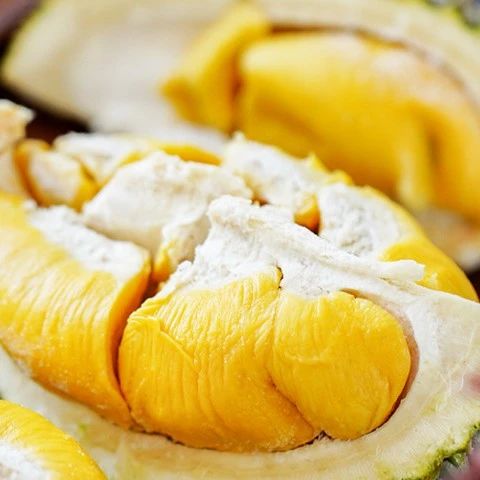
榴莲自由,猝不及防地来了
36氪· 2025-06-11 00:00
Core Viewpoint - The price of durian, often referred to as the "Hermès of fruits," has significantly dropped this summer, allowing consumers to enjoy durian more freely than before [3][5][9]. Price Drop - Durian prices have halved in many regions across China, with wholesale prices for Thai golden pillow durians dropping by 40% to 50% in June [9][10]. - Retail prices in cities like Beijing and Guangzhou have decreased from around 60 yuan per pound to approximately 27 yuan [9][10]. - A consumer noted that the price of a 4.2-pound golden pillow durian fell from 35 yuan per pound to 28 yuan within a month [6][9]. Factors Behind Price Changes - Multiple factors, including climate changes and increased supply, have contributed to the current price drop of durians [12][13]. - The rainy season in Thailand has delayed the harvest, affecting the quality and growth of durians [13]. - This year is considered a bumper harvest year for Southeast Asian durians, leading to an overall increase in supply and subsequent price decline [12][13]. Market Dynamics - The durian market in China has seen a shift with the entry of new suppliers from Vietnam, the Philippines, and Malaysia, which has led to increased competition and price stabilization [17][18]. - The import volume of durians in China reached 1.56 million tons in 2024, with a year-on-year growth of 9.4% [17]. - The market is experiencing a "polarization," with some growers focusing on high-end varieties while others are still improving the quality of lower-priced durians [18]. Industry Challenges - The durian industry faces significant uncertainties, including high initial investment costs and the fragility of the fruit, which complicates logistics and storage [23][24]. - Many companies in the durian trade operate on thin margins, relying on market fluctuations rather than consistent profits [24][25]. - The consumer experience varies widely, with reports of both high-quality and poor-quality durians affecting customer satisfaction [12][25].