
Genetic Engineering

Search documents
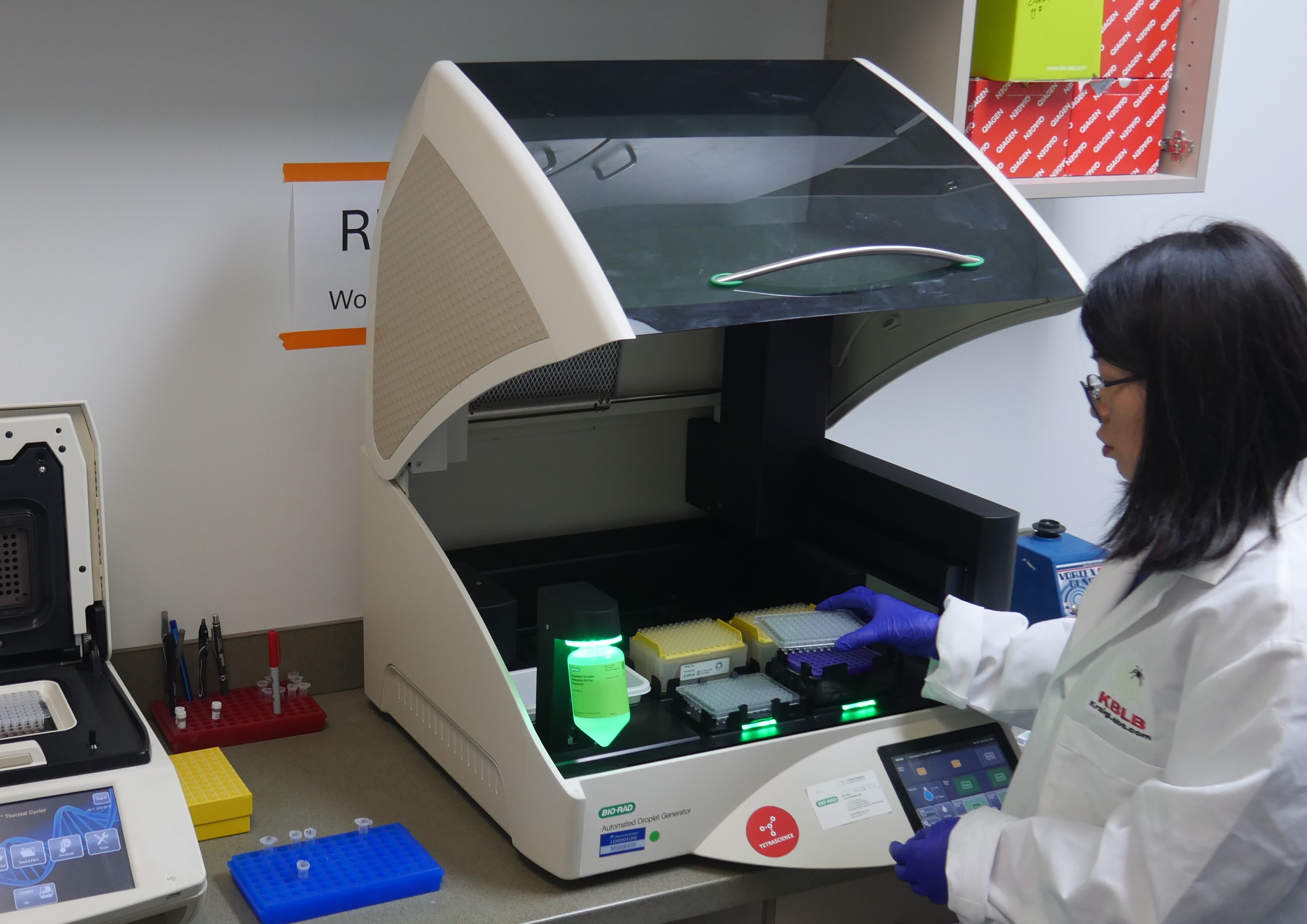
Kraig Biocraft Laboratories Increases R&D Capacity, as Project Atlas Breakthroughs Creating New Spider Silk Transgenics
Globenewswire· 2026-03-23 11:05
ANN ARBOR, Mich., March 23, 2026 (GLOBE NEWSWIRE) -- Kraig Biocraft Laboratories, Inc. (OTCQB: KBLB) ("the Company", "Kraig Labs", or "Kraig's"), a world leader in spider silk technology*, today announced a significant expansion of its research and development capacity designed to keep pace with rapid progress of its advanced materials initiative, Project Atlas. The Company has expanded its laboratory capabilities, onboarding new scientific personnel and the deployment of new advanced equipment. These impr ...

Engineered Silkworms Spin Spider Silk as Biotech Firm Targets Commercial Scale
Globenewswire· 2026-03-18 12:51
DENVER, March 18, 2026 (GLOBE NEWSWIRE) -- www.247marketnews.com -- A biotechnology company developing genetically engineered silkworms says it’s moving toward commercial production of spider silk, a material long sought by researchers for its unusual combination of strength and elasticity. Kraig Biocraft Laboratories (OTCQB: KBLB) deployed one million genetically engineered silkworm eggs across multiple production facilities in Vietnam as part of a Spring scale-up effort that could eventually produce aroun ...

Engineered Silkworms Spin Spider Silk as Biotech Firm Targets Commercial Scale
Globenewswire· 2026-03-18 12:51
DENVER, March 18, 2026 (GLOBE NEWSWIRE) -- www.247marketnews.com -- A biotechnology company developing genetically engineered silkworms says it’s moving toward commercial production of spider silk, a material long sought by researchers for its unusual combination of strength and elasticity. Kraig Biocraft Laboratories (OTCQB: KBLB) deployed one million genetically engineered silkworm eggs across multiple production facilities in Vietnam as part of a Spring scale-up effort that could eventually produce aroun ...
Kraig Biocraft Laboratories Targets New Industrial and Defense Biomaterials as "Project Atlas" Hits Major Milestone
Globenewswire· 2026-03-05 12:05
ANN ARBOR, Mich., March 05, 2026 (GLOBE NEWSWIRE) -- Kraig Biocraft Laboratories, Inc. (OTCQB: KBLB) ("the Company", "Kraig Labs", or "Kraig's"), a world leader in spider silk technology*, today announced a major milestone in "Project Atlas", the Company's next-generation bioengineering initiative aimed at creating entirely new classes of materials for industrial and defense applications. Kraig Labs first disclosed the existence of Project Atlas on January 19th, 2026, when it was already at an advanced stag ...
细思极恐!爱泼斯坦给哈佛送钱,专找这个领域的教授
Guan Cha Zhe Wang· 2026-02-20 04:18
【文/观察者网 熊超然】 2008年,当爱泼斯坦因招嫖而被定罪后,哈佛大学悄然决定,不再接受这名"慷慨捐赠者"的捐款。 要知道,此前十年间,爱泼斯坦已向哈佛捐赠了多达910万美元。然而六年之后,爱泼斯坦仍在想方设 法,将其财富输送给哈佛一些享誉世界的科学家,其中包括从事前沿遗传学研究的人士,该领域长期以 来一直是他的个人兴趣所在。 美国司法部公布的电子邮件显示,爱泼斯坦计划设立一家投资公司,表面上由哈佛生物学家运营,但资 金由他本人控制。和爱泼斯坦共同设立这家公司的著名遗传学研究创新者乔治·丘奇(George Church),目前仍在哈佛大学生物启发工程怀斯研究所领导一个关键部门,他已参与创立了至少50家生 物技术公司,并以长期致力于利用基因编辑复活猛犸象而闻名。 在哈佛大学,爱泼斯坦将大部分资金投入到该校的科研人员身上,并与丘奇和另一名生物学家马丁·诺 瓦克(Martin Nowak)的关系尤为密切。 美国有线电视新闻网(CNN)当地时间2月19日的独家报道披露,此前未公开的照片似乎显示,这两名 教授曾到访过爱泼斯坦臭名昭著的私人岛屿。在哈佛领导层宣布与这名声名狼藉的金融家断绝关系数年 后,爱泼斯坦仍试图将 ...

Kraig Biocraft Laboratories Activates First Wave of 2026 Production Program
Globenewswire· 2026-02-17 12:05
Core Insights - Kraig Biocraft Laboratories, Inc. has officially transitioned its 2026 production plan from strategy to execution, initiating its multi-ton spider silk scale-up initiative [1][2][3] Production Plan - The 2026 production schedule aims for sustained monthly production of recombinant spider silk cocoons at unprecedented commercial volumes, with the first wave of production materials now complete [2][3] - The March production run marks the first major deployment under the 2026 plan, focusing on consistent output, quality control, supply chain stability, and downstream processing capacity [3][4] Company Strategy - The company emphasizes a vertically integrated model that allows for rapid material deployment and controlled expansion of silkworm rearing operations, aligning with future customer demand [4] - The CEO stated that the focus is on execution, volume, and commercialization, with the March run expected to set the pace for subsequent production cycles throughout 2026 [5] Industry Position - Kraig Labs is positioning itself as the global leader in recombinant spider silk, with the current production cycle strengthening its market position [5]

Twist Bioscience: Liquid Biopsy And AI Tailwinds (NASDAQ:TWST)
Seeking Alpha· 2026-02-10 07:53
Company Overview - Twist Bioscience's stock has experienced a significant rebound in recent months, attributed to increasing optimism surrounding AI-enabled drug discovery and the adoption of minimal residual disease (MRD) testing [1] - The Biopharma segment of Twist is reaccelerating, driven by customers engaged in AI-enabled drug discovery and next-generation sequencing (NGS) [1] Investment Strategy - Narweena, an asset management firm led by Richard Durant, focuses on identifying market dislocations caused by a poor understanding of long-term business prospects, aiming for excess risk-adjusted returns [1] - The research process at Narweena emphasizes company and industry fundamentals to uncover unique insights, with a high risk appetite and a long-term investment horizon [1] - The firm targets smaller cap stocks and markets where competitive advantages are not immediately apparent, driven by the belief that an aging population and low growth will create new investment opportunities [1] Market Dynamics - Many industries are expected to face stagnation or secular decline, which may paradoxically enhance business performance due to reduced competition [1] - Conversely, some businesses may encounter rising costs and diseconomies of scale, impacting their performance negatively [1] - The economy is increasingly characterized by asset-light businesses, leading to a declining need for infrastructure investments over time [1] - A large pool of capital is pursuing a limited set of investment opportunities, resulting in rising asset prices and compressed risk premia [1] Leadership Background - Richard Durant holds undergraduate degrees in engineering and finance from the University of Adelaide and an MBA from Nanyang Technological University, where he was on the Dean's Honors List [1] - He has successfully passed the CFA exams, indicating a strong foundation in financial analysis [1]


These Analysts Increase Their Forecasts On Twist Bioscience After Q1 Results
Benzinga· 2026-02-03 14:27
Core Insights - Twist Bioscience Corporation reported first-quarter sales of $103.70 million, a 17% year-over-year increase, surpassing both Wall Street expectations and management guidance [1] - The company aims for profitability through consistent revenue growth, maintaining gross margins above 50%, and disciplined spending to invest in scalable growth opportunities [2] - Fiscal 2026 sales guidance was raised from $425 million-$435 million to $435 million-$440 million, exceeding the consensus estimate of $431.39 million [3] Analyst Ratings - Barclays analyst Luke Sergott maintained an Overweight rating on Twist Bioscience and increased the price target from $39 to $50 [4] - Evercore ISI Group analyst Vijay Kumar maintained an Outperform rating and raised the price target from $42 to $52 [4]

Why Is Twist Bioscience Stock Soaring Monday?
Benzinga· 2026-02-02 19:27
Core Insights - Twist Bioscience Corporation reported a first-quarter 2026 loss of 50 cents per share, aligning with Wall Street expectations, while sales reached $103.70 million, a 17% year-over-year increase, surpassing both consensus and management guidance [1][4] Financial Performance - The adjusted EBITDA loss for the quarter was $13.4 million, an improvement from a loss of $16.3 million in the previous year [1][2] - Gross margin for the first quarter of fiscal 2026 increased to 52%, up from 48.3% a year ago [2] - The company had approximately $198 million in cash, cash equivalents, and short-term investments as of December 31, 2025 [3] Customer and Product Metrics - Twist shipped products to approximately 2,538 customers in Q1 2026, an increase from about 2,376 customers a year ago [2] - The company shipped approximately 271,000 genes in the quarter, compared to around 205,000 genes in the same period last year [2] Future Outlook - Twist Bioscience raised its fiscal 2026 sales guidance to $435 million-$440 million, compared to the previous range of $425 million-$435 million, with expectations for revenue growth balanced across DSPS and NGS [4] - The company anticipates gross margin to remain above 52% for fiscal 2026 and aims for adjusted EBITDA breakeven in Q4 of fiscal 2026 [4] Analyst Commentary - Analysts express confidence in the long-term revenue growth trajectory of the company, highlighting its aggressive investments in multiple markets that could lead to over 20% growth [6] - The company's strategy to moderate investments while scaling into the FOTF is viewed positively, as it may broaden the appeal of the company's story if executed effectively [6][7]
Kraig Biocraft Laboratories Rings in the New Year with the Most Ambitious Genetic Engineering Program in its History
Globenewswire· 2026-01-20 12:05
Core Insights - Kraig Biocraft Laboratories, Inc. is launching an ambitious genetic engineering initiative aimed at enhancing the strength and elasticity of recombinant spider silk beyond current capabilities [1][4] - The company has completed the construction phase of advanced spider silk gene constructs, marking a significant milestone in its research and development efforts [2][3] - This initiative is the largest and most complex silkworm gene-engineering project globally, building on years of proprietary research to enhance performance and scalability [3][4] Company Developments - The new genetic engineering program is expected to drive innovation in the company's production pipeline, leading to improved fiber performance and product diversification [4][5] - Kraig Labs aims to solidify its leadership position in commercial-scale spider silk manufacturing through this initiative [4][5] - The company emphasizes its long-term commitment to innovation while advancing the commercialization of existing products [5]