
Oil Tanker Shipping

Search documents
X @Nick Szabo
Nick Szabo· 2026-03-16 23:16
RT THE ISLANDER (@IslanderWORLD)🇮🇷🇺🇸🇮🇱While Trump begs China to send warships to reopen the Strait of Hormuz — an Iranian oil tanker just left Qeshm Island, transited the Strait, and is heading to Ningbo, China.ETA March 31. Speed 8.2 knots. Destination: the country Trump is threatening to cancel a summit with unless they help him.Iran didn’t close the Strait. Iran controls the Strait.There’s a difference. Iranian tankers move freely. Chinese and Russian tankers move freely by hugging Iran's shore the narro ...
Tankers and Tycoons | 60 Minutes Archive
60 Minutes· 2026-03-14 11:03
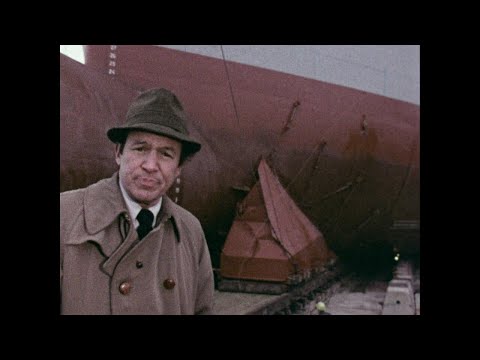
60 Minutes rewind. >> The oil tanker may just be the single most remarkable money-making instrument in the world today. In the last four years since the Six-Day War, tanker profits have skyrocketed, and the tanker tycoons, that small and secretive band of highstake gamblers, contemplate a golden future of more oil, more tankers, more money.The reason the world's appetite for oil shows no signs of slacking off. And the only way to get that oil from the foreign fields to the consumer is in a tanker. It's the ...

中远海能- 地缘政治场景下油轮运费与盈利敏感性分析;买入评级
2026-02-05 02:22
COSCO Shipping Energy (1138.HK) Conference Call Summary Company Overview - **Company**: COSCO Shipping Energy - **Ticker**: 1138.HK - **Market Cap**: HK$67.7 billion / $8.7 billion - **Enterprise Value**: HK$88.5 billion / $11.3 billion - **Current Price**: HK$14.20 - **12-Month Price Target**: HK$16.00 (Upside: 12.7%) [1][5] Industry Insights - **Tanker Market Dynamics**: The tanker market is expected to experience tighter supply due to the exit or low utilization of shadow or sanctioned capacity, which will drive freight rates higher than market expectations [1] - **Shadow Fleet Impact**: Approximately 18% of current total tanker capacity is classified as shadow or sanctioned fleet, which affects the overall supply-demand balance in the tanker market [2][17] - **Geopolitical Factors**: The analysis suggests that if sanctions on oil from Russia or Iran were lifted, it could lead to a significant exit of shadow fleet capacity, as unsanctioned oil would no longer require shadow fleet for transportation [1][19] Financial Projections - **Revenue Growth**: Projected revenue growth for COSCO Shipping Energy is as follows: - 2024: Rmb 23,130.7 million - 2025: Rmb 25,363.1 million - 2026: Rmb 30,481.0 million - 2027: Rmb 30,653.4 million [5][15] - **EBITDA Growth**: Expected EBITDA growth rates are: - 2024: Rmb 8,575.0 million - 2025: Rmb 9,757.3 million - 2026: Rmb 12,922.7 million - 2027: Rmb 13,024.5 million [5][15] - **Earnings Per Share (EPS)**: - 2024: Rmb 0.80 - 2025: Rmb 0.97 - 2026: Rmb 1.34 - 2027: Rmb 1.34 [5][15] Valuation Metrics - **Price-to-Earnings (P/E) Ratio**: - 2024: 9.6 - 2025: 13.0 - 2026: 9.4 - 2027: 9.4 [11] - **Price-to-Book (P/B) Ratio**: - 2024: 0.9 - 2025: 1.4 - 2026: 1.2 - 2027: 1.2 [11] - **Dividend Yield**: - 2024: 5.6% - 2025: 3.7% - 2026: 5.3% - 2027: 5.3% [11] Strategic Outlook - **Freight Rate Sensitivity**: The company is expected to benefit from higher freight rates due to the transition of Venezuelan oil transportation from shadow fleet to mainstream fleet [1][17] - **Scenario Analysis**: - Lifting sanctions on Iranian oil could lead to a potential upside of 63% to the share price - Lifting sanctions on Russian oil could result in a 27% to 33% upside - A scenario where both sanctions are lifted could lead to a 94% to 102% upside [18] - **Downside Risks**: A potential downside of 10% to 6% exists if disruptions in the Red Sea are resolved, which could reduce shipping demand by 2% [18] Conclusion - COSCO Shipping Energy is positioned to capitalize on favorable market conditions driven by geopolitical factors and a tightening supply of tanker capacity. The financial outlook shows promising growth in revenue and earnings, supported by strategic shifts in oil transportation dynamics. The company maintains a "Buy" rating based on the potential for significant upside in share price under various scenarios.
运费,接近200,000美元/天?!
Sou Hu Cai Jing· 2025-09-21 15:12
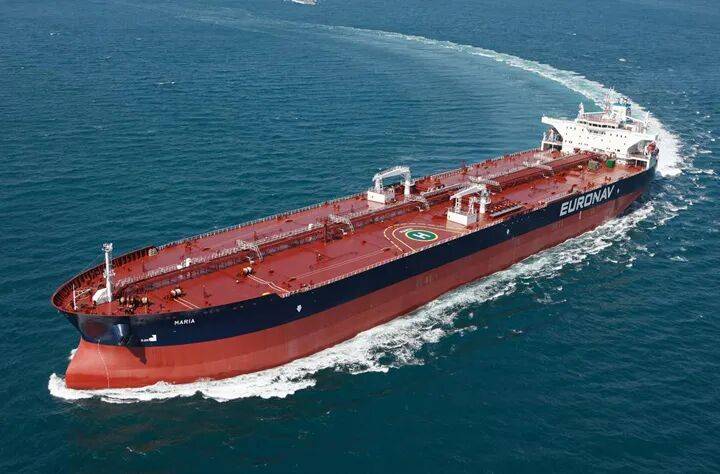
Core Viewpoint - The VLCC (Very Large Crude Carrier) market has seen spot rates exceed $100,000 per day, with some voyages approaching $200,000 per day, highlighting a significant mismatch between theoretical supply and actual operational capacity [1][3]. Group 1: Market Performance - The weighted average spot rate for VLCCs reached $103,200 per day in mid-September, an increase of 8.3% from the previous day [3]. - On September 16 alone, 11 VLCC contracts were completed, with four exceeding $100,000 per day [3]. - The current market conditions indicate a strong performance in the spot market compared to time-charter contracts, with expectations for continued outperformance [8][12]. Group 2: Supply and Demand Dynamics - The actual availability of VLCCs is significantly lower than the statistical fleet size, with 39% of VLCCs over 15 years old, leading to a reduced operational capacity [8][12]. - Future deliveries of new vessels will not fully offset the retirement of older ships, suggesting a prolonged tight market situation [12]. - The Middle East's cargo volume in September exceeded 165 shipments, indicating increased demand, with expectations for even higher volumes in October [13]. Group 3: Industry Sentiment - Industry leaders, such as Frontline's CEO Lars Barstad, express confidence in the VLCC market, citing a strong support structure amid changing trade dynamics due to sanctions and tariffs [7]. - Tsakos Energy Navigation has ordered three new VLCCs to increase capacity, reflecting a positive outlook on market conditions [8]. - The current market is characterized by a combination of geopolitical factors, increased OPEC production, and a shrinking compliant fleet due to sanctions, all contributing to a tightening of actual supply [16].
C3is (CISS) - 2025 Q1 - Earnings Call Transcript
2025-05-15 15:02
Financial Data and Key Metrics Changes - The company achieved a net income of $8,000,000 for Q1 2025, an increase of 109% from Q1 2024 [3][30] - Net revenues were reported at $5,800,000, a decrease of 41% compared to Q1 2024, primarily due to a decrease in charter rates [3][21] - Cash balance increased by 25% to $15,700,000 from the end of 2024 [4][24] - Adjusted net income decreased by 74% to $1,200,000 compared to Q1 2024 [24] Business Line Data and Key Metrics Changes - The Aframax tanker, Afra Pearl II, contributed approximately 72% to total revenues, with TCE rates 55% lower than Q1 2024 [4][21] - The TCE rates for the entire fleet were 56% lower than the rates for Q1 2024 [4][21] - Voyage costs remained stable at $2,800,000, while vessel operating expenses increased to $2,100,000 from $1,800,000 in Q1 2024 [22] Market Data and Key Metrics Changes - The dry bulk trade is experiencing shifting dynamics influenced by economic trends and environmental pressures, with a forecasted long-term downtrend in the iron ore market [5][6] - Global dry bulk trading ton miles are expected to grow by 1.5% in 2025, lagging behind fleet growth of 3.1% [8] - China's grain imports are expected to slow due to high inventories and policy adjustments [7] Company Strategy and Development Direction - The company aims for disciplined growth through technical assessments and selective acquisitions of non-Chinese built vessels [27][28] - The strategy includes maintaining high-quality fleet standards to reduce operating costs and secure favorable charters [27][28] - The company has no bank debts and has met all CapEx obligations without resorting to bank loans [29][30] Management's Comments on Operating Environment and Future Outlook - The global economic environment in 2025 is characterized by mixed signals, presenting both risks and opportunities for the shipping sector [11][30] - Economic shocks and evolving policy measures are expected to shape the outlook, contributing to a cautious yet dynamic landscape [11][30] - The company is positioned to leverage regional growth drivers and adapt to evolving economic dynamics [31] Other Important Information - The company has increased its fleet by 234% since inception and maintains a focus on high-quality charterers [28][29] - The global Handysize fleet has seen a slight increase, with 3,151 vessels currently in operation [15] - The Aframax LR2 fleet stands at 1,174 vessels, with a significant portion over 20 years of age [17] Q&A Session Summary - No specific questions or answers were documented in the provided content.

C3is (CISS) - 2025 Q1 - Earnings Call Transcript
2025-05-15 15:00
Financial Data and Key Metrics Changes - The company reported a net income of $8,000,000 for Q1 2025, an increase of 109% from Q1 2024 [3][24] - Net revenues were $5,800,000, a decrease of 41% compared to Q1 2024, primarily due to a decrease in charter rates [3][21] - Cash balance increased by 25% to $15,700,000 from the end of 2024 [4][24] - Adjusted net income decreased by 74% to $1,200,000 compared to Q1 2024 [24] Business Line Data and Key Metrics Changes - The Aframax tanker, Afra Pearl II, contributed 72% to total revenues, with TCE rates 55% lower than Q1 2024 [4][21] - The TCE rates for the entire fleet were 56% lower than the rates for Q1 2024 [4][21] - Voyage costs remained stable at $2,800,000, while vessel operating expenses increased to $2,100,000 from $1,800,000 in Q1 2024 [22] Market Data and Key Metrics Changes - The dry bulk trade is experiencing shifting dynamics influenced by economic trends and environmental pressures, with a forecasted long-term downtrend in the iron ore market [5][6] - Global dry bulk trading ton miles are expected to grow by 1.5% in 2025, lagging behind fleet growth of 3.1% [8] - China's grain imports are expected to slow due to high inventories and policy adjustments [7] Company Strategy and Development Direction - The company aims for disciplined growth through technical assessments and selective acquisitions of non-Chinese built vessels [27] - The strategy includes maintaining high-quality fleet standards to reduce operating costs and secure favorable charters [26] - The company has no bank debts and has met all CapEx obligations without resorting to bank loans [28][29] Management's Comments on Operating Environment and Future Outlook - The global economic environment in 2025 is characterized by mixed signals, presenting both risks and opportunities for the shipping sector [10][29] - Economic shocks and evolving policy measures are expected to shape the outlook, contributing to a cautious yet dynamic landscape [10][29] - The company is positioned to leverage regional growth drivers and adapt to evolving economic dynamics [30] Other Important Information - The company has increased its fleet by 234% since inception and maintains a focus on short to medium-term charters and spot voyages [27][28] - The global Handysize fleet has seen a slight increase, with 3,151 vessels currently in operation [14] Q&A Session Summary Question: What are the expectations for the dry bulk market in 2025? - The dry bulk market is expected to face lower demand growth due to various uncertainties, but a relatively balanced supply-demand dynamic is anticipated [9] Question: How is the company managing its fleet and operational costs? - The company maintains high standards of safety and reliability, conducting regular inspections and adopting comprehensive maintenance programs [26] Question: What impact do environmental regulations have on the shipping sector? - Environmental regulations are expected to play a significant role in market dynamics, influencing supply-side conditions and operational practices [8][10]
C3is (CISS) - 2024 Q4 - Earnings Call Transcript
2025-03-11 15:44
Financial Data and Key Metrics Changes - For the year 2024, the company reported revenues of $42.3 million, an increase of 47% compared to 2023 [6] - Net revenues were $28 million, reflecting a 33% increase from 2023 [6] - Adjusted EBITDA was $16.4 million, up 11% from the previous year [6] - Adjusted net income was $8.7 million, a 7% increase from 2023 [6] - Cash balance at the end of Q4 2024 was $12.6 million, a 39% increase from year-end 2023 [7] Business Line Data and Key Metrics Changes - The Aframax tanker, Afrapearl II, contributed approximately 76% to total revenues [6][34] - Daily time charter equivalent (TCE) for 2024 was $21,000 per day, which is 10% lower than the rate for 2023 [8][34] - Fleet operational utilization was 90.3% for the 12-month period ending December 31, 2024, down from 91.6% in 2023 [35] Market Data and Key Metrics Changes - The global drybulk trade showed resilience, particularly in the latter half of 2024, with Handysize vessels holding a significant market share [9] - Iron ore and coal trade continue to dominate, but the iron ore market is undergoing a transitional phase influenced by economic trends [10] - Demand for coal rebounded in the second half of 2024 due to prolonged hot weather and growth in the chemical sector [13] Company Strategy and Development Direction - The company aims for disciplined growth through selective acquisition of quality vessels and maintaining high standards of safety and reliability [43][44] - The strategy includes focusing on short to medium-term charters and securing favorable contracts with high-quality customers [44] - The company has no bank debts and has increased its fleet capacity by 234% since inception [45][46] Management's Comments on Operating Environment and Future Outlook - The shipping industry is navigating a transitional phase influenced by geopolitical factors and environmental regulations [47] - The management anticipates that 2025 will present strong financial performance and growth prospects, particularly with potential political changes in the U.S. [48][49] - The company is closely monitoring evolving market conditions to maximize future profits [47] Other Important Information - The company recorded a non-cash item of $11.13 million loss at year-end 2024, resulting in a net loss of $2.7 million for the year [39] - The fleet book value at the end of December 2024 was $84 million, a 12% increase from year-end 2023 [40] - The company maintains a comprehensive maintenance program for its vessels to ensure quality and reduce operating costs [42] Summary of Q&A Session - There was no question-and-answer session at the end of the conference call [1]