Refrigeration

Search documents
Jim Cramer Recommends Vertiv Over Carrier Global
Yahoo Finance· 2026-03-31 16:36
Group 1 - Carrier Global Corporation (NYSE:CARR) has seen a stock increase of 16% so far in 2026, indicating a positive performance year [3] - The company's recent earnings report showed weaker than expected results, attributed to a downturn in North American residential construction [3][4] - Carrier's business is characterized by a two-speed dynamic, with the residential segment in a cyclical downturn while the commercial HVAC and aftermarket business is thriving, partly due to exposure to data centers [4] Group 2 - The company is recognized for its climate and energy solutions through HVAC and refrigeration products and services [3] - Carrier fits the "HALO" investment rubric, which emphasizes heavy assets and low obsolescence, making it an attractive option during certain market conditions [4]

DOV Boosts CO2 Refrigeration Leadership With Next Generation Flex Mini
ZACKS· 2026-03-05 13:11
Core Insights - Dover Corporation's subsidiary Hillphoenix has launched the Next Generation Flex Mini, a compact and high-efficiency transcritical CO2 refrigeration system aimed at food retail and industrial markets [1][7] - The Flex Mini system utilizes natural refrigerant CO2, which has a significantly lower global warming potential compared to traditional HFC systems, enhancing sustainability and operational performance [1][3] Product Features - Key benefits of the Flex Mini include improved energy efficiency through advanced low-pressure ejector technology, reduced maintenance needs with a filter-less oil separator, and integrated bypass valves for easier serviceability [2][7] - The platform supports various voltage requirements and offers weather-resistant, sound-attenuated, and cold-weather configurations, ensuring reliable performance across diverse operating conditions [3] Market Performance - Dover's shares have increased by 19.2% over the past year, while the industry has seen a rise of 23.7% [5] - The company holds a Zacks Rank of 3 (Hold), with better-ranked stocks in the Industrial Products sector including Flowserve Corporation (FLS), Helios Technologies, Inc. (HLIO), and Crane Company (CR) [6]


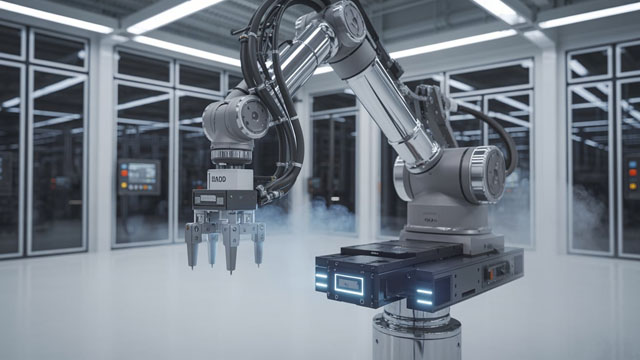
Hillphoenix Expands CO2 Portfolio with Next Generation Flex Mini for Food Retail and Industrial Markets
Prnewswire· 2026-03-04 21:15
Core Insights - Hillphoenix, a subsidiary of Dover Food Retail, has launched the Next Generation Flex Mini, a high-performance CO2 transcritical refrigeration system designed for food retail and industrial markets [1] Product Features - The Flex Mini system is engineered to maximize operational uptime while minimizing total cost of ownership [1] - It offers multiple compressor brand options and a maintenance-centric design, providing unprecedented flexibility in a compact footprint [1] - Key benefits include: - Adaptable design with multiple voltage options, optional weatherproof and soundproof cabinetry, and a cold weather kit [1] - Reduced operational costs through advanced low-pressure ejector technology, significantly lowering energy consumption [1] - Dual-brand compatibility supporting two compressor brand configurations [1] - Streamlined serviceability with a maintenance-free, filter-less oil separator and integrated bypass valves [1] Company Overview - Hillphoenix specializes in the design and manufacturing of commercial refrigerated display cases and refrigeration systems [1] - Dover Food Retail operates through brands like Anthony, Hillphoenix, Advansor, and The AMS Group, focusing on creating unique food experiences [1] - Dover Corporation, the parent company, is a diversified global manufacturer with annual revenue exceeding $8 billion, operating across five segments [1]


Hillphoenix Expands CO2 Portfolio with Next Generation Flex Mini for Food Retail and Industrial Markets
Prnewswire· 2026-03-04 21:15
Core Insights - Hillphoenix, a subsidiary of Dover Food Retail, has launched the Next Generation Flex Mini, a high-performance CO2 transcritical refrigeration system aimed at food retail and industrial markets [1] Product Features - The Flex Mini system is designed to maximize operational uptime while minimizing total cost of ownership [1] - It offers multiple compressor brand options and a maintenance-centric design, providing unprecedented flexibility in a compact footprint [1] - Key benefits include: - Adaptable design with multiple voltage options, weatherproof and soundproof cabinetry, and a cold weather kit [1] - Reduced operational costs through advanced low-pressure ejector technology, significantly lowering energy consumption [1] - Dual-brand compatibility to meet specific technical and brand preferences [1] - Streamlined serviceability with a maintenance-free, filter-less oil separator and integrated bypass valves for rapid service [1] Company Overview - Hillphoenix specializes in the design and manufacturing of commercial refrigeration systems and products, including refrigerated display cases [1] - Dover Food Retail operates through brands like Anthony, Hillphoenix, Advansor, and The AMS Group, focusing on creating unique food experiences [1] - Dover Corporation, the parent company, is a diversified global manufacturer with annual revenue exceeding $8 billion, operating across five segments [1]
Energy Recovery CO2 Refrigeration Melted, Desalination Evaporates Into 2027
Seeking Alpha· 2026-02-26 21:57
Core Insights - Energy Recovery, Inc. (ERII) reported its Q4 '25 results and provided updates on its business strategy and guidance for 2026, leading to a significant decline in its stock price by over 30% the day after the announcement [1] Financial Performance - The company’s Q4 '25 results were a key factor in the stock price drop, indicating potential concerns regarding its financial health and future performance [1] Business Strategy - ERII outlined its business strategy for 2026, which may have implications for its operational focus and market positioning, although specific details were not provided in the excerpt [1]

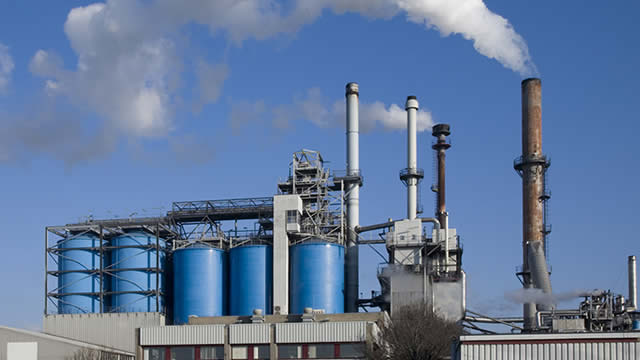
Mueller Industries Inc. (NYSE: MLI) Financial Overview and Stock Sale by Director
Financial Modeling Prep· 2026-02-10 00:04
Core Insights - Mueller Industries Inc. is a key player in the manufacturing sector, focusing on copper, brass, aluminum, and plastic products, serving industries such as plumbing, refrigeration, and automotive [1] Financial Performance - In Q4 2025, Mueller Industries reported net sales of $962.4 million, reflecting a 4.2% increase from the previous year, with operating income rising by 1.0% to $172.0 million and net income increasing by 11.6% to $153.7 million [2][5] - For the full year of 2025, the company achieved net sales of $4.2 billion, up from $3.8 billion in 2024, with a diluted earnings per share (EPS) of $1.38, marking a 14.0% increase [3][5] Valuation Metrics - The company's price-to-earnings (P/E) ratio is approximately 16.57, and the price-to-sales ratio stands at about 3.09, indicating the market's valuation of its earnings and sales [3] - Mueller Industries maintains a low debt-to-equity ratio of 0.018, indicating minimal reliance on debt financing, and a strong current ratio of 5.92, highlighting its robust liquidity position [4][5] - The enterprise value to sales ratio is around 2.77, and the enterprise value to operating cash flow ratio is approximately 15.33, providing insights into the company's valuation and cash flow generation [4]


Jim Cramer on Carrier Global: “I Think You Buy It Now and Put It Away”
Yahoo Finance· 2026-02-02 20:18
Company Overview - Carrier Global Corporation (NYSE:CARR) specializes in climate and energy solutions through HVAC and refrigeration products and services [3] Performance Insights - The company reported in-line sales with a solid earnings beat, although there was surprising softness in its residential business [3] - The commercial business is performing exceptionally well, particularly in climate control and data center solutions [3] Management Commentary - Jim Cramer expressed confidence in CEO Dave Gitlin's leadership and recent acquisition strategy, despite some concerns regarding reliance on the European market [1][3] - Cramer recommends buying the stock now and holding it for the long term [1]
Hillphoenix Expands Industrial CO2 Portfolio with Launch of AdvansorUltra Platform
Prnewswire· 2026-01-08 21:15
Core Insights - Hillphoenix has launched AdvansorUltra™, its first standardized industrial CO rack, enhancing its position in the industrial refrigeration market [1] - The launch aligns with Hillphoenix's strategy to leverage the growing adoption of transcritical CO refrigeration in various sectors including cold storage, food processing, and pharmaceuticals [1] Company Overview - Hillphoenix is part of Dover Food Retail, specializing in environmentally sustainable refrigeration systems and advanced design and manufacturing of commercial refrigeration products [3][4] - Dover Food Retail operates through several brands, including Hillphoenix and Advansor, and focuses on providing innovative solutions to enhance food retail experiences [4] Product Features - AdvansorUltra offers capacities up to 450TR (1,583kW) per rack, suitable for large facilities that may require multiple racks [5] - The system operates within a temperature range of -25 to 20F (-32 to -7C) and can reach as low as -57F (-48C) for specialized applications [5] - The design improves serviceability by allowing technicians better access to serviceable parts without needing to shut down the system [5] Training and Support - Hillphoenix has upgraded its training facility in Conyers, Georgia, to assist technicians in transitioning from traditional refrigerant systems to transcritical CO systems [2]

Dover Operating Companies to Showcase Innovative Technologies at Leading Convenience and Fuel Retail Trade Show
Prnewswire· 2025-10-01 20:15
Core Insights - Dover will showcase innovative solutions at the upcoming NACS Show and PEI Convention from October 14-17, 2025, in Chicago, IL, focusing on advancements in convenience retail and fueling industries [1][3]. Industry Overview - The convenience retail industry serves over 160 million customers daily through more than 152,000 stores, evolving rapidly due to opportunities in clean energy, advanced retail fueling, digital software platforms, foodservice, refrigeration, and vehicle wash solutions [2]. Company Highlights - Dover's operating companies will present technologies aimed at improving efficiency and meeting consumer demands, including: - **Dover Food Retail (DFR)**: Focuses on sustainable refrigeration technologies and unique food experiences, showcasing innovations like the Infinity MAX All-Glass Walk-In Cooler Doors and R290 Second Nature Natural system [3][5]. - **Dover Fueling Solutions (DFS)**: A leading provider of energy dispensing equipment and automation solutions, will demonstrate a fully connected ecosystem including Site IQ, Bulloch POS, and Wayne PWR DC fast chargers [4][6][10]. - **OPW Retail Fueling**: Will present advanced fueling system products and innovations aimed at enhancing safety and efficiency in the retail-fueling industry [7][11]. Innovations and Technologies - Key innovations to be highlighted include: - **Infinity MAX All-Glass Walk-In Cooler Doors**: Designed to enhance product visibility and customer engagement [5]. - **R290 Second Nature Natural system**: A sustainable refrigeration solution for various prepackaged goods [5]. - **Wayne PWR DC fast charger**: Offers multiple power configurations for electric vehicle charging [6]. - **Site IQ**: A software platform for optimizing forecourt management and maintenance [6]. - **New customer engagement features**: Such as real-time promotion displays and coupon-printing capabilities at fuel pumps [8]. Company Background - Dover Corporation is a diversified global manufacturer with annual revenue exceeding $7 billion, operating across five segments including Clean Energy & Fueling and Climate & Sustainability Technologies [14].

3 Industrial Stocks to Ride the 2025 Manufacturing Rebound
ZACKS· 2025-08-26 14:15
Core Insights - The industrial sector in 2025 is influenced by cyclical recovery, policy stimulus, trade-driven structural shifts, and volatile PMI movements, with early-year optimism fading mid-summer before rebounding in August [1] - The S&P 500 Industrials Select Sector SPDR (XLI) achieved a year-to-date return of 16.1% as of July, with a 12-month performance of 20.6%, despite experiencing volatility in Manufacturing PMI readings [2] - Geopolitical factors and tariffs have impacted input prices and inflation, prompting firms to reshore production and diversify suppliers, which has bolstered industrial demand [3] Manufacturing PMI and Sector Performance - The S&P Global PMI rose to 50.1 in January, indicating expansion, but fell to 49.8 by July, reflecting contraction due to cooling demand and tariff-related stress, before rebounding to 53.3 in August [2] - The rebound in August was driven by increases in new orders, inventories, and hiring, alongside easing supply-chain pressures [2] Macro and Geopolitical Influences - Ongoing tariffs have raised input prices and inflation, leading to increased industrial activity as firms adapt to these pressures [3] - Policy support through infrastructure spending and incentives for on-shoring has positively influenced investor sentiment and industrial earnings outlooks [3] Investment Opportunities - Companies such as Kaiser Aluminum Corporation (KALU) are projected to have an earnings growth rate of 84.9% for the current year, with a Zacks Consensus Estimate improvement of 11.3% over the past 60 days [5] - AGCO Corporation (AGCO) is expected to see a 36.7% earnings growth rate next year, with estimates up 13.8% recently [6] - Hudson Technologies, Inc. (HDSN) anticipates a 19.2% earnings growth rate for the next year, with a significant estimate increase of 27% over the past 60 days [7] Conclusion - The U.S. industrial sector presents an attractive investment landscape for 2025, supported by policy initiatives and structural shifts in trade and manufacturing, despite the challenges posed by tariffs and geopolitical tensions [8][9]