Smart Equipment

Search documents
一人公司火了,多地密集发布支持政策
21世纪经济报道· 2026-01-19 10:55
Core Viewpoint - The article discusses the rise of One Person Companies (OPC) in the AI era, highlighting how AI technology enables small teams or even individuals to efficiently manage complex tasks, thus lowering startup costs and fostering innovation in various sectors [1][2][5]. Group 1: OPC Model and Its Advantages - The OPC model allows for significant reductions in startup costs, enabling a small number of core entrepreneurs to leverage AI tools for various tasks, such as coding, project management, and content creation [2][5]. - The shift from traditional large-scale hiring to a model where one or two individuals can accomplish what previously required ten is emphasized, showcasing the efficiency brought by AI [1][2]. - The article notes that in the AI era, the focus is not on the number of employees but on the ability to utilize AI effectively, leading to the emergence of "one-person unicorns" valued at over $1 billion [5][10]. Group 2: Market Trends and Statistics - In the first half of 2025, 36.3% of new startups in the U.S. were founded by a single individual, up from 23.7% in 2019, indicating a growing trend towards solo entrepreneurship [5]. - The article highlights that the traditional belief in "more hands make light work" is being challenged as AI simplifies many complex tasks, allowing individuals to become more powerful in their entrepreneurial endeavors [5][10]. - The "Tsinghua System" of startups, particularly in AI and smart manufacturing, shows a high investment success rate of 74%, indicating strong market confidence in these ventures [12][13]. Group 3: The Role of AI in Entrepreneurship - AI is described as a transformative force that reduces operational costs and enhances the capabilities of individual entrepreneurs, allowing them to manage various aspects of their businesses more effectively [6][10]. - The article mentions that AI provides entrepreneurs with tools to analyze financial reports and other business metrics, acting as an invisible advisor [6][10]. - The integration of AI into physical products, such as smart wearables and heating garments, demonstrates the potential for innovation in consumer markets [9][10]. Group 4: Policy Support and Ecosystem Development - The Shenzhen government has initiated plans to establish over ten OPC communities by 2027, aiming to foster a vibrant ecosystem for AI startups [1][19][21]. - Various cities across China are implementing supportive policies for OPCs, focusing on providing essential resources like office space and funding to encourage innovation [21][22]. - The article discusses the shift in policy focus from large corporations to supporting individual entrepreneurs, recognizing the potential of small-scale innovation to drive economic growth [23][24].


“种草”高交会:灵巧手“拿捏”万物,AI秒变“情绪搭子”
Nan Fang Du Shi Bao· 2025-11-15 10:22
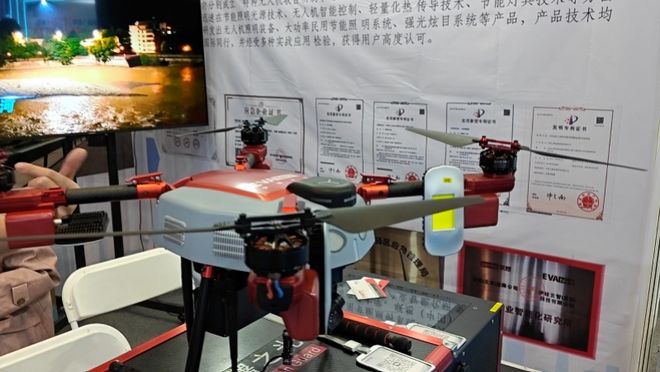
Core Insights - The 27th China International High-Tech Achievements Fair (High-Tech Fair) is being held in Shenzhen from November 14 to 16, showcasing over 5,000 technology companies from more than 100 countries and regions, with an exhibition area of 400,000 square meters [1][9] - The event features a wide range of innovative technologies, including drones, humanoid robots, non-invasive brain-machine interface devices, and AI voice companions, highlighting significant advancements in smart equipment and health technology [1][5][9] Group 1: Smart Equipment - The "Dawn" drone, which has been used in emergency rescue operations, is capable of providing stable lighting in disaster areas and can operate continuously for an entire night, covering an area equivalent to two to three football fields [3] - The eVTOL (electric Vertical Take-Off and Landing) aircraft has received the first domestic flight permit and aims to offer low-cost sightseeing services in cities like Luoyang, Chengdu, Wuhan, and Shenzhen, allowing tourists to experience aerial views for a minimal fee [3] - A robotic hand capable of mimicking intricate human hand movements has been showcased, emphasizing its potential to replace human labor in manufacturing processes, thereby reducing wear and tear on human hands [5] Group 2: Health Technology - A brain health device, designed to enhance cognitive efficiency, utilizes non-invasive brain-machine interface technology to stimulate brain cells, targeting individuals with memory issues or attention deficits [7] - An innovative smart ring, claimed to be the world's first device for detecting sleep apnea, boasts a monitoring accuracy of 90.7% for sleep-related health metrics [9] - An AI companion robot, designed to interact with users based on their emotional states, has gained popularity, particularly among children, showcasing the integration of AI in personal well-being [9]
Pandag Tech Introduces First Commercial Electric Robotic Mower to Australian Market at AgQuip 2025
Globenewswire· 2025-08-14 12:52
Company Overview - Pandag Tech is an international smart equipment company focused on creating intelligent tools for commercial outdoor applications, emphasizing automation, sustainability, and user-centered design [6] Product Launch - The company will showcase its flagship product, the PANDAG-G1, at AgQuip 2025, marking its Australian debut [1] - The event will take place from August 19 to 21, 2025, at Booth I|16c [1] Product Features - The PANDAG-G1 operates autonomously on a single charge, capable of covering up to 15 acres of turf without supervision, allowing maintenance teams to focus on detailed tasks [2] - Designed for Australian conditions, the G1 can handle rugged terrain and climb slopes up to 78% [3] - It features an UltraSense™ navigation system that combines centimeter-level GPS accuracy with AI-powered obstacle detection for safe operation near roads and public areas [3] Versatility and Efficiency - The G1's modular design allows operators to switch between various functions such as mowing, trimming, spraying, and towing in seconds, reducing the need for multiple machines [4] - It is capable of heavy-duty vegetation control, cutting through overgrowth as tall as 4 feet, making it suitable for various applications including turf fields and large farms [5] Market Positioning - The PANDAG-G1 is positioned as a workhorse solution for maintaining large properties, focusing on safety, performance, and cost-efficiency [5]

6座城市,冲刺千万人口大市!
21世纪经济报道· 2025-03-25 14:53
Core Viewpoint - The race for cities in China to reach a population of ten million is evolving into a "war of attrition," with increasing challenges and a need for cities to enhance their internal development capabilities [3][6]. Group 1: Population Growth Data - As of the end of 2024, Wenzhou's permanent population reached 985.2 thousand, an increase of 91 thousand from the previous year, just 148 thousand short of the ten million mark [4]. - Hefei officially became the 18th city in China to surpass ten million residents, with a population of 10,002 thousand, growing by 149 thousand from the end of 2023, totaling a cumulative increase of 537 thousand over three years [10]. - Six cities, including Wenzhou, Ningbo, Foshan, Nanjing, Jinan, and Shenyang, have populations exceeding 920 thousand and are still experiencing growth, indicating their potential to reach ten million [5]. Group 2: Challenges in Population Growth - The current pace of population growth suggests that by 2025, it may be difficult to see the emergence of the 19th city with a population of ten million [6]. - Many cities with populations around nine million are experiencing a downward trend in population, indicating a significant increase in the threshold for reaching ten million [7]. - The competition among cities is intensifying, with three of the six cities striving for ten million being ordinary prefecture-level cities, which struggle to compete with the public service resources of municipalities and sub-provincial cities [14]. Group 3: Factors Influencing Population Attraction - Urban population attraction is influenced by multiple factors, including housing subsidies, entrepreneurial support, living costs, public service quality, industrial capacity, and employment opportunities [8]. - Hefei's population growth is attributed to its industrial upgrades, which create job opportunities and higher salary levels, supported by a strong talent base from institutions like the University of Science and Technology of China [10][12]. Group 4: Strategies for Population Growth - Cities aiming for ten million populations should focus on industrial upgrades, as demonstrated by Hefei's industrial output growth of 14.8% in 2024, with significant increases in sectors like new energy vehicles and smart equipment [18][19]. - Optimizing living costs and residency policies is crucial, with cities like Shenyang implementing new policies to facilitate the settlement of newcomers [21]. - Improving infrastructure and enhancing livability are essential, as cities are working to address public service gaps, such as education, to attract and retain residents [22].