Trucking and Road Transportation

Search documents
RDW : Les Pays-Bas introduiront un péage pour les camions le 1er juillet 2026
Prnewswire· 2026-03-31 08:00
Core Point - The Netherlands will introduce a truck toll effective July 1, 2026, requiring truck owners to pay per kilometer traveled, including foreign vehicles [1][2][10]. Group 1: Toll Implementation - The truck toll will apply to Dutch and foreign trucks in categories N2 and N3, with a maximum authorized mass exceeding 3,500 kg [3][8]. - Trucks must be equipped with a functioning On-Board Unit (OBU) to record distance traveled and pay the toll [3][4]. - The Eurovignette for the Netherlands will end on the same date, with over 725,000 unique foreign trucks using Dutch roads annually [2][10]. Group 2: OBU and Providers - Truck owners must contract with service providers to obtain an OBU, which will manage toll payments [4][5]. - Existing OBUs from German and Belgian providers will not work in the Netherlands, necessitating new contracts for service [5][8]. - NedLinq offers an OBU that operates solely in the Netherlands, including replacement units in case of malfunction [6][8]. Group 3: Toll Rates and Environmental Impact - The toll rate will be based on the truck's maximum authorized mass, CO2 emission class, and, in some cases, Euro emission class [5][8]. - The toll aims to promote sustainable and efficient transport, encouraging investments in cleaner and lighter vehicles [5][8]. - A significant portion of toll revenues will be allocated to subsidies aimed at enhancing the viability of the transport sector [5][8]. Group 4: Compliance and Information Campaign - From July 1, 2026, all N2 and N3 trucks entering the Netherlands must have a valid OBU, with penalties for non-compliance [6][7]. - The Netherlands has initiated an international information campaign to inform service providers and fuel card suppliers about the new toll [7][8].

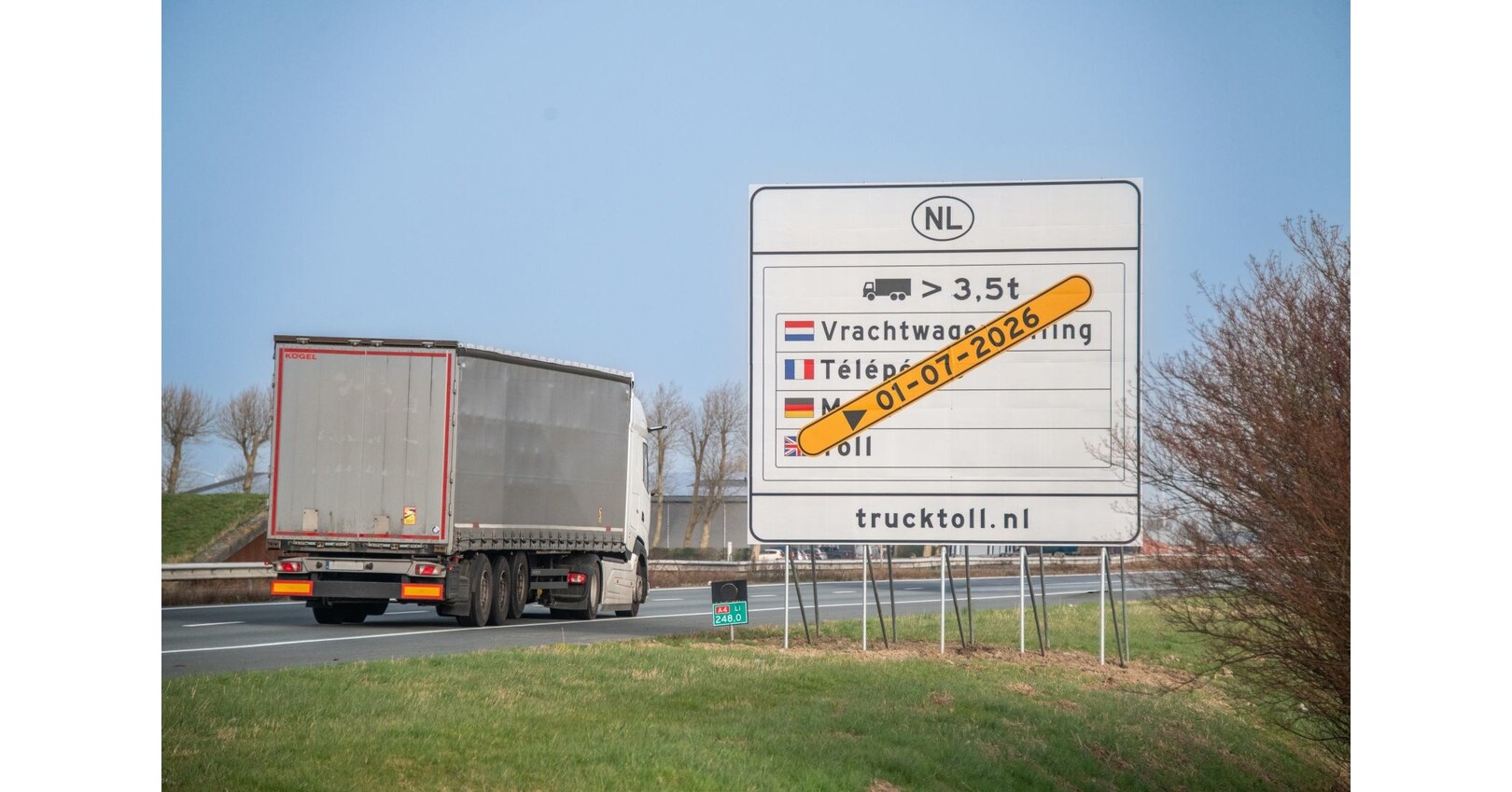
RDW: The Netherlands introduces truck toll on 1 July 2026
Prnewswire· 2026-03-31 08:00
Core Point - The Netherlands will implement a truck toll starting on July 1, 2026, requiring truck owners to pay per kilometer traveled, including foreign vehicles [1][2]. Group 1: Toll Implementation - The truck toll will apply to Dutch and foreign trucks in categories N2 and N3, which have a maximum authorized mass exceeding 3,500 kg [3][9]. - Vehicles must be equipped with a functioning onboard unit (OBU) to pay the toll, which records the distance traveled [3][9]. - The Eurovignette for the Netherlands will be discontinued on the same date [2]. Group 2: Onboard Unit (OBU) Requirements - Truck owners must contract with service providers to obtain an OBU, which is necessary for toll payments and must be activated while driving in the Netherlands [4][9]. - Existing OBUs from German and Belgian providers will not work in the Netherlands, but many foreign truck owners can expand their service area [5][8]. Group 3: Toll Rates and Sustainability - The toll is designed to promote sustainable transportation; cleaner and lighter vehicles will incur lower charges per kilometer [5][9]. - The toll rates will be based on the vehicle's maximum authorized mass, CO2 emission class, and in some cases, the Euro emission class [5][9]. - A significant portion of the toll revenue will be allocated to subsidies aimed at enhancing the sustainability of the transportation sector [5][9]. Group 4: Enforcement and Compliance - From July 1, 2026, all N2 and N3 trucks entering the Netherlands must have a functioning OBU from a valid provider, with fines for non-compliance [6][9]. - The Netherlands will actively enforce compliance from the start of the truck toll [6][9]. Group 5: Information Campaign - An international information campaign has been launched to inform stakeholders about the new truck toll [7][9]. - Service providers and fuel card suppliers are also engaging with their customers regarding the upcoming toll [7][9].
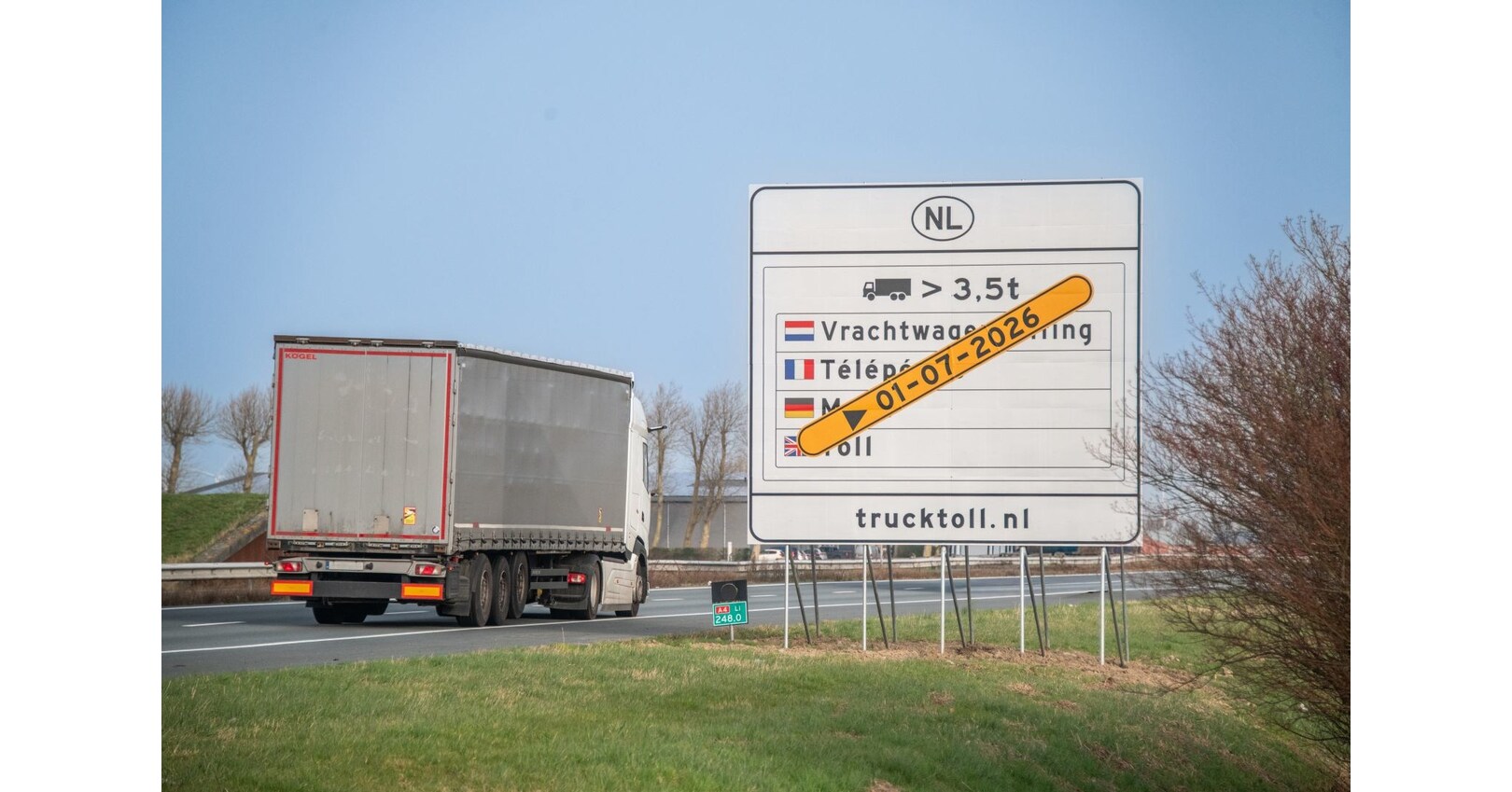
RDW: Die Niederlande führen am 1. Juli 2026 eine Lkw-Maut ein
Prnewswire· 2026-03-31 08:00
Core Point - The Netherlands will introduce a truck toll effective July 1, 2026, requiring truck owners to pay per kilometer driven, applicable to both domestic and foreign vehicles [1][2]. Group 1: Toll Implementation - The truck toll will apply to trucks in categories N2 and N3, which have a permissible total weight exceeding 3,500 kg [3][6]. - Vehicles must be equipped with a functional On-Board Unit (OBU) to pay the toll, which records the distance traveled [3][4]. - The toll will be enforced on nearly all Dutch highways and some provincial and municipal roads [1]. Group 2: OBU Providers - Truck owners will need to contract with a provider to obtain an OBU, which is necessary for toll payment processing [4][9]. - Existing OBUs from German and Belgian providers will not function in the Netherlands, necessitating new contracts for Dutch operations [5][9]. Group 3: Toll Structure and Purpose - The toll is designed to promote sustainable and efficient transportation, with lower rates for cleaner and lighter vehicles [6]. - The toll rates will be based on the vehicle's total permissible mass, CO emissions class, and in some cases, the Euro emissions class [6]. - A significant portion of the toll revenue will be allocated to funding sustainability improvements in the trucking industry [6]. Group 4: Enforcement and Compliance - From July 1, 2026, all N2 and N3 trucks entering the Netherlands must have a functional OBU from an approved provider, or face penalties [7]. - The Netherlands will actively enforce compliance with these regulations starting from the toll's implementation date [7][10]. Group 5: Information Campaign - An international information campaign has been launched to inform stakeholders about the new truck toll [10]. - Providers and fuel card companies are actively communicating with their customers regarding the toll introduction [10].
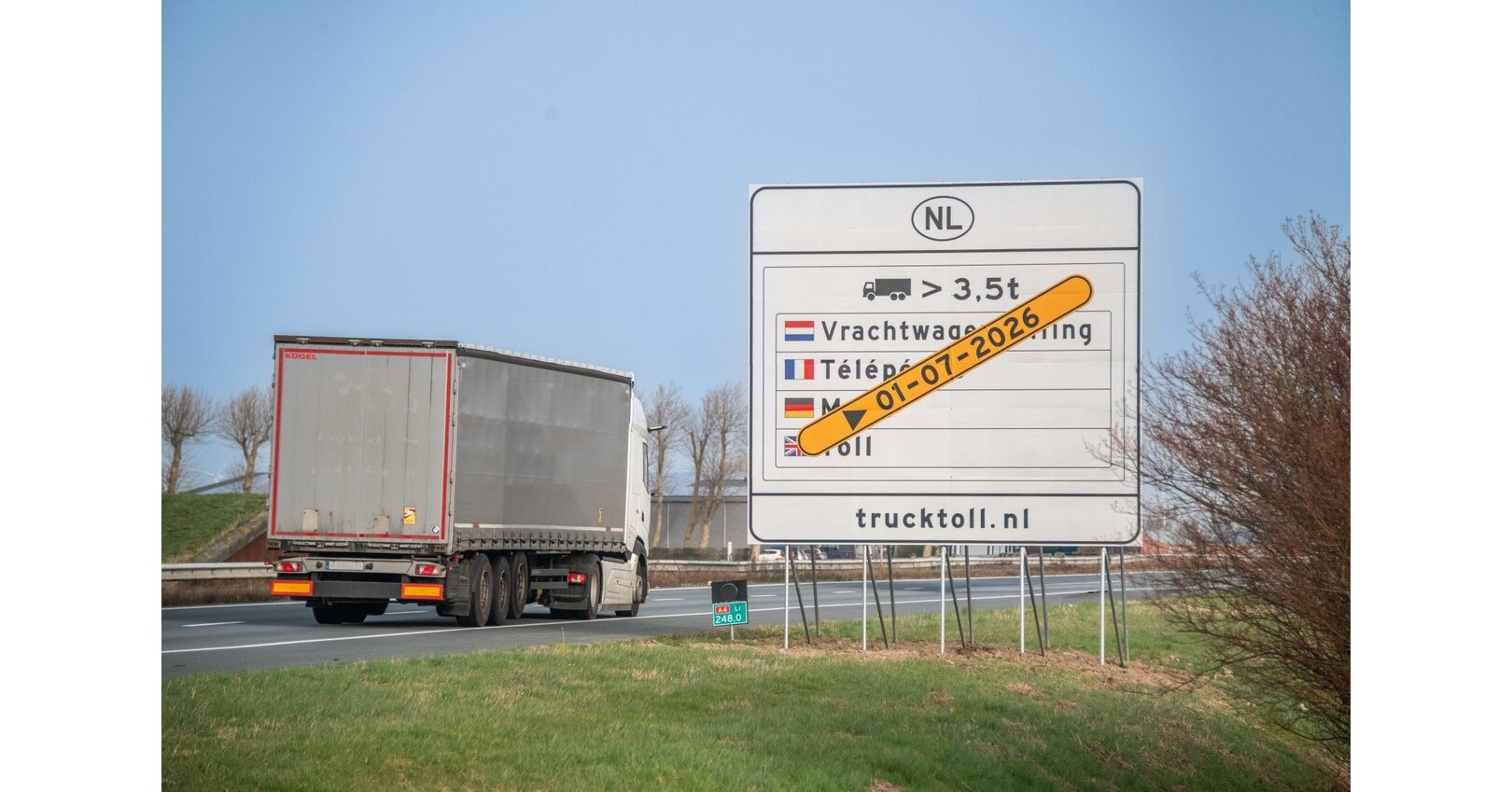
HYSTER-YALE ANNOUNCES COST REDUCTION ACTIONS AMID CHALLENGING MARKET CONDITIONS
Prnewswire· 2025-11-19 21:43
Core Viewpoint - Hyster-Yale, Inc. is implementing a restructuring plan aimed at optimizing operational and overhead structures to better serve customers and shareholders, particularly in response to current low industry volumes in the industrial segment, with expectations for recovery in mid-2026 [1][2]. Restructuring Plan - The restructuring will lead to a reduction of approximately 575 employees globally across manufacturing and staff functions to address mismatches in shipping and booking rates [2]. - This initiative is expected to incur a one-time pre-tax charge of about $21 million in Q4 2025, while generating annualized cost savings of approximately $40 to $45 million starting in Q1 2026 [2]. Strategic Focus - The executive team emphasizes that these difficult decisions are necessary to maintain the company's strategic path, which is detailed in the investor presentation available on its website [3]. - The company is committed to supporting affected employees during this transition and remains focused on positioning itself for sustainable, long-term profitable growth [3]. Company Overview - Hyster-Yale, Inc. is headquartered in Cleveland, Ohio, and offers a comprehensive line of lift trucks and solutions, including attachments, to meet specific materials handling needs [5]. - The company aims to transform material movement globally and is dedicated to understanding customer applications to provide optimal solutions and exceptional customer care [5]. Subsidiary Information - Hyster-Yale's subsidiary, Hyster-Yale Materials Handling, Inc., designs, engineers, manufactures, and services a wide range of lift trucks and aftermarket parts marketed under various brand names [6].



HYSTER-YALE ANNOUNCES THIRD QUARTER 2025 RESULTS
Prnewswire· 2025-11-04 21:46
Core Insights - Hyster-Yale, Inc. reported a decline in revenues and profits for Q3 2025, reflecting ongoing economic uncertainty and reduced truck volumes across all product lines [1][7][9] Financial Performance - Revenues for Q3 2025 were $979.1 million, down 4% year-over-year from $1,016.1 million in Q3 2024, but up 2% sequentially from $956.6 million in Q2 2025 [2][7] - Operating profit fell to $2.3 million, a 93% decrease from $33.1 million in Q3 2024, while net income was a loss of $2.3 million compared to a profit of $17.2 million in the same quarter last year [2][7] - Diluted earnings per share were $(0.13), down from $0.97 in Q3 2024, reflecting a 113% decline [2][7] Lift Truck Business Results - Lift Truck revenues were $929.3 million, a 4% decline year-over-year, attributed to lower truck volumes due to economic uncertainty [3][4] - The Americas segment saw revenues of $732.7 million, down 5% from $771.5 million in Q3 2024, while EMEA revenues increased by 4% year-over-year [3][8] - Gross profit for the Lift Truck business was $134.3 million, down 21% from $169.9 million in Q3 2024 [5][7] Tariff Impact - Tariff costs were approximately $40 million in Q3 2025, contributing to the decline in operating profit [9] - The company is implementing price increases and cost reductions to mitigate the impact of tariffs on financial results [18][19] Cash Flow and Liquidity - Operating cash flow improved to $37 million, driven by increased inventory efficiency [17] - The company reduced debt slightly to $467.8 million compared to $468.5 million a year ago, maintaining a focus on liquidity management [14][15] Market Outlook - The company anticipates continued challenges due to tariffs and economic uncertainty, with proactive measures in place to improve financial results [18][19] - Despite a contraction in the lift truck market, there was an uptick in booking activity, with dollar value bookings improving to $380 million from $330 million in the prior quarter [21][24] Strategic Initiatives - The company is focused on operational improvement projects to streamline manufacturing and optimize operations, with expected benefits starting in 2026 [31] - Long-term objectives include transforming the lift truck business and expanding into new markets, with a commitment to innovation and customer engagement [38]

Universal Logistics Holdings, Inc. Postpones Third Quarter 2025 Earnings Release
Prnewswire· 2025-10-23 21:12
Core Points - Universal Logistics Holdings, Inc. has postponed the release of its third quarter financial results for the period ended September 27, 2025, which was originally scheduled for October 23, 2025, to allow additional time for financial reporting procedures related to non-cash impairment charges on intangible assets in its intermodal segment [1] - The investor conference call that was set for October 24, 2025, at 10:00 a.m. ET has also been postponed [1] - A new date and time for the earnings release and conference call will be announced once the financial reporting process is complete [2] Company Overview - Universal Logistics Holdings, Inc. is a holding company with subsidiaries providing customized transportation and logistics solutions across the United States, Mexico, Canada, and Colombia [3] - The company offers a wide range of supply chain solutions that can be scaled to meet changing demands, including value-added, dedicated, intermodal, and trucking services [3]


Universal Logistics Holdings, Inc. to Report Third Quarter 2025 Earnings on Thursday, October 23, 2025
Prnewswire· 2025-10-15 20:15
Core Points - Universal Logistics Holdings, Inc. plans to release its third quarter 2025 financial results on October 23, 2025, after market close [1] - The quarterly earnings conference call is scheduled for October 24, 2025, at 10:00 a.m. Eastern Time [1] - The company provides a variety of customized transportation and logistics solutions across the United States, Mexico, Canada, and Colombia [2] Financial Information - The company reported a consolidated net income of $8.3 million for the second quarter of 2025, equating to $0.32 per basic share [6]