Vertical Farming

Search documents
新加坡启用全球最高垂直农场 力图提升食品自给能力
Xin Lang Cai Jing· 2026-01-07 09:52
Core Viewpoint - Singapore has launched the world's tallest vertical farm, aiming to reduce its reliance on imported food, despite challenges faced by other operators in the sector [1] Group 1: Investment and Development - The vertical farm, developed by Singaporean company Greenphyto, cost 80 million SGD (approximately 62 million USD) and stands 23 meters tall [1] - The facility is designed to produce up to 2,000 tons of vegetables annually, including lettuce and spinach, with a yield per hectare that can be up to 45 times higher than traditional farming methods [1] Group 2: Industry Challenges - Other operators in the vertical farming sector are struggling with rising costs, and the government has lowered domestic agricultural production targets [1] - Recent farm closures highlight that high-tech agriculture is not a definitive solution to Singapore's food security issues [1] Group 3: Future Outlook - Despite the challenges, Singapore is betting on scaling and automation to make vertical farming profitable [1]
AeroFarms to close Virginia vertical farm as funding dries up
Yahoo Finance· 2025-12-19 16:33
Company Overview - AeroFarms, a US-based vertical farming company, is at risk of going out of business after its main backer decided against further investment [1][3] - The company filed a WARN notice indicating plans to close its Ringgold indoor vertical farm in Danville, resulting in the termination of 173 jobs [1] Financial Situation - In September 2023, AeroFarms exited Chapter 11 bankruptcy proceedings, having received approval for an asset purchase agreement with existing investors Grosvenor Food & AgTech and Doha Venture Capital [2] - The largest investor of AeroFarms unexpectedly withdrew any further financial investment, prompting the company to seek new funding sources [3][4] Industry Context - Vertical farming is a capital-intensive industry primarily focused on leafy greens and herbs, with many companies being early-stage start-ups that require external financing [5] - The sector has seen several operators fail, as many are not generating profits and face challenges in securing funding [5] Challenges in Vertical Farming - The complexity of vertical farming arises from the integration of multiple technological innovations, including software, agronomy, and hardware automation [6] - The approach to vertical farming has often been overly focused on technology, neglecting the multifaceted nature of the business [6]
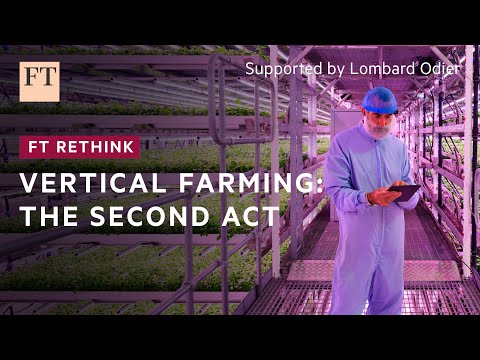
Can vertical farming overcome its growing pains? | FT Rethink
Financial Times· 2025-10-08 09:15
Industry Overview - Vertical farming has experienced a boom but also faced difficulties [1] - Over $6 billion was invested in vertical farming startups in the past decade [1] - The global market is expected to more than treble from around $8 billion in 2023 to about $25 billion in 2030 [4] Funding and Financial Challenges - Funding dropped significantly from over $2 billion in 2021 to around $280 million last year [2] - Major players like Barry Farming and App Harvest have collapsed [2] - High energy costs for LED lighting and ventilation are a major problem [2] - Higher interest rates have made financing more expensive [2] Challenges and Obstacles - Shortage of skilled labor is a contributing factor to the industry's struggles [3] - Secrecy around technology has hindered learning from mistakes [3] - More arable land is being used for biofuels, and soil degradation is a problem [5] - Crops are under pressure from climate change, and water scarcity is an issue [5] Future Prospects and Opportunities - Environmental, economic, and structural reasons could fuel demand for vertical farms [4][5] - Concerns about food security may drive the need to bring food sources closer to home [6] - Advances in AI could significantly improve the efficiency of vertical farms [6] - Vertical farming's potential is greater in areas like Singapore, which only grows 6% of its own produce [7]