
《人间》杂志

Search documents
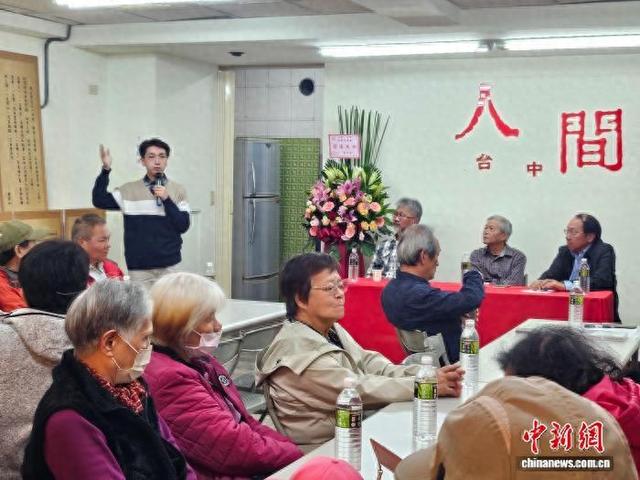
相会台中,相识“人间”
Xin Lang Cai Jing· 2026-01-28 20:59
Core Viewpoint - The "Humanity · Taichung" cultural exchange base has opened, aiming to foster community engagement and cultural understanding, continuing the ideals of the "Humanity" magazine founded by renowned writer Chen Yingzhen [2][3]. Group 1: Cultural Exchange and Community Engagement - "Humanity · Taichung" is designed as an open cultural gathering place, promoting activities such as cultural lectures and reading clubs to engage the public, especially low-income families [2]. - The opening event featured a tea gathering where guests shared their personal stories related to "Humanity," highlighting the magazine's role in connecting individuals and fostering a sense of community [3]. Group 2: Historical Context and Ideological Significance - The founding of "Humanity" magazine in 1985 by Chen Yingzhen aimed to rekindle social connections and understanding among people, advocating for a more compassionate society [2]. - Attendees at the event discussed the historical context of Taiwan's resistance against Japanese colonial rule, emphasizing the importance of understanding Taiwan's history in the face of contemporary political narratives [4][5]. Group 3: Legacy and Future Aspirations - The legacy of Chen Yingzhen and the "Humanity" magazine continues to inspire individuals to engage with Taiwan's history and cultural identity, with hopes for ongoing discussions about national unity [5]. - The publisher, Lan Bozhou, expressed a desire for more community involvement to support the continuation of Chen Yingzhen's ideals and the promotion of Taiwan's true historical narrative [5].
“人间·台中”文化交流基地在台中开幕
Xin Lang Cai Jing· 2026-01-25 14:08
Group 1 - The "Human · Taichung" cultural exchange base was inaugurated on January 24 in Taichung, created by the Human Publishing House and the Taiwan Political Victims Mutual Aid Association [1][2] - The base aims to continue the ideals of the late writer Chen Yingzhen, who founded the "Human" magazine in 1985, which ceased publication in 1989 [1][2] - The base is intended to serve as a cultural hub in Taichung, promoting public understanding of Taiwan's history of resistance against colonial rule since the Japanese occupation [2] Group 2 - Key figures associated with the base include Zhou Hongqi, president of the Taiwan Political Victims Mutual Aid Association, and Lan Bozhou, a well-known writer and publisher [2] - The base will focus on the humanitarian spirit found in Chen Yingzhen's literary works and the ideals shared with political victims, aiming to disseminate marginalized beliefs and social concerns [2]

陈映真的思想世界与当代回响
Xin Lang Cai Jing· 2026-01-02 23:43
Core Perspective - Chen Yingzhen is a significant figure in contemporary Chinese literature and thought, known for his dual perspective that transcends geographical and cultural boundaries, evoking resonance on cultural identity, historical memory, and ideological enlightenment across the Chinese-speaking world [1] Group 1: Overview of "Chen Yingzhen's Selected Works" - The collection is organized into five sections: the first focuses on autobiographical writings outlining his spiritual development; the second addresses the "rural literature debate" and related discussions; the third critiques "Taiwan independence" thoughts and colonial historical legacies; the fourth analyzes the cultural logic of contemporary consumer society; and the fifth explores the historical connections and spiritual dialogues between the two sides of the Taiwan Strait [1][2] Group 2: Evolution of Thought - The first section of the collection reflects Chen's evolution from personal melancholy to social concern and critical realism, influenced by his readings of Lu Xun, leftist literature, and Marxist theory [2] - Chen describes his life journey as walking in the "back street," symbolizing a steadfast intellectual path that resists both official literary norms and blind adherence to modernist trends, emphasizing a writing stance rooted in realism and social concern [2] Group 3: Critique of Modernism and Advocacy for Rural Literature - In the second section, Chen critiques Taiwanese modernism as a "sub-stream" of literature, arguing it lacks genuine thought and intellectual depth, and calls for a return to national roots and a focus on reality [3] - He defines "rural literature" not merely as a regional concept but as a manifestation of national spirit in literature, advocating for works that authentically depict the realities of Taiwanese society [3] Group 4: Global Context and Third World Perspective - Chen's advocacy for "rural literature" is framed within a global historical context, linking Taiwan's fate with that of other regions facing imperialism and cultural hegemony [4] - He critiques American aid as a vehicle for political and cultural dominance, while also warning against Japanese cultural infiltration [4] Group 5: Integration of Literature, Thought, and Social Practice - Chen views literary writing, critical thought, and social practice as inseparable, emphasizing that writing should engage with the land, connect with the people, and respond to history [5][6] - He criticizes intellectuals who fall into dogmatism and factional struggles, advocating for a genuine connection with reality and a commitment to the people [6] Group 6: Contemporary Relevance - The collection's significance lies in its call for a critical perspective that can guide individuals through consumerism and nihilism, emphasizing the importance of cultural continuity and subjectivity in a fragmented cultural landscape [7] - It urges a return to social engagement and direct perception of reality, while also seeking to restore critical connections within the "Third World" context [7] Group 7: Conclusion - "Chen Yingzhen's Selected Works" serves not only as a compilation of personal writings but also as an unfinished spiritual testament, reminding readers of the enduring tradition of connecting personal and national destinies within a global framework [8]