《伟大转折》演艺

Search documents
文博赋能与新消费破圈彰显中国黄金周文旅经济活力
Xin Hua Wang· 2025-10-08 10:40
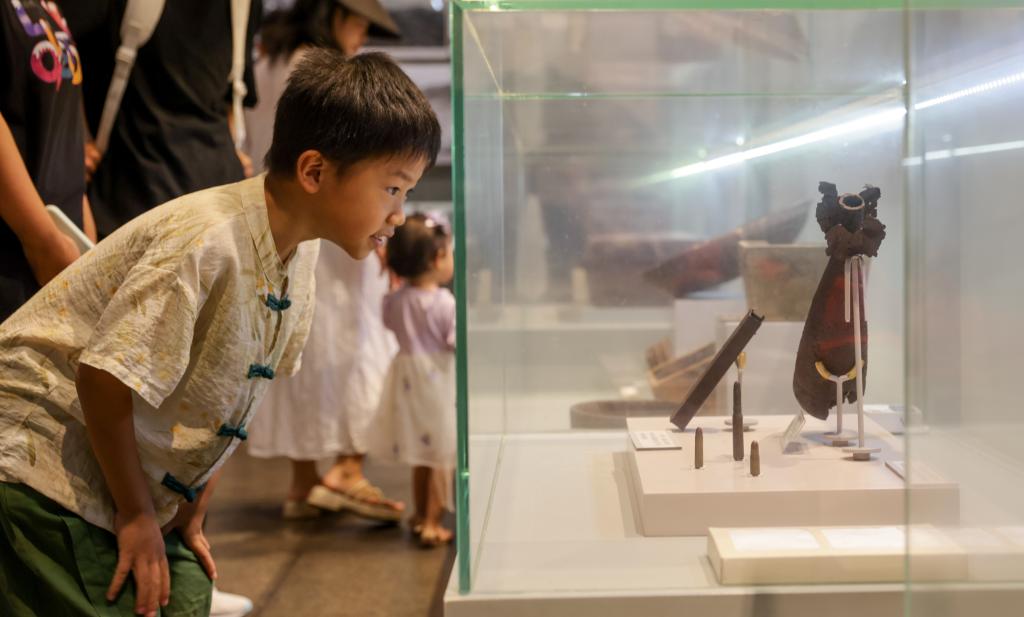
Core Insights - The article highlights the vibrant cultural tourism economy in China during the National Day holiday, showcasing how cultural heritage and new consumption trends are driving economic activity [1][4][8] Group 1: Cultural Tourism Development - The Zunyi Conference Memorial Hall in Guizhou remains a popular tourist destination, with immersive experiences like holographic projections enhancing visitor engagement [2][4] - The Palace Museum in Beijing has seen a surge in visitors due to the "Palace Cultural Relics Southward Migration Commemoration Exhibition," with ticket sales reaching daily limits [4][8] - Various cultural tourism sites, such as West Lake in Hangzhou, have experienced a significant increase in visitor numbers, reflecting the public's interest in China's rich cultural heritage [4][8] Group 2: New Consumption Trends - The Qingyun Market in Guiyang attracted 1.398 million visitors and generated a revenue of 20.89 million yuan during the holiday, indicating a shift towards experiential consumption [4][8] - The "night economy" is becoming a new driver for holiday consumption, with popular dining spots and entertainment venues seeing long queues and increased foot traffic [6][8] - The Chinese Ministry of Commerce reported a 9.8% year-on-year increase in per capita spending on education, culture, and entertainment, highlighting a growing trend in service consumption [6][8] Group 3: Policy and Market Collaboration - The Chinese government is actively promoting cultural tourism through various initiatives, including over 29,000 planned cultural tourism activities and 480 million yuan in consumer subsidies [6][8] - Local governments are implementing diverse strategies to enhance tourism experiences, such as extending opening hours for popular venues and optimizing reservation systems [8][9] - The overall inter-regional mobility during the holiday reached a historical high, with approximately 1.243 billion trips made, averaging over 310 million trips per day [8]