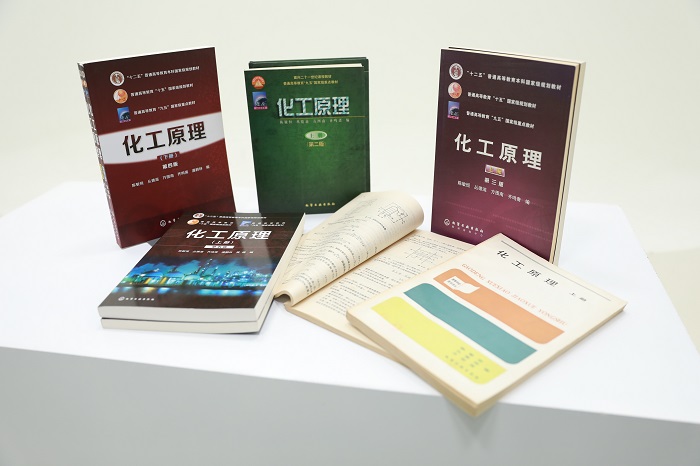
《化工原理》

Search documents
化工高教领域的一棵常青树——陈敏恒团队主编《化工原理》出版发行纪实
Zhong Guo Hua Gong Bao· 2026-01-16 02:36
Core Viewpoint - The textbook "Chemical Engineering Principles," edited by Professor Chen Minheng's team from East China University of Science and Technology, has been a cornerstone in chemical engineering education in China since its first publication in 1985, undergoing multiple revisions to adapt to industry needs and educational reforms [1][4][16]. Group 1: Historical Development - The first edition of "Chemical Engineering Principles" was published in 1985, breaking away from reliance on foreign textbooks and introducing innovative teaching concepts [5][6]. - The textbook has been recognized as a key educational resource, receiving multiple national and provincial awards, including two national-level awards and six provincial-level awards [1][4]. - Over 40 years, the textbook has been adopted by nearly 100 universities across China, reflecting its widespread acceptance and impact on chemical engineering education [1][17]. Group 2: Educational Reforms and Innovations - The textbook has undergone five editions, each reflecting advancements in chemical engineering and educational methodologies, with the latest edition published in 2020 [1][16]. - The revisions have focused on enhancing students' practical skills and innovative capabilities, aligning with the evolving demands of the chemical industry and higher education [9][14]. - The fifth edition incorporates modern teaching technologies, including multimedia resources and updated case studies, to improve learning outcomes [16][17]. Group 3: Content and Structure - The core content of the textbook revolves around the principles of momentum, heat, and mass transfer, as well as chemical reaction engineering, which are essential for various applications in the chemical industry [4][9]. - Each edition has progressively integrated contemporary topics such as green chemistry and new material technologies, ensuring relevance to current industry practices [16][17]. - The structure of the textbook has consistently emphasized a unified theoretical framework, linking various unit operations to enhance students' understanding of complex engineering problems [7][10].