
绿色化工

Search documents
我国首个外商独资重化工项目——巴斯夫(广东)一体化基地项目全面建成投产
Nan Fang Ri Bao Wang Luo Ban· 2026-03-30 10:17
Core Viewpoint - The BASF (Guangdong) integrated base project has been fully completed and put into operation, marking a significant milestone for BASF in enhancing resilience and achieving global diversification amidst geopolitical tensions and supply chain challenges [2][3]. Group 1: Project Overview - The BASF (Guangdong) integrated base is China's first wholly foreign-owned heavy chemical project, officially starting construction in November 2019 after a memorandum was signed in July 2018 [1]. - The project has a production capacity of 1 million tons of ethylene annually, supporting various industries such as automotive, electronics, pharmaceuticals, and daily chemicals [5]. - The base is designed to utilize 100% renewable energy, aiming to reduce energy costs and reliance on single raw materials through a mixed raw material model [3][5]. Group 2: Market Context - The global petrochemical industry is facing unprecedented challenges, with geopolitical conflicts and rising oil prices (over $90 per barrel) impacting costs and supply chains [2]. - The United Nations Conference on Trade and Development (UNCTAD) reports a continued reduction in investment in traditional manufacturing, highlighting the need for companies to adapt to changing global dynamics [2]. Group 3: Strategic Importance - The project reflects BASF's confidence in the Chinese market and its commitment to local production, which helps reduce dependency on imports and provides reliable supply to downstream customers [6][8]. - The integrated base is expected to attract over 50 petrochemical enterprises to Zhanjiang, creating a petrochemical industry ecosystem with an annual output value exceeding 120 billion yuan [6]. Group 4: Future Opportunities - The "14th Five-Year Plan" outlines new development opportunities for the petrochemical industry in China, emphasizing high-quality development and the cultivation of strategic emerging industries [4]. - The project serves as a model for foreign enterprises to seize opportunities in the Chinese market and integrate deeply into local operations [4]. Group 5: Regional Development - Guangdong's favorable investment environment, characterized by open policies and a robust manufacturing base, has made it an attractive destination for foreign investment [7][8]. - The region is home to a diverse range of manufacturing industries, providing a solid foundation for foreign companies to thrive and innovate [8].

巴斯夫(广东)一体化基地已拥有全流程生产能力 将有助于维护全球石化产业链供应链安全稳定
Nan Fang Ri Bao Wang Luo Ban· 2026-03-27 08:32
Core Viewpoint - The BASF (Guangdong) integrated base project has officially commenced full production, marking a significant milestone as China's first wholly foreign-owned heavy chemical project, amidst global supply chain challenges and geopolitical tensions [1][3][4] Group 1: Project Overview - The BASF (Guangdong) integrated base is the largest single overseas investment by BASF, with a total investment of approximately €8.7 billion, and it is the third-largest integrated production base globally [16] - The project has launched 18 production units and 32 production lines, with an annual capacity of 1 million tons of ethylene, providing high-quality raw materials for various industries [7][16] - The base is notable for being the world's first large-scale integrated chemical facility to operate entirely on renewable energy [5][16] Group 2: Strategic Importance - The project is strategically significant for maintaining the stability of the global petrochemical supply chain, especially in light of disruptions in the Strait of Hormuz affecting raw material costs [1][3] - BASF's decision to invest in Guangdong reflects confidence in China's stable policy environment and development prospects, positioning the region as a preferred destination for foreign investment [4][13] Group 3: Market Dynamics - The global petrochemical industry is facing unprecedented challenges, with rising oil prices exceeding $90 per barrel due to geopolitical tensions, leading to increased costs and supply chain pressures [3] - In response to these market conditions, BASF has raised prices for its product lines in Europe by over 30% [3] Group 4: Future Opportunities - The "14th Five-Year Plan" outlines new development opportunities for the petrochemical industry in China, emphasizing high-quality development and the cultivation of strategic emerging industries [6] - The BASF project exemplifies how foreign enterprises can seize new opportunities in the Chinese market and integrate deeply into local operations [6][12] Group 5: Local Integration and Innovation - The project has fostered a local ecosystem, attracting over 50 petrochemical companies to Zhanjiang, creating an industrial chain with an annual output value exceeding 120 billion yuan [8][10] - BASF has leveraged local manufacturing capabilities, with over 80% of the equipment sourced from China, enhancing cost efficiency [14] - The facility is also a hub for innovation, having secured 69 patents and collaborating with local universities to advance green chemistry and smart manufacturing technologies [14]
巴斯夫(广东)基地战略价值显现
Sou Hu Cai Jing· 2026-03-27 01:52
Core Viewpoint - The BASF (Guangdong) Integrated Base project has officially commenced full production, marking a significant milestone as China's first wholly foreign-owned heavy chemical project, which is strategically important for stabilizing the global petrochemical supply chain amid geopolitical uncertainties [6][10][11]. Group 1: Project Overview - The BASF (Guangdong) Integrated Base is the company's third-largest integrated production facility globally, featuring 18 production units and 32 production lines, with an annual capacity of 1 million tons of ethylene [15][24]. - The project utilizes 100% renewable energy for its operations, positioning it as a model for sustainable and intelligent production in China and globally [11][24]. - The base is designed to provide high-quality raw materials for various industries, including automotive, electronics, and daily chemicals, thereby supporting the development of a world-class green petrochemical industry cluster in Guangdong [15][16]. Group 2: Market Context and Strategic Importance - The project is launched during a time of heightened geopolitical tensions, particularly in the Middle East, which has disrupted global energy transport routes and increased costs for petrochemical raw materials [8][9]. - BASF's investment in Guangdong reflects confidence in China's stable policy environment and growth potential, as well as the region's talent advantages [10][11]. - The project aims to mitigate risks associated with global supply chain disruptions by diversifying raw material sources and enhancing production flexibility [11][12]. Group 3: Economic and Investment Implications - The investment in the BASF (Guangdong) Integrated Base amounts to approximately €8.7 billion, representing the largest single overseas investment by BASF [24]. - The project is expected to attract over 50 petrochemical enterprises to the Zhanjiang area, creating a comprehensive petrochemical industry ecosystem with an annual output value exceeding 120 billion yuan [16][17]. - Guangdong's favorable investment climate, characterized by an open and inclusive development philosophy, has been pivotal in attracting foreign investment, as evidenced by the rapid establishment of new foreign enterprises in the region [19][21].

油价震荡的今天,读懂广东与巴斯夫的超前布局
Sou Hu Cai Jing· 2026-03-27 00:06AI Processing
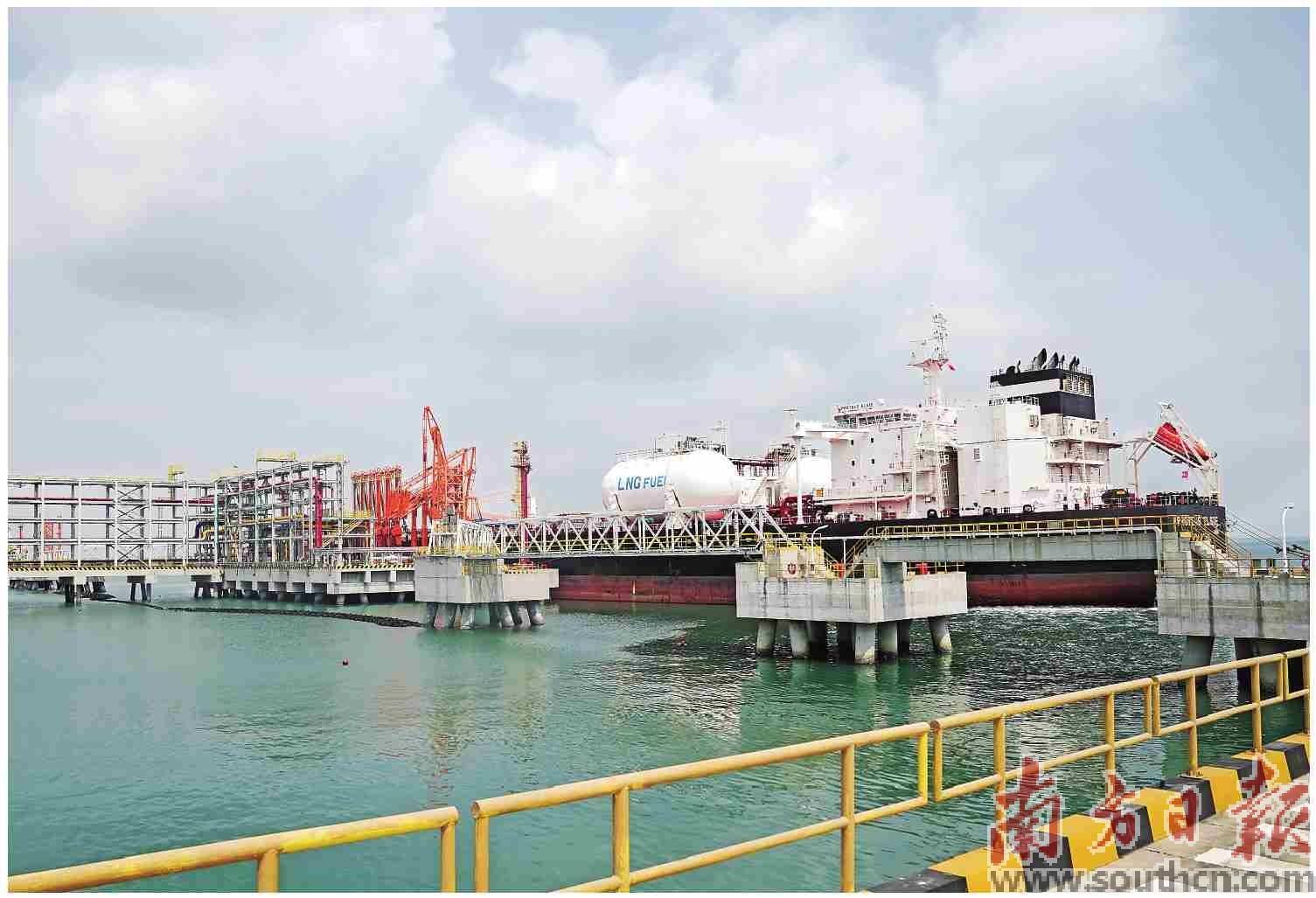
3月26日,湛江东海岛,我国首个外商独资重化工项目——巴斯夫(广东)一体化基地项目全面投产。 在基地北部的液体散货码头,一艘来自挪威装载着11吨石脑油的运输船正在停靠。作为化工生产的"基础血液",石脑油将经过输油臂与输油管道,进入基地 核心的乙烯联合装置,完成裂解后再送至下游设备,生产出乙二醇、丙烯酸等工业基础原料。 约6500海里外,全球能源运输要道霍尔木兹海峡航运受阻,不断推高石化原料成本与供应链风险,并冲击跨国投资者的信心。 七年前广东联手巴斯夫的超前布局,在全球变乱交织的当下,对于维护全球石化产业链供应链安全稳定的战略价值,正全面显现。而化工巨头始终坚定选择 广东,是世界百年未有之大变局下"风景这边独好"的最好印证——中国、广东依然是外资首选的投资目的地。 对冲全球市场风险 把握中国发展新机遇 巴斯夫(广东)一体化基地项目全面投产的节点,正处在一个微妙的时间窗口。 从环境看:美以伊战事持续,为国际经贸合作前景蒙上阴影。 联合国贸发会议最新发布的《全球投资趋势监测报告》显示,2025年传统制造业的投资持续缩减。更值得警惕的是,地缘政治冲突导致全球供应链重构加 速,部分国家推行的政策正在重塑跨国企业在海外 ...
国际化工巨头重仓中国
21世纪经济报道· 2026-03-26 13:48
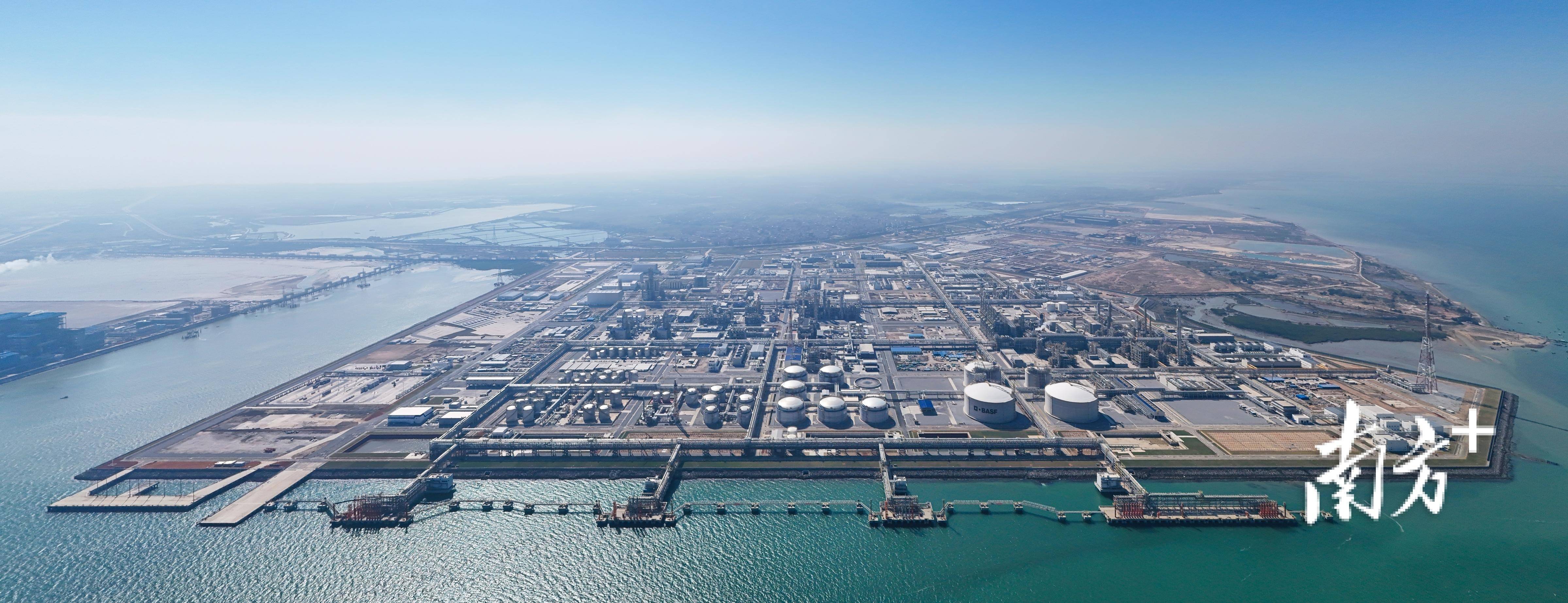
Core Viewpoint - BASF's Zhanjiang integrated base represents a significant milestone in the company's investment strategy in China, showcasing a blend of efficiency, sustainability, and advanced technology in the chemical industry [1][12]. Investment and Production - The Zhanjiang integrated base, with a total investment of €8.7 billion, is the largest single investment in BASF's history and marks the first wholly foreign-owned large-scale petrochemical project in China [1][12]. - The base has successfully launched 18 production units and 32 production lines, capable of producing over 70 products, including basic chemicals, intermediates, and specialty chemicals [7]. Sustainability and Innovation - The Zhanjiang base has achieved a 50% reduction in CO2 emissions compared to traditional petrochemical facilities through integrated processes and the use of renewable energy [5]. - The facility operates on 100% renewable energy, supported by long-term green electricity purchase agreements and investments in offshore wind farms [5][6]. Market Strategy and Local Impact - BASF's strategy emphasizes "local production serving local markets," with 70% of the production capacity in China directly supplying the local market [11]. - The company anticipates that sales in Greater China will reach approximately €8.2 billion by 2025, with the region expected to account for 18% to 19% of BASF's total revenue, up from 14% [10][11]. Competitive Advantage - The Zhanjiang base enhances BASF's competitive edge by maintaining high operational efficiency, with the Nanjing facility operating at nearly 95% capacity, compared to the industry average of 70% to 80% [12]. - The flexibility of the Zhanjiang facility allows it to process various raw materials, providing stability against market fluctuations and geopolitical uncertainties [6][12].
87亿欧元湛江基地全面投产,巴斯夫重仓中国
2 1 Shi Ji Jing Ji Bao Dao· 2026-03-26 12:36
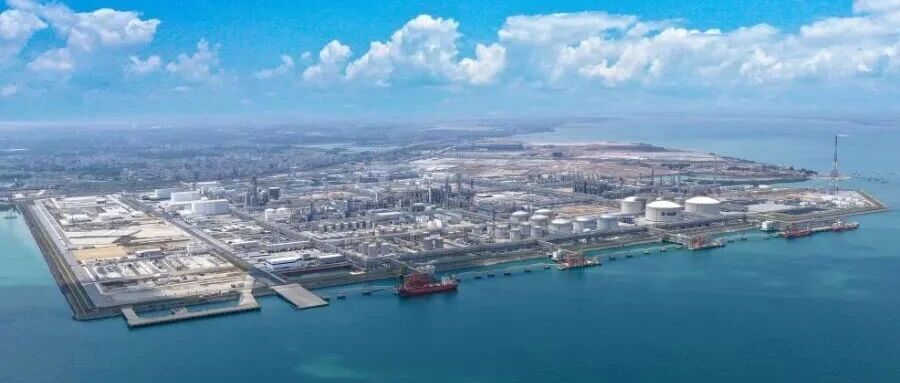
Core Viewpoint - BASF's Zhanjiang integrated base has officially commenced full production, marking a significant milestone as the first wholly foreign-owned large-scale petrochemical project in China, with a total investment of €8.7 billion, setting a record for BASF's single investment [1][10]. Group 1: Project Overview - The Zhanjiang integrated base was announced in 2018, began construction in 2019, and saw its first production unit launched in 2022, with core units expected to start producing by 2025-2026 [1]. - The base has successfully launched 18 units and 32 production lines, capable of producing over 70 products, serving various essential industries [5]. Group 2: Sustainability and Innovation - The Zhanjiang base is redefining green chemistry standards, achieving a 50% reduction in CO2 emissions compared to traditional petrochemical bases through integrated processes and renewable energy applications [3]. - The facility operates on 100% renewable energy, supported by long-term green electricity purchase agreements and investments in offshore wind farms [3][4]. Group 3: Strategic Importance - The Zhanjiang base serves as a critical platform for BASF's future development in China, aligning with the company's strategy of "local production for local markets" [7]. - By 2025, BASF's sales in Greater China are projected to reach €8.2 billion, with total investments exceeding €15 billion, highlighting the region's growing importance to the company [7][8]. Group 4: Competitive Advantage - BASF's integrated approach at the Zhanjiang base enhances its cost structure and reduces carbon emissions, providing a competitive edge in the market [6]. - The facility's flexibility in raw material processing allows it to adapt to market fluctuations, ensuring stable product output amidst geopolitical and economic uncertainties [4][9].
合成生物学赋能化工,4大趋势值得关注
合成生物学与绿色生物制造· 2026-03-25 07:52
Core Viewpoint - The article emphasizes the transformative potential of synthetic biology in the chemical industry, highlighting its ability to produce a wide range of chemical products sustainably and efficiently, with a projected economic impact of $100 billion by 2025 [2]. Group 1: Differences Between Synthetic Biology and Chemical Synthesis - Chemical synthesis involves a series of reactions to produce one or more products without the necessity of biological organisms, often resulting in significant pollution and CO2 emissions [4]. - Synthetic biology manufacturing utilizes renewable carbon resources like sugars and CO2, leading to cleaner and more efficient production processes that minimize environmental impact [4]. - Synthetic biology offers new pathways for the sustainable production of bulk chemicals, renewable chemicals, polymers, fine chemicals, and agricultural products, addressing the challenges of traditional chemical synthesis [4]. Group 2: Applications of Synthetic Biology in Chemical Production - Synthetic biology enables the industrialization of various bio-based products, including bio-based succinic acid, ethanol, and artemisinin, with the potential for all organic chemicals to be produced through synthetic biology [6]. - The integration of synthetic biology with AI and big data is expected to enhance the production of bio-based products, contributing to a sustainable bio-economy [6]. Group 3: Innovations in Materials and Enzyme Processes - Synthetic biology presents significant innovation potential for new materials, surpassing traditional petrochemical innovations, with over 3 million new molecules and materials available for exploration [8]. - Enzyme catalysis, a method within synthetic biology, improves production processes in pharmaceuticals and other sectors by offering higher yields, purity, and reduced by-products compared to traditional fermentation methods [10]. Group 4: Biomass as a Substitute for Fossil Resources - Biomass can replace fossil resources for essential fuels and materials, significantly reducing CO2 emissions, with bio-based materials showing lower greenhouse gas emissions compared to petrochemical materials [11]. - The potential for greenhouse gas reduction from bio-based materials is substantial, with estimates suggesting reductions of up to 2.9 billion tons per year if fully adopted in the U.S. [11]. Group 5: Advantages of Synthetic Biology in the Chemical Sector - Synthetic biology utilizes renewable raw materials, aligning with carbon neutrality goals, and promotes a closed carbon cycle through the use of biomass [14]. - The production processes in synthetic biology are energy-efficient, with potential energy savings of 30%-50% compared to traditional methods, and future potential reaching 50%-70% [15]. - Cost advantages are evident, with some bio-based chemicals produced at lower costs than their petrochemical counterparts, such as a 20% cost reduction for bio-based succinic acid [16]. - Higher selectivity and efficiency in producing complex molecules are achieved through synthetic biology, simplifying processes and reducing impurities [17].

磷化工热潮:这门老产业如何驱动未来
QYResearch· 2026-02-27 02:23
Core Insights - The phosphorus chemical industry is a heavy chemical industry based on phosphate rock, producing phosphoric acid, yellow phosphorus, phosphates, fertilizers, and high-end organic/inorganic phosphorus chemicals, playing a crucial role in agriculture and emerging sectors like new energy materials and electronic chemicals [1][2]. Industry Overview: Market Value and Scale - The phosphorus chemical industry is a foundational sector of the national economy, with products spanning agriculture, chemicals, new energy, electronics, and pharmaceuticals. The global market for yellow phosphorus and its derivatives is expected to grow from approximately $5.65 billion to about $6.91 billion between 2025 and 2030, with a compound annual growth rate (CAGR) of around 4.1%. Key growth drivers include stable agricultural fertilizer demand and the expansion of emerging application fields [2]. - The global market for phosphorus chemical-related products is projected to reach approximately $65 billion in 2024 and is expected to grow to about $80 billion by 2033 (equivalent to approximately ¥5600 billion to ¥6800 billion) [2]. Industry Chain and Upstream-Downstream Relationships Upstream - The upstream sector is primarily constrained by phosphate rock resources. China is one of the world's major phosphate rock producers, but high-grade phosphate rock is relatively scarce, with a production ratio of high-grade (P₂O₅≥30%) below 10%, leading to increased reliance on imports and efficient resource development [4]. Midstream - Core products include yellow phosphorus, wet phosphoric acid, monoammonium phosphate, and diammonium phosphate. Traditional applications account for about 60% of industry demand in agriculture, while new energy materials, such as lithium iron phosphate (LFP), are rapidly growing [5]. Downstream - In agriculture, basic and enhanced fertilizers remain traditional pillars of demand. The rapid growth of lithium iron phosphate batteries is a new demand growth point in the new energy sector. The high-end chemical and electronic sectors are experiencing rapid development in niche areas such as electronic-grade phosphoric acid, flame retardants, and specialty solvents [6][10]. Downstream Demand Hotspots and Consumer Complaints - Agricultural demand remains rigid due to global food security strategies, particularly in developing countries where the area for food crop planting is expanding [7]. - The production of lithium iron phosphate batteries is surging, with a year-on-year increase of over 50% in the first three quarters of 2024 in China, making it a new growth engine for the phosphorus chemical industry [8]. - Consumer complaints mainly focus on the unstable effectiveness of fertilizers, discrepancies between product quality and advertising, as well as concerns regarding mineral and chemical production safety and the environmental issues related to phosphogypsum storage [9]. Trends and Highlights - Traditional agricultural demand continues to dominate but is stabilizing in growth rate. The new energy battery sector (LFP/PF/Li-ion) is rapidly expanding and has become the most active growth engine. The fine chemical sector offers high profit margins, but there are high technical and quality barriers [11]. Company Insights - Major companies in the industry include: - OCP Group: $9.8 billion revenue, a global phosphate giant controlling Morocco's high-grade phosphate resources, significantly influencing international phosphate fertilizer and phosphate salt exports [12]. - PhosAgro: $6.5 billion revenue, a leading Russian phosphorus chemical company with high-grade mineral resources, notable international market share [12]. - Yuntianhua Group: $8.8 billion revenue, one of China's largest phosphorus chemical companies with strong domestic resource integration capabilities [12]. - Xingfa Group: $3.8 billion revenue, a key Chinese phosphorus chemical enterprise with a comprehensive product line [12]. - Batian Co.: $0.47 billion revenue, a medium-sized company primarily serving the domestic agricultural market [12]. - Xinyangfeng Agricultural Science: $2.3 billion revenue, a domestic mid-to-large agricultural and phosphorus chemical enterprise with innovation capabilities [12]. Future Predictions - By 2030, the global market for yellow phosphorus and its derivatives is expected to reach approximately $6.9 billion, while the broader phosphorus chemical market is projected to reach about $80 billion by 2033. Key drivers include stable agricultural demand, rapid growth in new energy materials, and policy support for high-value technology development and environmental transformation [13]. - The phosphorus chemical industry is evolving from a traditional fertilizer supply chain to a critical player in energy transition, electronic materials, and green chemistry, driven by technological innovation and digitalization [13].


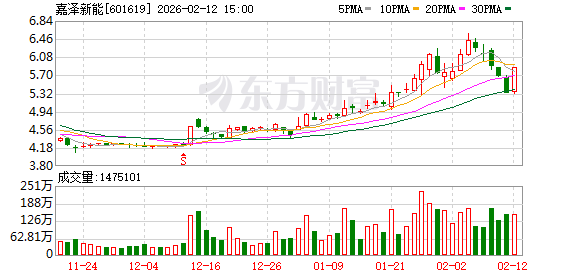
嘉泽新能:目前尚未开展海上风电业务
Zheng Quan Ri Bao· 2026-02-12 10:11
Core Viewpoint - The company is focusing on the development of green hydrogen and chemical projects, marking a significant step in its green chemical sector expansion [2] Group 1: Company Developments - The company is currently monitoring offshore wind power business but has not yet initiated any projects in this area [2] - The company announced the investment in a green hydrogen and chemical co-production project in Jixi City, Heilongjiang Province, with a capacity of 300,000 tons [2] - This project is seen as a key initiative to enhance the company's position in the green chemical industry and is expected to serve as a model for future developments [2]

以合成生物赋能绿色化工——记华恒生物董事长兼总经理郭恒华的创新实践与产业担当
Zhong Guo Hua Gong Bao· 2026-02-10 03:03
Core Insights - The article emphasizes the transformative role of synthetic biology in reshaping the chemical industry towards a green and low-carbon future, with Anhui Huaheng Biotechnology Co., Ltd. as a leading player in this change [1][2]. Group 1: Company Leadership and Strategy - Guo Henghua, the chairman and general manager of Huaheng Biotechnology, has successfully positioned the company as a leader in the amino acids and bio-based products sector through keen market insights and technical expertise [1]. - The company adopts an "engineering mindset" throughout the product development and industrialization process, ensuring a seamless transition from laboratory breakthroughs to market-ready products [1][2]. Group 2: Technological Advancements and Industrialization - After initial technological breakthroughs in amino acids, the company focused on pilot testing and scaling up to address critical issues such as stability, batch consistency, and cost control, leading to long-term stable operation of industrial facilities [2]. - The research team enhances production efficiency and yield by optimizing fermentation processes and purification methods, ensuring a stable market supply of bio-based materials and functional raw materials [2]. Group 3: Global Market Position and Collaboration - Under Guo Henghua's long-term strategic vision, Huaheng Biotechnology maintains a leading position in the global market and continues to expand its core role in the international supply chain [2]. - The company has established partnerships with multiple international firms, broadening its overseas market presence and solidifying its position within the global bio-manufacturing industry [2]. Group 4: Future Outlook - As synthetic biology technology continues to evolve, the company aims to explore pathways for high-quality development in China's bio-manufacturing sector and contribute to the high-quality growth of the chemical economy [3].
