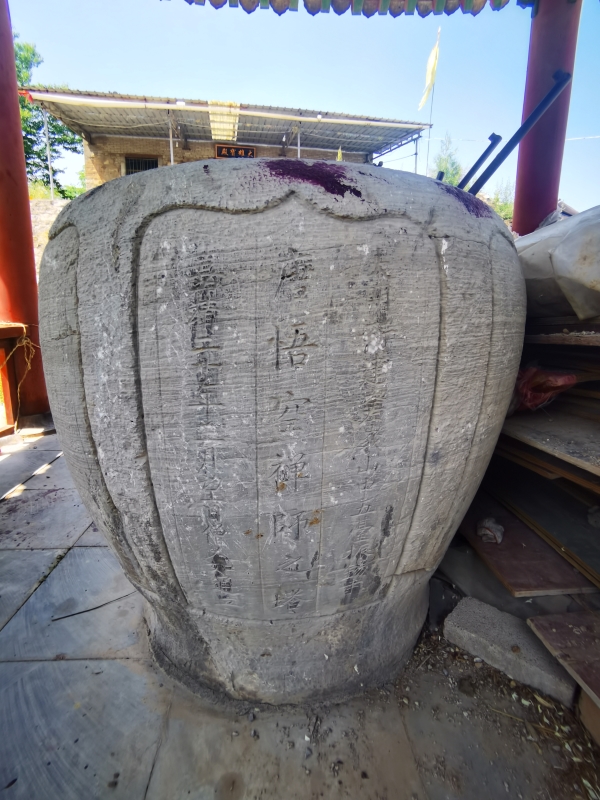
《大唐贞元新译十地等经记》

Search documents
当文明与秩序崩塌之时
Jing Ji Guan Cha Bao· 2026-02-10 10:07
Core Viewpoint - The narrative of "Another Journey to the West" by Miao Zixi explores the story of Che Fengchao, a Tang dynasty envoy, whose journey to the Western Regions reflects the rise and fall of the Tang dynasty amidst the backdrop of the An Lushan Rebellion and the geopolitical dynamics of the time [1][2][4]. Summary by Sections Historical Context - The Tang dynasty was at its peak, exerting influence over the Western Regions and Central Asia, including the vassal state of Kucha, which sought protection from the Tang against the expanding powers of the Umayyad Caliphate and Tibet [2][4]. - The envoy Che Fengchao, under the guidance of a Kucha monk, sought refuge in India to escape the turmoil caused by the An Lushan Rebellion, which marked the decline of the Tang dynasty [2][3]. Geopolitical Dynamics - The narrative highlights the delicate balance that Kucha had to maintain between the three powers: the Umayyad Caliphate, Tibet, and the Tang dynasty [1][2]. - The historical backdrop includes the conflicts between nomadic and agrarian civilizations, with the Tang dynasty's establishment of protectorates in the Western Regions to manage these tensions [4][5]. Military Conflicts - The Tang dynasty faced significant military challenges, including the rise of the Eastern Turkic Khaganate and subsequent conflicts that led to territorial losses [6][7][10]. - The narrative discusses the military engagements between the Tang and Tibet, particularly the battles that drained the Tang's resources and ultimately led to the loss of the Western Regions [10][12]. Cultural and Individual Perspectives - Miao Zixi employs a documentary-style narrative to depict the personal journey of Che Fengchao, reflecting on the broader historical events while emphasizing individual experiences [13][14]. - The story illustrates the collapse of civilization and order, while simultaneously reshaping the worldview of the Central Plains, connecting various civilizations across Inner Asia, East Asia, and South Asia [14].
这位历史上真实的“悟空”,在由盛转衰的唐代经历了什么
Di Yi Cai Jing· 2025-12-26 04:10
提到"悟空",绝大多数人想到的肯定是《西游记》里的齐天大圣,然而历史上,真的有一位叫"悟空"的僧人,他 也去西天取过经。 这位悟空原名车奉朝,是唐朝一名平民家庭出身的低阶武官。天宝十载(751年)他21岁,奉唐玄宗之命出使中亚 的罽宾国。不巧,唐朝使团返程时,他得了重病,滞留在罽宾。他本想和下一批罽宾使臣一起回唐,没想到"安史 之乱"爆发,唐朝在西域的影响力急剧降低,接连在与大食、吐蕃的西域争霸中失利。夹缝中求生存的罽宾为了自 保,不敢收留车奉朝,他只能剃度为僧,在南亚、中亚和西域各地漂泊近40年,终于在790年回到长安。此时的他 已是一位伶仃老僧。 历史上,真的有一位叫"悟空"的僧人,他也去西天取过经。 "以前关于安史之乱,更多是讲唐玄宗、安禄山,还有杨贵妃、杨国忠、郭子仪等大人物的。但是通过悟空这样一 个被迫滞留在异域的小人物的经历可以看出,安史之乱不仅导致唐朝由盛转衰,还对整个亚洲大陆的国际格局产 生了很重要的影响,这才导致悟空如此颠簸浪荡的一生。今天是全球化的时代,我重新写出悟空的人生经历,可 能会更容易和大家产生共鸣。"历史作家苗子兮说。 2023年秋天,苗子兮在新疆北庭故城遗址博物馆里一块小小的展 ...