
修昔底德陷阱

Search documents
关税战不出结果,军舰闯不出安全:美国终于明白,中国不是软柿子
Sou Hu Cai Jing· 2026-02-22 03:44
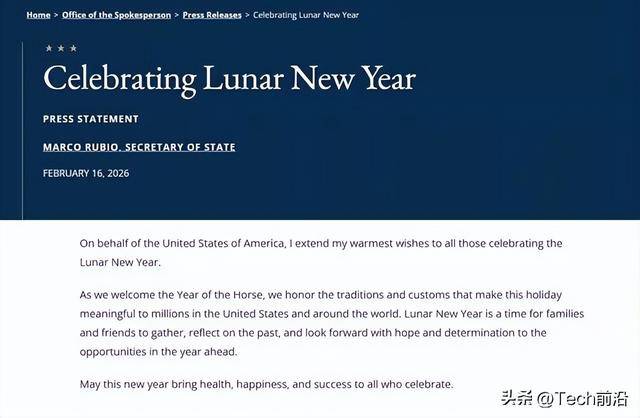
Group 1 - The core message of the article highlights the significance of U.S. Secretary of State Rubio's Lunar New Year greetings as a gesture of goodwill towards China, reflecting the growing cultural influence of China in the U.S. [3] - Rubio's greetings indicate that the mainstream U.S. society is increasingly recognizing the cultural contributions of the Chinese and broader Asian communities, which now exceed 6 million in the U.S. [3] - The article discusses the historical context of U.S.-China relations, noting that the U.S. has benefited economically from its relationship with China since the early 2000s, when China became a major trading partner [4][6] Group 2 - The article outlines the shift in U.S. policy post-2016, where trade protectionism has risen, leading to increased economic friction between the two nations, particularly targeting China's emerging industries [6][9] - Despite the trade tensions, the U.S. remains economically dependent on China, as evidenced by the continued flow of goods from China through alternative routes [6] - The potential for a thaw in U.S.-China relations is suggested with upcoming diplomatic engagements, particularly with Trump's anticipated visit to China [8] Group 3 - The article emphasizes the complexity of U.S.-China relations, noting that while there are efforts to foster cooperation, the U.S. continues to pursue strategies that may hinder China's global influence [9][11] - It calls for a balanced approach to U.S.-China relations, advocating for dialogue and negotiation to address differences while recognizing mutual interests [9] - The article concludes with a vision for a new type of great power relationship that fosters cooperation and trust, rather than falling into historical traps of conflict [11]

综合开发研究院原院长、经济学家樊纲荣膺“2025年度十大宏观经济学家”
Xin Lang Cai Jing· 2026-02-11 03:32
Group 1 - The core viewpoint of the article highlights the announcement of the "Top Ten Macroeconomists of 2025," emphasizing the need for proactive fiscal policies and moderately loose monetary policies to support China's economic development amidst challenges [1][3] - The evaluation of the economists was conducted by a committee considering five dimensions: professionalism, influence, innovation, foresight, and activity level, with results based on voting and reference to the foresight and output rates of their works [2][4] Group 2 - Economist Fan Gang was awarded the title of "Top Ten Macroeconomists of 2025," with notable insights including the importance of addressing the impact of AI on employment while promoting new industries and jobs created by AI [5] - Fan Gang raised questions about whether China can avoid the "Thucydides Trap" and find a new direction for economic development [5] - He pointed out that "involution" and vicious competition partly stem from an imperfect merger and acquisition mechanism [5] - In discussions about building a maritime power, he emphasized leveraging latecomer advantages through higher levels of openness [5] - Fan Gang also discussed the transformation of the perception of "Made in China" from misunderstanding to recognition [5]
当文明与秩序崩塌之时
Jing Ji Guan Cha Bao· 2026-02-10 10:07
Core Viewpoint - The narrative of "Another Journey to the West" by Miao Zixi explores the story of Che Fengchao, a Tang dynasty envoy, whose journey to the Western Regions reflects the rise and fall of the Tang dynasty amidst the backdrop of the An Lushan Rebellion and the geopolitical dynamics of the time [1][2][4]. Summary by Sections Historical Context - The Tang dynasty was at its peak, exerting influence over the Western Regions and Central Asia, including the vassal state of Kucha, which sought protection from the Tang against the expanding powers of the Umayyad Caliphate and Tibet [2][4]. - The envoy Che Fengchao, under the guidance of a Kucha monk, sought refuge in India to escape the turmoil caused by the An Lushan Rebellion, which marked the decline of the Tang dynasty [2][3]. Geopolitical Dynamics - The narrative highlights the delicate balance that Kucha had to maintain between the three powers: the Umayyad Caliphate, Tibet, and the Tang dynasty [1][2]. - The historical backdrop includes the conflicts between nomadic and agrarian civilizations, with the Tang dynasty's establishment of protectorates in the Western Regions to manage these tensions [4][5]. Military Conflicts - The Tang dynasty faced significant military challenges, including the rise of the Eastern Turkic Khaganate and subsequent conflicts that led to territorial losses [6][7][10]. - The narrative discusses the military engagements between the Tang and Tibet, particularly the battles that drained the Tang's resources and ultimately led to the loss of the Western Regions [10][12]. Cultural and Individual Perspectives - Miao Zixi employs a documentary-style narrative to depict the personal journey of Che Fengchao, reflecting on the broader historical events while emphasizing individual experiences [13][14]. - The story illustrates the collapse of civilization and order, while simultaneously reshaping the worldview of the Central Plains, connecting various civilizations across Inner Asia, East Asia, and South Asia [14].
理论月刊丨赵忠秀:中美体系竞争下的中国战略突围
Sou Hu Cai Jing· 2026-02-05 04:22
Core Viewpoint - The core strategy of the U.S. towards China is to contain its development, shifting from indirect economic means to direct technological restrictions [3][4][5] Group 1: Current State of U.S.-China Competition - The U.S.-China trade disputes, which began in 2018, have escalated from tariff conflicts to investment and personnel flow restrictions, fundamentally rooted in a technological competition [4][5] - The U.S. is increasingly using technology wars as a tool to limit China's growth, indicating a shift in policy focus from economic engagement to strategic competition [3][4] Group 2: Key Areas of Technological Competition - The global competition in "key core technologies" such as semiconductors, artificial intelligence, quantum information, new materials, and energy storage is intensifying, with these areas becoming the main battleground for technological and industrial competition [5][6] - The global semiconductor market is projected to reach $630.6 billion in 2024 and nearly $1 trillion by 2026, highlighting its critical role in industrial and national security [5] - In artificial intelligence, China accounted for 69.7% of global AI patent grants in 2023, while the U.S. share dropped from 42.8% in 2015 to 14.2% [5] Group 3: U.S. Strategies to Restrict China - The U.S. has implemented technology blockades against China, focusing on investment restrictions and export controls, alongside limiting the flow of researchers [8][9] - The U.S. aims to restructure supply chains and has enacted laws to limit tax credits for companies associated with "prohibited foreign entities," targeting Chinese firms [8][9] - The U.S. is also striving to establish standards in emerging technologies, emphasizing the importance of standards for economic and national security [8][9] Group 4: Challenges and Advantages for China - China faces challenges in R&D spending, which, while increasing, remains lower than that of the U.S. and some European countries, and there is a need to enhance the originality of patents and influence in international standard-setting [9][10] - However, China possesses a complete industrial system across all categories, forming a self-sufficient and efficient supply chain that is difficult for developed and developing economies to replicate [9][10] Group 5: Strategic Recommendations for China - China should enhance its technological self-reliance and effectively utilize global innovation resources by increasing R&D investment and fostering collaboration between academia and industry [11][12] - There is a need to support foundational sciences and original research, focusing on critical issues and encouraging talent to propose new theories and explore new fields [11][12] - Improving the standard-setting system and maintaining international cooperation in standards is crucial for enhancing China's influence in global technology [12][20]

哈佛大学教授艾利森:关税战让美国对中国有了更务实的认知
Xin Lang Cai Jing· 2026-01-25 11:01
Group 1 - The core viewpoint is that the U.S. has developed a more pragmatic understanding of China post the 2025 tariff war, recognizing it as an equally strong economic competitor [1][3] - The tariff war led both the U.S. and China to realize their interdependence, necessitating cooperation and stabilization of bilateral relations [3] - The concept of the "Thucydides Trap" suggests that structural conflicts exist between rising and established powers, which the U.S. and China must confront [1] Group 2 - Trump's approach to China is distinct from his dealings with other countries, indicating a recognition of China's significance [1] - The Taiwan issue is highlighted as a potential flashpoint, with the recent political changes in Taiwan posing a threat that could escalate tensions [3] - There is speculation that Trump may reach some consensus with China regarding Taiwan during his potential second term, although outcomes remain unpredictable [3]

进步与再平衡:愿黄金时代永不落幕
Jing Ji Guan Cha Bao· 2026-01-24 12:04
Group 1 - The article draws parallels between the cultural flourishing of medieval Baghdad and industrial revolution-era England, highlighting the significance of bookstores in both societies [1] - During the Renaissance, the emergence of a new patronage system allowed wealthy families like the Medici to support artists, leading to a close relationship between art and commerce [2][3] - The rise of the merchant class in the Netherlands contributed to a shift in artistic demand towards more personal and everyday themes, further democratizing art [2] Group 2 - The integration of craftsmen and intellectuals was crucial for technological advancement, as seen in the establishment of the Royal Society in England, which encouraged collaboration between knowledge and practical skills [3][4] - The absence of a strong centralized government in England allowed the market to thrive, fostering an environment conducive to innovation and the rise of the merchant class [7][8] - The industrial revolution was characterized by continuous progress, driven by technological innovations across various sectors, from steam engines to digital technologies [5][6] Group 3 - The transition of cultural centers from London to New York reflects the evolution of global power dynamics, with the U.S. embodying a decentralized system that fosters innovation [10][11] - The challenges faced by contemporary societies include balancing centralized planning with the need for decentralized innovation, particularly in the context of technological advancements [15][17] - The article emphasizes the importance of optimism and the redefinition of progress to avoid the decline of a golden age, suggesting that a focus on inclusivity and environmental sustainability is essential [17][18]
两岸圆桌派|汪涛、陈凤馨:大陆过去对台湾是“溺爱”,可惜台湾人没有意识到
Guan Cha Zhe Wang· 2025-12-30 03:23
Core Viewpoint - The ongoing US-China technology war has reached a critical stage, with China making significant advancements in various technology sectors, raising questions about Taiwan's position and future opportunities in this context [1][17]. Group 1: China's Technological Advancements - According to the Australian Strategic Policy Institute's report, China has established a leading position in over 60 out of 70 key technology areas, significantly surpassing the US [5]. - The "14th Five-Year Plan" emphasizes six key areas for technological breakthroughs, including integrated circuits and advanced materials, while also identifying new economic growth points such as quantum technology and hydrogen energy [2][3]. - China's approach to technology development is characterized by a broad exploration of all available technologies rather than a selective focus, allowing for a diverse range of innovations [10][16]. Group 2: Market Dynamics and Investment - The success of Chinese tech companies like Cambricon and Moore Threads is attributed to market-driven investments rather than government funding, highlighting the importance of private capital in fostering innovation [7][21]. - The shift from government-selected winners to market-selected winners has led to a more dynamic and competitive tech landscape in China, enhancing the conversion of research into commercial applications [8][9]. Group 3: Implications for Taiwan - Taiwan's reliance on TSMC raises concerns about its long-term economic sustainability, as the island lacks other significant industries to support its economy if TSMC were to relocate [24][25]. - The historical investment in the semiconductor industry has created a strong foundation, but there is a pressing need for Taiwan to diversify its economic base beyond TSMC to avoid becoming overly dependent [22][26]. Group 4: Future Outlook - The ongoing technological competition suggests that the US's strategy of containment may be ineffective, as China's advancements continue to challenge the status quo [17][20]. - The potential for collaboration between the US and China is acknowledged, but the technology war is expected to persist, influencing global market dynamics and investment strategies [3][18].

大陆过去对台湾是“溺爱”,可惜台湾人没有意识到
Guan Cha Zhe Wang· 2025-12-30 02:39
Core Insights - The ongoing US-China tech war has reached a critical stage, with China making significant advancements in various technology sectors, indicating a shift in global power dynamics [1][9][26] Group 1: China's Technological Advancements - China has established a leading position in over 60 out of 70 key technology areas, significantly surpassing the US in many fields [5][21] - The "14th Five-Year Plan" emphasizes six key areas for technological breakthroughs, including integrated circuits and advanced materials, while also identifying new economic growth points such as quantum technology and hydrogen energy [2][4] - The focus on artificial intelligence application is expected to accelerate, leveraging China's extensive supply chain and market size [4][12] Group 2: Market Dynamics and Innovation - The shift from government-led to market-driven selection of technology winners is crucial for fostering innovation in China, allowing for a more dynamic and competitive environment [8][10] - Young tech entrepreneurs are emerging as key players, with their success contributing to a cycle of investment and innovation within the tech sector [9][21] - The ability to convert academic research into commercial applications remains a critical factor for China's technological success [5][21] Group 3: Implications for Taiwan - Taiwan's reliance on TSMC as its primary technological asset raises concerns about its long-term economic sustainability, especially if TSMC's operations are relocated [22][24] - The historical investment in the semiconductor industry has positioned Taiwan well, but there is a need for diversification to avoid over-dependence on a single entity [24][25] - The changing geopolitical landscape necessitates a reevaluation of Taiwan's role in the tech ecosystem, as it faces competition from mainland China's rapid advancements [22][26]
以正确认知共寻相处之道——二〇二五中美经贸启示录②
Ren Min Ri Bao· 2025-12-29 03:32
Group 1 - The article highlights the impact of trade wars and tariffs on the U.S. market, leading to tight inventory and rising prices for Christmas goods, forcing consumers to adjust their holiday budgets [1] - It emphasizes that the zero-sum game mentality is detrimental to U.S.-China economic relations, causing ongoing tensions and trade frictions [1][2] - The article points out that the U.S. imposition of tariffs has not resolved trade deficits or improved industrial competitiveness, instead burdening American businesses and consumers [2] Group 2 - The piece illustrates the mutual benefits of U.S.-China trade cooperation, citing a viral TikTok video promoting a solar fan hat from China, which reflects the positive impact of trade on consumer welfare [2] - It notes that U.S.-China bilateral trade accounts for about one-fifth of global trade, highlighting the deep interdependence of the two economies [2] - The article argues that the "Thucydides Trap" is not an inevitable fate, and that both nations can find a new path for coexistence by abandoning the zero-sum mindset [3] Group 3 - The article stresses the importance of dialogue over confrontation, advocating for mutual cooperation instead of zero-sum competition to strengthen U.S.-China economic ties [3] - It mentions that recent discussions between the two countries' economic teams have clarified approaches to resolving mutual concerns, indicating a potential for improved relations [3] - The piece concludes that cooperation should be the cornerstone of U.S.-China relations, positioning economic collaboration as a stabilizing force rather than a source of conflict [3]
以正确认知共寻相处之道(钟声·大国外交·2025年度回眸)——二〇二五中美经贸启示录②
Ren Min Ri Bao· 2025-12-27 02:33
Group 1 - The core issue of the current era is for China and the U.S. to find a new path for major power relations, moving away from zero-sum game thinking [1][3] - The U.S. trade war and tariffs have led to tight inventory and rising prices for Christmas goods, forcing American consumers to adjust their holiday budgets [1] - The negative impact of tariffs on U.S. businesses and consumers is evident, with calls from the American business community to remove tariffs to stabilize supply chains [2] Group 2 - The essence of U.S.-China economic relations is mutual benefit rather than a win-lose scenario, with bilateral trade accounting for about one-fifth of global trade [2] - The cooperation between the two countries is crucial for addressing challenges, including inflation in the U.S., and has been recognized by various stakeholders [3] - Ongoing dialogues and negotiations between the two nations indicate a willingness to resolve differences and enhance cooperation, emphasizing the importance of dialogue over confrontation [3]