《小女婿》

Search documents
沈阳推广冬日非遗IP
Xin Lang Cai Jing· 2026-02-10 23:13
Core Viewpoint - The event "Winter Snow Warm Sun Intangible Cultural Heritage China Year" was held in Shenyang, promoting local intangible cultural heritage (ICH) and enhancing the recognition of Shenyang's ICH cuisine [1] Group 1: Event Overview - The event took place on February 8 at the "Main Character" Ancient Style Performing Arts City in Shenyang's Dadong District [1] - A promotional video titled "Inheritance of Intangible Cultural Heritage: The Taste of Shenyang" was showcased, along with the launch of the electronic version of the "Shenyang Intangible Cultural Heritage Cuisine Map" [1] Group 2: Performances and Activities - Traditional theatrical performances included the production "National Essence and Color: The Return of the Child" by the Shenyang Peking Opera, which explored the cultural heritage of horse in Peking Opera [1] - The Shenyang Pingju Theatre presented classic segments from "The Yang Family Generals," "The Little Son-in-Law," and "Xie Yao Huan," highlighting the charm of Pingju art [1] Group 3: Immersive Experience - An immersive ICH experience area was set up, showcasing nearly 20 ICH projects such as Li's Sugar Figurines, traditional incense making, Liao San Cai pottery, Sibei archery, and Manchu embroidery [1] - Local ICH cuisine, including Liao cuisine, Dongguan's "Four Unique Dishes," and Laobian Dumplings, were featured alongside performances of Northeast traditional music like Liao Zhong Drum and Northeast Big Drum [1] Group 4: Organizers - The event was guided by the Shenyang Municipal Party Committee Propaganda Department and organized by the Shenyang Municipal Bureau of Culture, Tourism, and Radio and Television, along with Shenyang Broadcasting and Television Station [1]
温故|从工地到广场,京城露天演出何以火热七十年?
Xin Lang Cai Jing· 2025-12-24 22:53
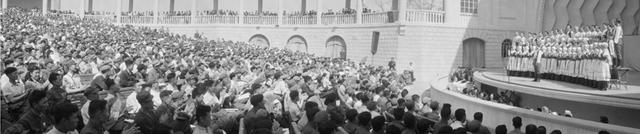
Core Viewpoint - The article highlights the enduring popularity and cultural significance of outdoor performances in Beijing, showcasing their evolution from the 1950s to the present day, and their role in enriching the cultural life of citizens across generations [1][2][6]. Historical Context - In the 1950s, outdoor performances emerged as a vital means to meet the cultural needs of the population, especially in factories, mines, and rural areas, where they were more appreciated than indoor theater performances [2][3]. - The Beijing Opera and other performing arts groups began touring rural areas and construction sites to provide entertainment, with notable performances reaching over 100,000 audience members in just two months [3][4]. Cultural Evolution - The 1980s and 1990s saw the rise of new forms of outdoor performances, such as summer evening concerts in parks, attracting thousands of attendees despite weather challenges [8][9]. - By the late 1990s, community music events and outdoor performances became increasingly popular, allowing residents to enjoy free shows close to home [9][11]. Modern Developments - The 2000s marked a significant expansion in outdoor cultural events, with the "Beijing Rendezvous" festival featuring performances from international artists and drawing large crowds [20]. - The successful bid for the 2008 Olympics catalyzed the development of public cultural spaces, enhancing the infrastructure for outdoor performances and increasing public engagement [18][27]. Recent Trends - In recent years, Beijing has continued to innovate in outdoor cultural offerings, with events like the Grand Canal Music Festival and the International Outdoor Music Film Week, attracting both local and international audiences [27]. - The scale of outdoor performances has grown, often drawing tens of thousands of spectators, reflecting a vibrant cultural scene that integrates various art forms [27].