《杨门女将》

Search documents
沈阳推广冬日非遗IP
Xin Lang Cai Jing· 2026-02-10 23:13
Core Viewpoint - The event "Winter Snow Warm Sun Intangible Cultural Heritage China Year" was held in Shenyang, promoting local intangible cultural heritage (ICH) and enhancing the recognition of Shenyang's ICH cuisine [1] Group 1: Event Overview - The event took place on February 8 at the "Main Character" Ancient Style Performing Arts City in Shenyang's Dadong District [1] - A promotional video titled "Inheritance of Intangible Cultural Heritage: The Taste of Shenyang" was showcased, along with the launch of the electronic version of the "Shenyang Intangible Cultural Heritage Cuisine Map" [1] Group 2: Performances and Activities - Traditional theatrical performances included the production "National Essence and Color: The Return of the Child" by the Shenyang Peking Opera, which explored the cultural heritage of horse in Peking Opera [1] - The Shenyang Pingju Theatre presented classic segments from "The Yang Family Generals," "The Little Son-in-Law," and "Xie Yao Huan," highlighting the charm of Pingju art [1] Group 3: Immersive Experience - An immersive ICH experience area was set up, showcasing nearly 20 ICH projects such as Li's Sugar Figurines, traditional incense making, Liao San Cai pottery, Sibei archery, and Manchu embroidery [1] - Local ICH cuisine, including Liao cuisine, Dongguan's "Four Unique Dishes," and Laobian Dumplings, were featured alongside performances of Northeast traditional music like Liao Zhong Drum and Northeast Big Drum [1] Group 4: Organizers - The event was guided by the Shenyang Municipal Party Committee Propaganda Department and organized by the Shenyang Municipal Bureau of Culture, Tourism, and Radio and Television, along with Shenyang Broadcasting and Television Station [1]
百戏入皖:双向奔赴的梨园和声
Xin Lang Cai Jing· 2025-12-25 01:00
Core Viewpoint - The "Hundred Operas Enter Anhui" event showcases a significant cultural initiative, bringing renowned Chinese opera performances to Hefei, enhancing local cultural engagement and appreciation for traditional arts [3][9]. Group 1: Event Overview - The "Hundred Operas Enter Anhui" event features over 60 opera masters, including approximately 30 "Meihua Award" winners, and aims to present a rich array of performances in Hefei [3][9]. - The event is part of a broader cultural strategy to promote traditional Chinese opera, with performances scheduled from late September to mid-December [3][4]. Group 2: Historical Context - The event draws historical parallels to the 1790 visit of the Hui opera troupes to Beijing, marking a significant moment in the evolution of Chinese opera and its integration into the national cultural fabric [4][5]. - The historical significance of the Hui opera troupes is highlighted, as they contributed to the development of Peking opera, showcasing the cultural exchange between different regional styles [4][5]. Group 3: Cultural Significance - The event emphasizes the importance of traditional Chinese opera as a vital part of cultural heritage, reflecting the artistic beauty and diversity of various regional styles [5][6]. - The initiative aims to foster a deeper connection between traditional arts and modern audiences, addressing the challenges of contemporary relevance for traditional performances [7][8]. Group 4: Economic Impact - The event has activated approximately 16,000 opera enthusiasts, generating nearly 80 million yuan in economic activity, and promoting local tourism through ticket incentives [9]. - The affordable ticket pricing strategy, with prices starting at 10 yuan and capped at 30 yuan, aims to make opera accessible to a broader audience [9].
为传承注入源头活水 让秦腔融入到城市的骨子里
Yang Guang Wang· 2025-12-11 22:36
Core Viewpoint - The Xi'an Yisushe, a century-old theater company, continues to thrive by integrating traditional Qin opera with contemporary narratives, reflecting the cultural essence of Xi'an and promoting the inheritance of Chinese traditional culture [1][2]. Group 1: Historical Significance - Established in 1912, Xi'an Yisushe is closely linked to the cultural heritage of Xi'an, serving as a vital platform for the transmission of Qin opera, which embodies the city's historical and cultural identity [1][2]. - The theater has been a significant witness to the evolution of local culture and has played a crucial role in preserving the artistic legacy of Qin opera over the past century [1]. Group 2: Artistic Development and Education - Li Dongfeng, a prominent actor, emphasizes the importance of understanding the audience's evolving preferences, noting that middle-aged viewers have remained a consistent demographic for Qin opera [3]. - The theater prioritizes the mentorship of young actors, with experienced artists like Li Dongfeng passing on their knowledge and skills to the next generation, ensuring the continuity of artistic traditions [4][5]. - Young actors are encouraged to cultivate a deep understanding of their roles through extensive reading and cultural immersion, which enhances their performance quality [5][11]. Group 3: Youth Engagement and Innovation - The theater has a significant proportion of young actors, constituting two-thirds of the company, which reflects a strategic focus on youth engagement and the future of Qin opera [15]. - Initiatives such as the Youth Support Fund and educational programs are in place to enhance the skills and academic qualifications of young performers, fostering a new generation of artists [15][17]. - The company is actively expanding its outreach by performing in prestigious institutions like Tsinghua University and Peking University, thereby promoting traditional culture to a broader audience [16]. Group 4: Challenges and Future Directions - The aging of veteran performers poses a challenge, making the mentorship of younger actors critical for the preservation of the art form [15]. - The theater is committed to balancing tradition with innovation, as seen in modern adaptations of classic works, which aim to attract younger audiences while maintaining the essence of Qin opera [13][14].
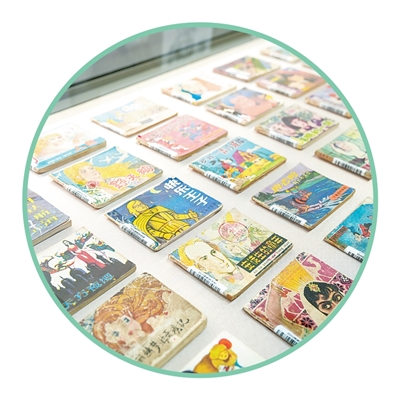
在小人书中读大世界
Ren Min Ri Bao· 2025-06-05 22:02
Core Viewpoint - The exhibition "Palm Qian Kun - The Era Memory in Reading" at the National Version Library's Hangzhou branch showcases the cultural significance of Chinese comic books, also known as "lianhuanhua," which have been a cherished part of childhood for generations, bridging cultural connections between China and the world [2][3]. Group 1: Historical Significance - Lianhuanhua became widely popular in China after the founding of the People's Republic, with notable works like Liu Jiu'er's colored comic "Wu Song Fights the Tiger" winning international awards, marking a significant achievement for Chinese comic artists [3]. - The first foreign award for a Chinese comic artist was won by Liu Jiu'er, who skillfully captured dynamic character movements and emotions in his works [3]. Group 2: Cultural Exchange - The exhibition highlights the international recognition of Chinese lianhuanhua, with artists like He Youzhi showcasing their work in France, which led to a surge of interest in Chinese comics among Western audiences [3][4]. - The reissue of "World Literary Classics Lianhuanhua" by Zhejiang People's Fine Arts Publishing House in 2013 reflects the enduring appeal of these works, featuring adaptations of classics by authors like Shakespeare and Hugo [4][5]. Group 3: Modern Developments - Recent years have seen a revival of lianhuanhua through digital reproduction and international translation, allowing these works to participate in global cultural dialogues [6]. - The release of French versions of Chinese classics, such as "Dream of the Red Chamber," has further solidified the international presence of Chinese lianhuanhua, with positive reviews from notable French publications [5][6].