《怨苍天变了心》

Search documents
无底线的老歌翻唱,正在榨干华语乐坛
Hu Xiu· 2025-09-11 07:16
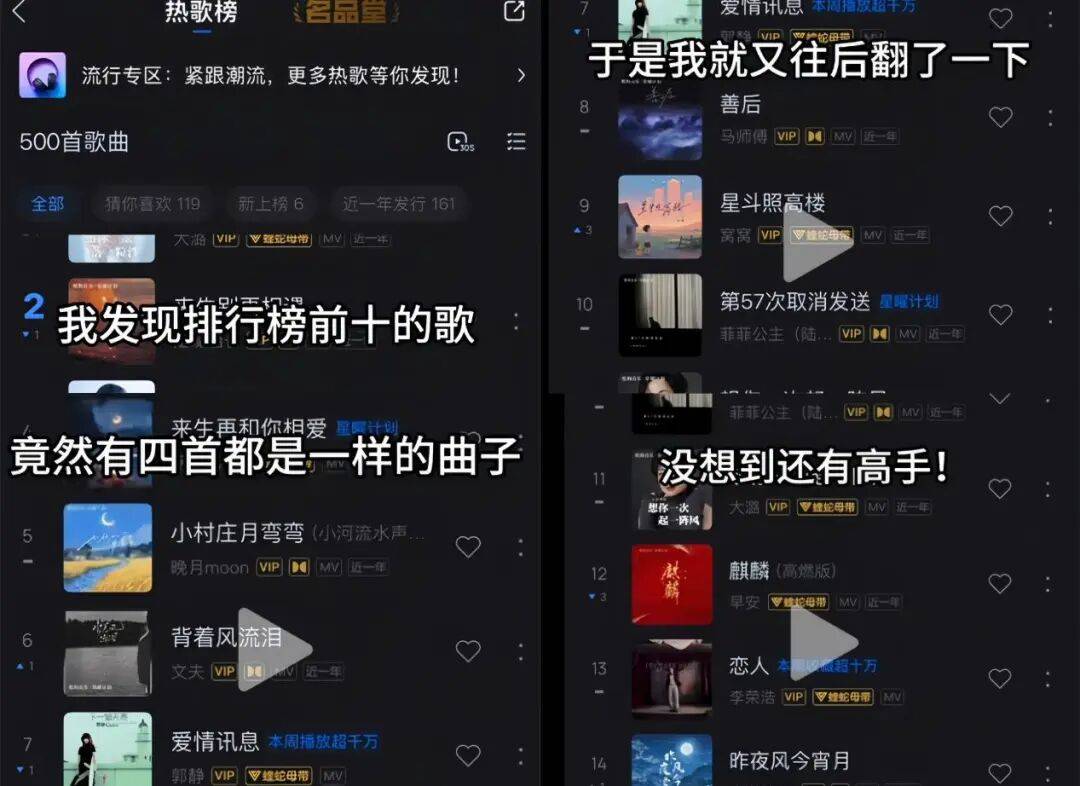
Core Insights - The article discusses the phenomenon of "song washing" in the Chinese music industry, highlighting how multiple versions of the same song, particularly "The Departure Station," dominate music charts [2][5][22]. Group 1: Song Washing Phenomenon - Musician Dong Yukun's criticism of the Chinese music scene has gained attention, noting the prevalence of highly similar songs on music platforms [2][6]. - "The Departure Station" has spawned numerous versions, with four variations in the top ten and over ten in the top 500, indicating a trend of mass production of similar songs [5][10]. - The article describes the process of song washing as a systematic approach to generating revenue through familiar melodies, exploiting algorithmic biases on music platforms [19][22]. Group 2: Industry Mechanisms and Challenges - The music industry faces systemic issues, including user preference for familiar melodies and vague copyright rules, which facilitate the song washing trend [22][30]. - Music platforms rely heavily on data-driven metrics for song rankings, which inadvertently favor washed songs due to their catchy melodies and straightforward lyrics [23][24]. - The article highlights the challenges faced by original creators in protecting their rights, as the costs of legal action are often prohibitive, leading to a decline in original content [30][32]. Group 3: Long-term Implications - The prevalence of washed songs threatens the originality and diversity of the music industry, potentially leading to a homogenized musical landscape [32][36]. - The article warns that the current ecosystem, driven by algorithmic incentives, may not sustain itself in the long run, as original creators may exit the industry due to inadequate protections and rewards [36][38]. - The lack of effective regulation and industry self-discipline exacerbates the problem, allowing opportunistic behaviors to flourish while original artists struggle [38][39].