《我要从南走到北》

Search documents
一本书读懂徐则臣的“北上”人生
Xin Lang Cai Jing· 2026-02-26 19:41
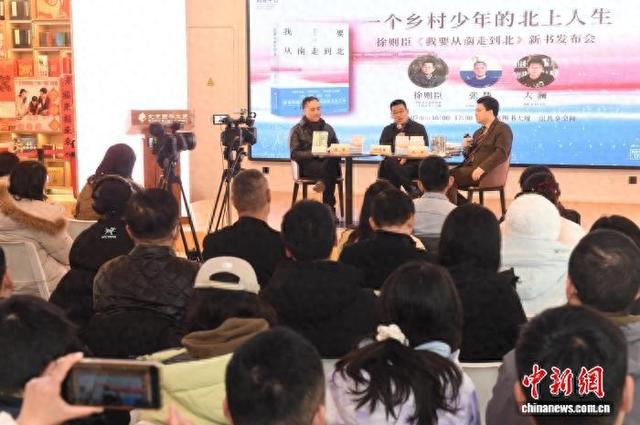
张楚则为"从南走到北"注入了精神层面的解读。他认为这已成为改革开放以来几代人共同的心理图式, 本质是"逃离与回归的冲突"。"年轻的时候,我们被时代、被欲望牵引着离开故乡,但精神、灵魂却可 能留在曾经的炕头、河流与玉米地里。"作为从县城走出的写作者,他将这种内心挣扎具体化为速度、 语言与情感的"三重错位"。然而,他视这种冲突为成长的必经之路,而文学正是那张随身携带的"皱巴 巴的地图","让我们回看走过的路时,心里感到安心"。 从乡村少年到茅奖作家: 《我要从南走到北》新书发布会现场,左二为该书作者徐则臣。 "人就怕不动,作家的写作与人生轨迹也需要不断地动,只有动起来,才有可能发生变化,才有机会出 现可能性。"作家徐则臣的人生,恰是一场持续的"北上"历程:从江苏连云港东海县青湖镇尚庄村的田 间少年,一步步走过村小、镇上初中、县城高中,再从淮安到南京读大学,最终抵达北京攻读研究生并 扎根于此,如今他身兼《人民文学》主编与茅奖作家双重身份。 近日,"一个乡村少年的北上人生——徐则臣《我要从南走到北》新书发布会"在北京举行。徐则臣与作 家张楚在B站文学UP主大澜的主持下,围绕徐则臣最新散文集《我要从南走到北》,展开了一 ...

《我要从南走到北》新书发布会在京举办
Xin Lang Cai Jing· 2026-02-12 11:17
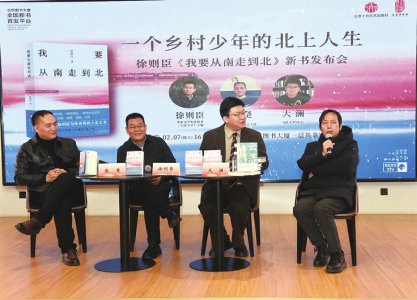
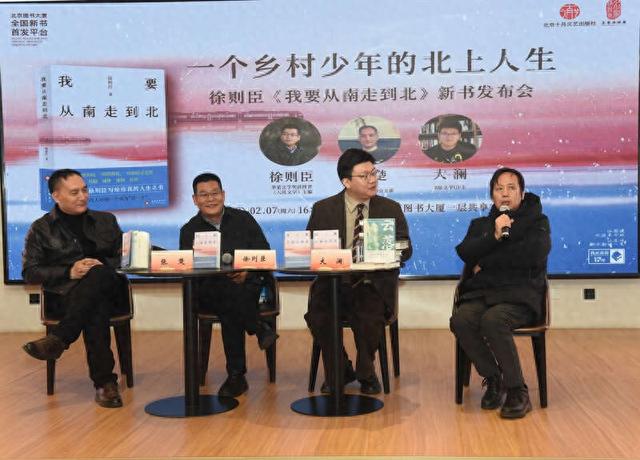
《我要从南走到北》收录了徐则臣整个创作生涯的散文代表作,时间横跨20年之久,讲述了徐则臣如何 从一个乡村孩子,通过阅读与写作,一路北上的成长之旅。文章既是徐则臣个人成长与发展的全情记 录,也是一代人心路历程的真实写照。 徐则臣的人生是一场持续"向北走"的过程:从江苏连云港东海县青湖镇尚庄村的乡村少年,到村小、镇 上初中、县城高中,再从淮安到南京读大学,再到北京读研究生,最后留在北京工作。他在地理上留下 的行走轨迹,成为这本散文集最真实的底色。而这一行走过程,也与他的长篇小说《北上》中人物的行 进路线与命运轨迹异曲同工,"一个人的成长其实就像河流一样,不管往哪个方向流,始终在往远方、 往世界去"。 场。主办方供图 北京十月文艺出版社总编辑韩敬群将这本书定义为徐则臣的"中年之书"与"成长之书","这本书就像徐 则臣在人生山路上的一次驻足回望,既是作家人到中年对自己人生与创作的回顾,也是与年轻一代的跨 代际对话"。 中国青年报客户端讯(中青报·中青网记者 吴蕴聪)近日,"一个乡村少年的北上人生——徐则臣《我要 从南走到北》新书发布会"在北京举办。 来源:中国青年报客户端 活动现 ...
徐则臣《我要从南走到北》新书发布
Xin Lang Cai Jing· 2026-02-11 06:24
Core Viewpoint - The latest essay collection "I Want to Walk from South to North" by Xu Zechen reflects his personal growth journey and the collective experience of a generation, showcasing the connection between literature and the evolving times [1][3]. Group 1: Author Background - Xu Zechen, born in 1978 in Jiangsu, graduated from Peking University and is the editor of "People's Literature" [1]. - He has authored several notable works, including "Jerusalem," "Going North," and "Running Through Zhongguancun" [1]. Group 2: Book Overview - "I Want to Walk from South to North" is a selection of Xu's representative essays spanning 20 years, documenting his journey from a rural child to a mature writer [1][3]. - The collection includes significant essays such as "The Cowherd's Tale," "Living in Beijing," and "A Lifetime of Wind" [1]. Group 3: Themes and Insights - The essays reflect Xu's insights on literature, the growth of a generation, and personal reflections on the development of society [1][4]. - Xu describes his writing process as a gradual construction of ideas, emphasizing the importance of time and space in his works [3]. Group 4: Peer Perspectives - Zhang Chu, a friend and fellow writer, notes the emotional resonance of Xu's work and highlights the "late maturity" characteristic of the "post-70s" generation of writers [3][4]. - The book is characterized as Xu's "midlife book" and "growth book," representing a dialogue between generations [4].