
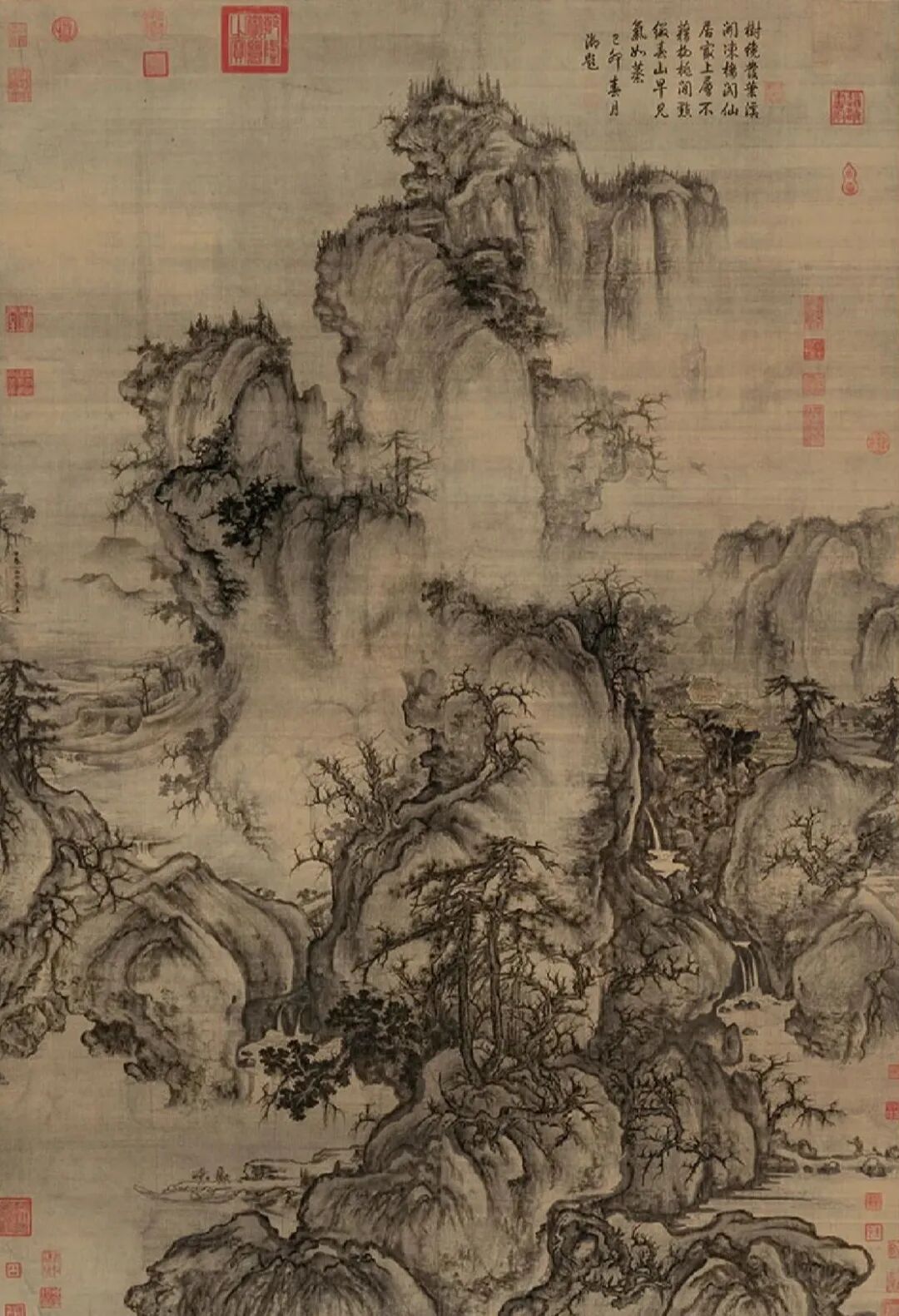
《早春图》

Search documents
粤朗倾听|以诗为媒,寻古画里的第一缕春
Xin Lang Cai Jing· 2026-02-04 15:22
Core Viewpoint - The article celebrates the arrival of spring, highlighting the connection between poetry and traditional Chinese paintings that depict the season's beauty and vitality [1]. Group 1: Poetry and Art - The poem "On the Morning of the Beginning of Spring" by Zhang Jiuling captures the surprise of snow coexisting with the arrival of spring, illustrated through various ancient paintings [1]. - The Northern Song painting "Early Spring" by Guo Xi uses the "three distances" technique to depict the tranquility and vitality of a snowy landscape [4]. - The Ming Dynasty painting "New Year's Morning" by Tang Yin portrays the warmth and ceremonial aspects of spring's return [6]. Group 2: Spring Imagery - The poem "Spring Begins" by Luo Yin expresses the vitality of spring with straightforward verses, complemented by the Northern Song painting "Sketch of Apricot Blossoms" by Zhao Chang, which vividly captures the blooming of apricot flowers [9][12]. - The painting "Smoke Trees on the Sandbank" by Hui Chong reflects the hazy beauty of spring, aligning with the imagery of returning geese and fish breaking through the ice [14]. - The Southern Song painting "Plum and Bamboo in the Snow" by Xu Yugong captures the elegance of a courtyard in spring, emphasizing the lushness of bamboo and blooming plum trees [10]. Group 3: Themes of Growth and Renewal - The poem "Spring Begins" by Zhang Zhi conveys the warmth of spring, illustrated by the Ming painting "A Sleeping Tour" by Shen Zhou, which depicts the lively awakening of nature [15][17]. - The painting "Peach Blossom Spring" by Qiu Ying uses meticulous detail to portray the flourishing scenery of spring, encapsulating the essence of life and warmth [20]. - The article concludes with a reflection on the love and expectations of ancient people for spring, encouraging a mindful appreciation of new growth and warmth in the present [21].

三幅宋代名画亮相台北故宫博物院南院 引发观展热潮
Xin Hua She· 2025-11-12 01:13
Core Points - The Taipei National Palace Museum is celebrating its 100th anniversary with multiple special exhibitions, including the display of three famous Song Dynasty landscape paintings [1] - Despite adverse weather conditions due to Typhoon "Phoenix," visitor enthusiasm remains high, with numerous tourists arriving to view the exhibits [1] - The exhibition features notable works such as Fan Kuan's "Travelers among Mountains and Streams," Guo Xi's "Early Spring," and Li Tang's "Pine Wind in the Ten Valleys," attracting significant public interest [1] Group 1 - The exhibition "Jiazi Wannian" is part of the centennial celebrations and has increased visitor engagement [1] - Visitors are actively engaging with the exhibits, with brochures quickly being taken and many expressing their appreciation for the art [1] - The popularity of previously exhibited items, such as the "Three Su Manuscripts," indicates a sustained interest in historical artifacts [2] Group 2 - The exhibition includes various artifacts from the Song Dynasty, such as Ru kiln porcelain, which have drawn attention from local students and art enthusiasts [2] - Upcoming displays will feature additional treasures, including works by Tang Dynasty calligrapher Yan Zhenqing, suggesting a continued trend of high visitor turnout [2]