《沃尔塔瓦河》

Search documents
2026中国新春音乐会在布鲁塞尔举行
Xin Lang Cai Jing· 2026-02-08 05:05
Group 1 - The concert titled "2026 Chinese New Year Concert" was held in Brussels, showcasing a blend of Chinese and Western music to celebrate the upcoming Spring Festival [1][2] - The event was organized by the Brussels Chinese Cultural Center and the Brussels Philharmonic Orchestra, attended by EU officials, cultural figures, and the local public as part of the "Happy Spring Festival" series [1] - The concert featured a variety of performances, including traditional Chinese songs like "Jasmine Flower" and classical pieces such as Glinka's "Ruslan and Lyudmila" overture and Smetana's "Vltava" [1] Group 2 - Notable performances included pianist Jiang Tian and soprano Song Jiacheng, who performed works like the "Yellow River" piano concerto and Mozart's 23rd piano concerto, as well as original compositions [1] - The concert concluded with the piece "Beijing Joyous News to the Border Village," which elevated the atmosphere, followed by an encore of "Spring Festival Overture" and Song Jiacheng's rendition of "My Motherland" [2]
“新年随想”音乐会奏响
Xin Lang Cai Jing· 2026-01-16 22:13
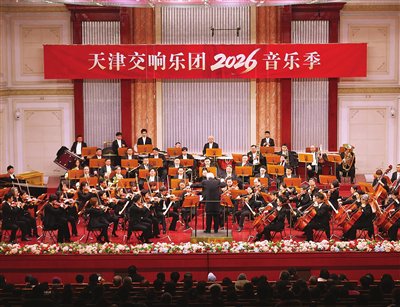
Group 1 - The concert titled "New Year Reverie" was performed by the Tianjin Symphony Orchestra for the 2025-2026 music season, featuring a collaboration between founder and honorary conductor Wang Junshi and resident conductor Yi Juanzi [3] - The concert included six classical orchestral works that showcased rich emotions and vibrant colors, providing an immersive musical journey for the audience [3] - The first half of the concert featured works such as "Joyful Festival" by Nursultan Vakhidin, "Spanish Caprice" by Rimsky-Korsakov, and "Vltava" by Smetana, highlighting cultural themes and orchestral color variations [3] Group 2 - In the second half, Wang Junshi conducted pieces including Elgar's "Pomp and Circumstance March," Grofé's "On the Trail," and Tchaikovsky's "Italian Caprice," illustrating a vivid portrayal of human culture and nature [3] - Wang Junshi emphasized the conductor's role in conveying musical emotions and connecting the works with the audience, balancing accessibility and artistic integrity in the selected repertoire [3] - The six pieces performed were chosen for their national characteristics and broad appeal, avoiding overly obscure expressions while retaining the essence of orchestral art [3]