三星堆玉璋

Search documents
三星堆多学科研究取得重要阶段性成果
Xin Hua She· 2025-09-27 21:54
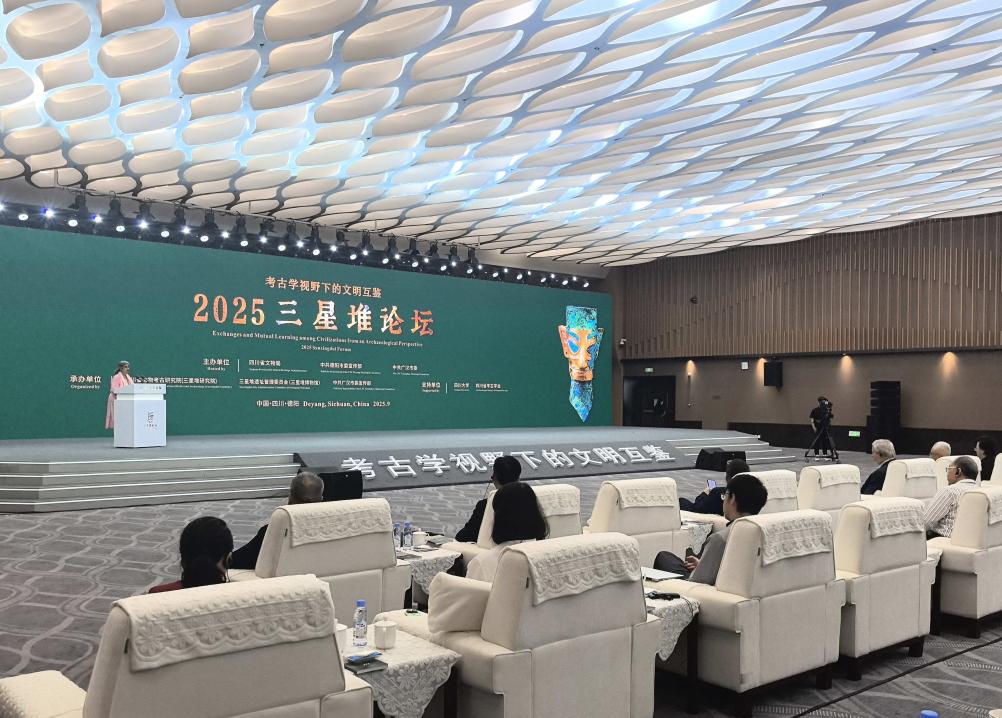
Core Insights - The Sichuan Provincial Institute of Cultural Relics and Archaeology announced significant archaeological advancements at the Sanxingdui site during the 2025 Sanxingdui Forum, focusing on multidisciplinary research in various fields such as sacrificial pit dating and bronze casting technology [1][2] Group 1: Archaeological Findings - Carbon-14 dating indicates that the burial dates of sacrificial pits 3, 4, 6, and 8 likely range from 1201 to 1012 BC, corresponding to the late Shang Dynasty, providing crucial evidence for establishing a refined chronological framework for the site [2] - The unique bronze casting techniques at Sanxingdui demonstrate innovative and localized expressions, forming a casting technology system centered on "segmented casting" while also utilizing "full casting" and forging methods [2] - Over 270 gold artifacts weighing more than 1500 grams have been restored, with a total weight of approximately 2000 grams for gold and silver alloy artifacts unearthed from the eight sacrificial pits [2] Group 2: Cultural and Agricultural Insights - The jade artifacts from Sanxingdui show a close inheritance relationship with the jade artifacts of the Erlitou culture, indicating cultural continuity [2] - The establishment of rice-based agriculture as the primary agricultural form supported a high-density population, providing the necessary resources and momentum for the rapid rise of the Sanxingdui civilization [2] Group 3: Ongoing Excavation Efforts - Nearly 40 archaeological excavations have been conducted at the Sanxingdui site, with the 2024 excavation efforts focusing on the southeastern and northwestern parts of the Yanjia Courtyard [3] - A large artificial earth platform with a rectangular building foundation exceeding 200 square meters has been discovered, featuring multiple rooms, with the largest room exceeding 90 square meters [3] - Archaeologists have preliminarily confirmed the southern boundary of a stone tool workshop, uncovering numerous pottery shards, stone blocks, and remnants of various jade artifacts from the Sanxingdui period [3]