
东红猕猴桃

Search documents
【中国青年报】院士专家下乡记:为孩子“摘星”,帮土地“点金”
Zhong Guo Qing Nian Bao· 2025-09-23 06:02
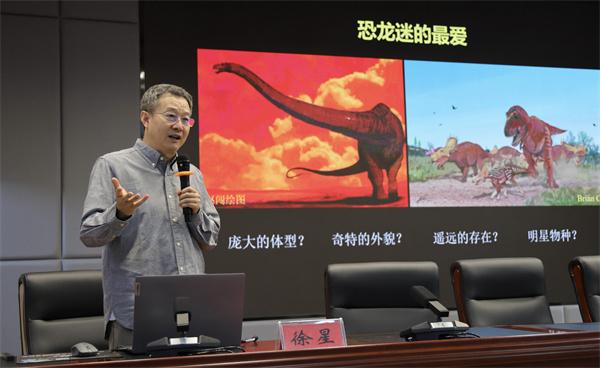
Group 1: Scientific Outreach and Education - The Chinese Academy of Sciences (CAS) organized a science outreach event in Liupanshui City, Guizhou Province, featuring a lecture by academician Xu Xing on dinosaur discoveries, aimed at engaging local students and promoting scientific curiosity [4][5][7]. - The CAS has been actively involved in educational support in Liupanshui since 2017, deploying a team to implement 27 research projects across 12 locations, enhancing local scientific education and resources [7][8]. - The CAS has developed a scientific education and innovation service platform for primary and secondary schools, investing over 30 million yuan, which has begun implementation in local schools [8]. Group 2: Agricultural Development and Innovation - The CAS has assisted local farmers in Liupanshui by developing new agricultural varieties, such as the "Donghong" kiwifruit, which has become a staple crop and significantly boosted local income [9][10]. - The area under kiwifruit cultivation in Liupanshui has expanded from less than 20,000 acres in 2013 to a peak of 112,000 acres, benefiting over 14,000 households and increasing local income [10]. - The introduction of hail nets has proven effective in protecting crops from severe weather, with loss rates under 20% for protected crops compared to 100% for unprotected ones during hailstorms [11]. Group 3: Economic Impact and Industry Transformation - The CAS has played a crucial role in transforming local industries, particularly in the development of the prickly pear industry, which has improved farmers' incomes and created new products for the market [12]. - The prickly pear cultivation has shifted from traditional crops like corn, with income per acre increasing significantly, demonstrating the economic benefits of scientific intervention [12]. - The CAS is also exploring new applications for coal byproducts in the local coal chemical industry, aiming to enhance value-added production and promote sustainable practices [13].

院士专家下乡记:为孩子“摘星”,帮土地“点金”
Zhong Guo Qing Nian Bao· 2025-09-22 07:22
Group 1: Scientific Outreach and Education - The event featured a science lecture by academician Xu Xing, aimed at engaging students in scientific discovery, particularly in paleontology [2][4] - Xu emphasized the importance of local relevance in science education, stating that students are more likely to engage with science if they can relate to it [5] - The Chinese Academy of Sciences has been actively involved in educational support in the region since 2017, deploying multiple research projects and scientists to enhance local science education [6][7] Group 2: Agricultural Innovation and Support - The Chinese Academy of Sciences has contributed to the development of new agricultural varieties, such as the "Donghong" kiwifruit, which has become a staple crop in the region [10][11] - The area has seen a significant increase in kiwifruit cultivation, growing from less than 20,000 acres in 2013 to a peak of 112,000 acres, benefiting over 14,000 households [10] - The introduction of hail nets has proven effective in protecting crops from severe weather, with loss rates under 20% for protected crops compared to 100% for unprotected ones during hailstorms [11] Group 3: Economic Development through Research - The transformation of local industries, such as the successful cultivation of prickly pear and kiwifruit, illustrates the potential of integrating scientific research with local economic development [12][13] - The Chinese Academy of Sciences is exploring new applications for coal byproducts, aiming to develop high-value products and promote sustainable practices in the coal chemical industry [13]