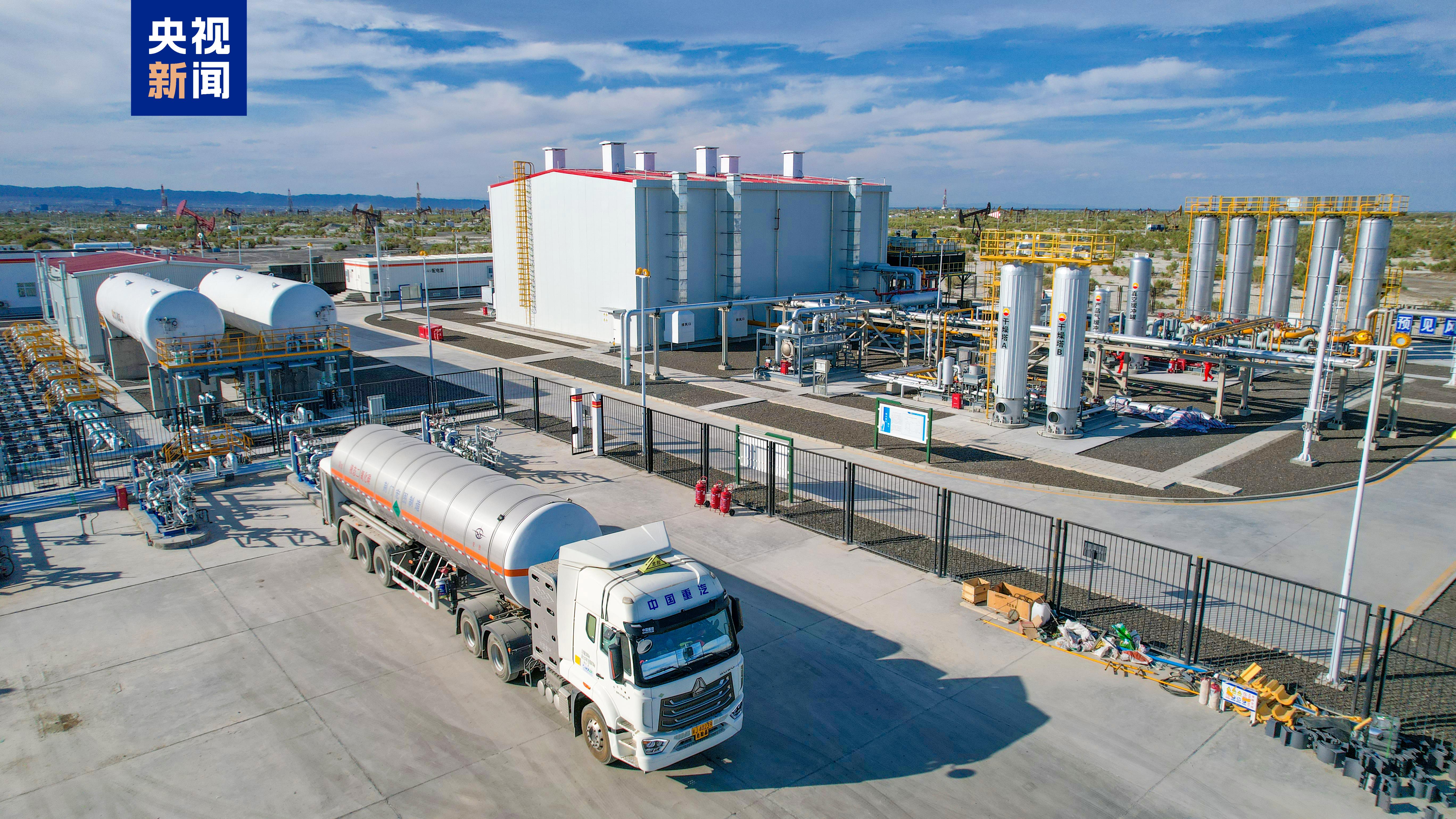
二氧化碳捕集封存与利用项目

Search documents
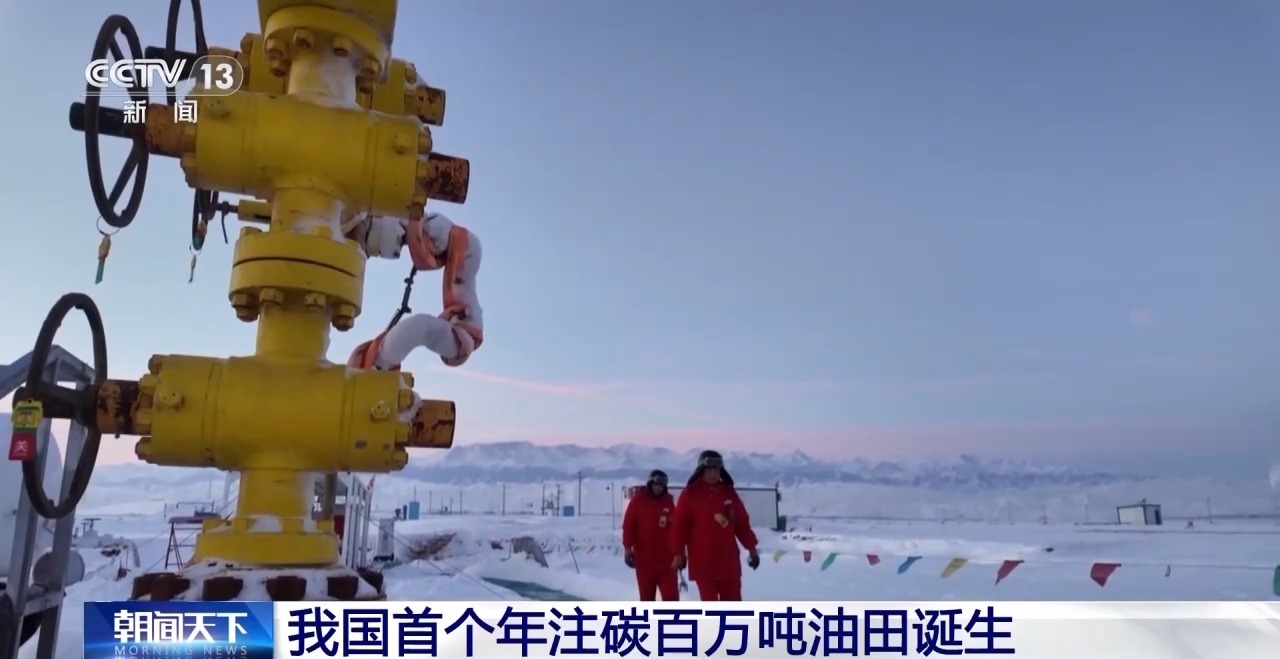
视频丨我国首个年注碳百万吨油田在新疆诞生
Yang Shi Xin Wen· 2025-12-29 01:40
Core Insights - The Xinjiang Oilfield CO2 Capture, Storage, and Utilization Project has achieved a significant milestone by surpassing an annual CO2 injection of 1 million tons, marking it as China's first oilfield to reach this level, indicating a major step forward in the country's CO2 capture and storage capabilities [1][3] Group 1: Project Overview - The project is located in the Junggar Basin and involves capturing and purifying CO2 emissions from industrial processes, which are then injected into oil reservoirs for reuse and storage [1] - The project began in 2019 with a pilot test for CO2 miscible flooding and has since developed into a demonstration project for CO2 capture and storage [1] - The current daily CO2 injection rate has increased to over 4,800 tons, showcasing significant improvements in both cumulative injection and oil recovery effectiveness [1] Group 2: Industry Context - The Junggar Basin is a crucial energy base in China, rich in oil, gas, and coal resources, with an estimated oil and gas resource volume of 19.9 billion tons [5] - The geological reserves of oil reservoirs suitable for CO2 flooding in the Xinjiang Oilfield have reached a billion-ton level [5] - The surrounding economic zone is characterized by heavy industries such as coal power, coal chemical, steel, and metallurgy, which are high energy-consuming and high-emission sectors, providing favorable conditions for the development of CO2 capture and storage industry clusters [5]

西北地区最大二氧化碳捕集封存与利用项目累计注碳突破200万吨
Yang Shi Xin Wen· 2025-11-17 13:57
Core Viewpoint - The Xinjiang oilfield's carbon capture, storage, and utilization project has successfully injected over 2 million tons of CO2, marking significant progress in large-scale carbon storage in high-emission areas of China, promoting both oil production and green low-carbon development [2][5]. Group 1 - The Xinjiang oilfield project captures CO2 emissions from local coal power and coal chemical enterprises, transporting it to oil extraction sites for underground injection, achieving permanent storage and enhancing oil recovery rates [5]. - In the current year, the project has stored 800,000 tons of CO2, with a total of over 2 million tons injected over two years, increasing daily oil production from 12 tons to 100 tons in the test area [5]. - The eastern, central, and western regions of the Junggar Basin have achieved full coverage of large-scale CO2 injection [7]. Group 2 - The project plans to accelerate the construction of a CO2 transportation pipeline network during the 14th Five-Year Plan, replacing the current truck transport model to reduce costs and promote integrated development of coal power, new energy, and carbon capture and storage [7]. - The goal is to establish a carbon capture and storage base capable of handling tens of millions of tons of CO2 [7].