健美

Search documents
五类化妆品过渡期落幕!江苏省泰州市姜堰区市场监管局开展化妆品专项监督检查
Xin Lang Cai Jing· 2026-01-16 06:42
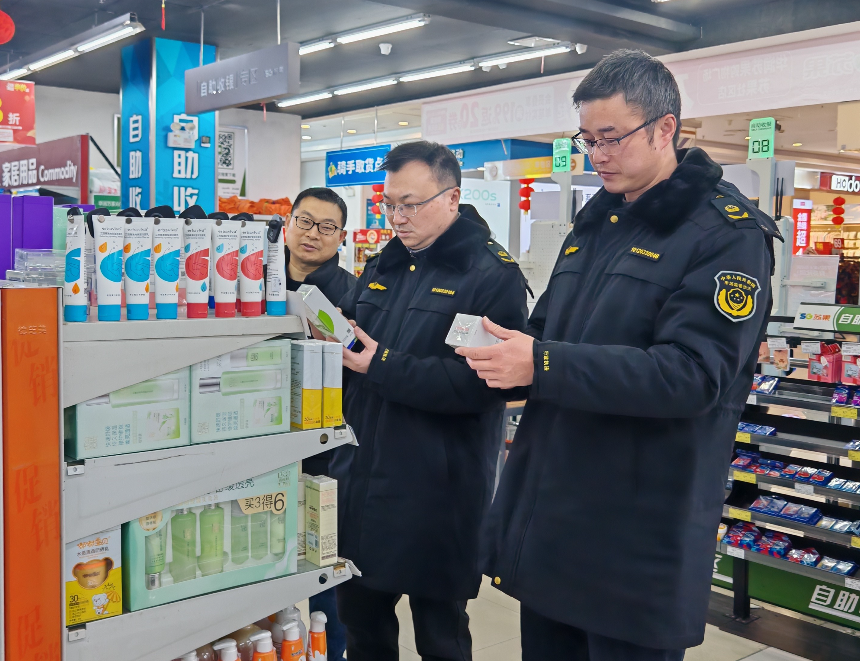
Core Viewpoint - From January 1, 2026, five categories of special purpose cosmetics will no longer be allowed for production, import, or sale, marking the end of a five-year transition period as per the Cosmetics Supervision and Administration Regulations [1] Regulatory Actions - The Jiangyan District Market Supervision Bureau in Taizhou, Jiangsu Province, has initiated a special inspection of cosmetics, targeting 15 retail outlets including supermarkets and beauty salons to ensure compliance with the new regulations [1][3] - Enforcement personnel conducted a thorough inspection of shelves, warehouses, and online sales platforms to identify and remove banned products that have exceeded the transition period [3] Compliance Verification - Strict checks on product labeling and registration details are being implemented to prevent the forgery or alteration of registration numbers and label information [3] - Differentiated regulatory measures are being applied to two categories of products post-transition: ordinary cosmetics and high-risk products that require drug management, ensuring compliance throughout the entire process from registration to sale [3] Guidance and Support - The enforcement team is providing one-on-one guidance to businesses, clarifying the requirements of the Cosmetics Supervision and Administration Regulations, and encouraging proactive compliance among operators [3][4] - The bureau aims to combine enforcement with guidance, promoting a shift from passive regulation to active compliance within the cosmetics market [4]

五年过渡期结束 五类化妆品今年起禁产禁售
Xin Lang Cai Jing· 2026-01-04 16:56
Group 1 - The Chongqing Municipal Market Supervision Administration announced that starting this year, five categories of cosmetics related to hair growth, hair removal, breast enhancement, bodybuilding, and deodorization will no longer be produced, imported, or sold, marking the end of a five-year transition period under the new regulatory framework [2][3] - This adjustment is based on the 2021 implementation of the "Cosmetics Supervision and Administration Regulations," which redefined the classification of special cosmetics, narrowing the scope from nine categories to those specifically related to hair dyeing, perming, spot removal, skin whitening, sun protection, and hair loss prevention [2] - Products with lower safety risks, such as those claiming to prevent hair breakage or enhance breast shape, have been reclassified as ordinary cosmetics and will now be subject to record-keeping management [2] Group 2 - Products that pose higher safety risks, such as those stimulating hair growth or affecting fat metabolism, will gradually be regulated as pharmaceuticals, aligning with international management trends [3] - After the expiration of administrative licensing documents during the transition period, registrants can apply for cancellation, and the National Medical Products Administration will no longer accept changes, reissues, or extensions [3] - Companies wishing to continue production, import, or sales after the transition period must choose to either register as ordinary cosmetics or apply for pharmaceutical registration based on the new classification [3]