元脑企智EPAI企业大模型开发平台

Search documents
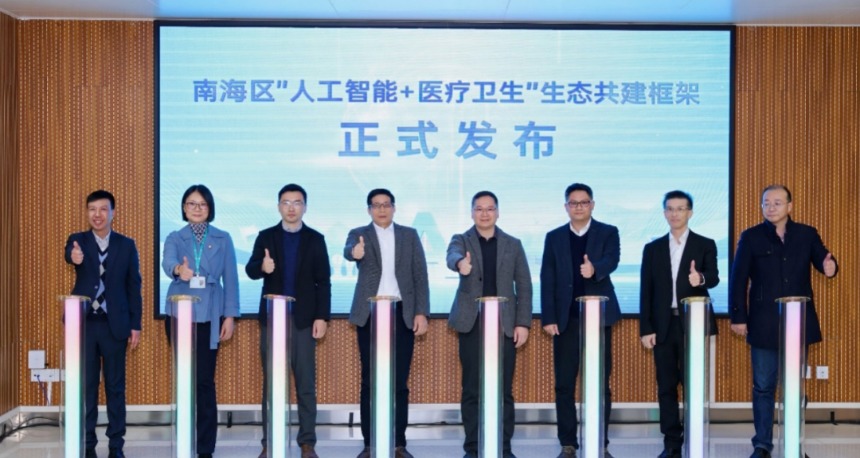
跑通“产研用”闭环让优质资源直达“家门口”!佛山南海构建 “AI+ 医疗卫生” 新生态
Guang Zhou Ri Bao· 2026-01-26 15:46
Core Insights - The "Artificial Intelligence + Healthcare" ecosystem co-construction seminar in Nanhai District, Foshan, marks a significant step towards standardized and scalable development in smart healthcare [1] - The Nanhai District's framework emphasizes a collaborative approach involving technology breakthroughs and deepening application scenarios to enhance healthcare services [3][4] Group 1: Framework and Mechanism - The framework is built on a "one body, two wings, and three-wheel drive" mechanism, focusing on "people's health" as the core [3] - The "one body" aspect aims to shift healthcare services from a treatment-centered model to a health-centered model, providing comprehensive health services throughout the life cycle [3] - The "two wings" consist of technological advancements and application scenario deepening, ensuring that AI technology is rooted in real healthcare needs [3] Group 2: Key Tasks and Implementation - Four key tasks have been identified: solidifying the "intelligent base," deepening "smart scenarios," constructing an "industrial ecosystem," and innovating "system mechanisms" [4] - The focus on "intelligent base" includes exploring market-oriented reforms for medical data and computational resources [4] - The "smart scenarios" aim to extend AI applications from hospitals to communities, covering the entire health service process [4] Group 3: Practical Outcomes and Innovations - The implementation of the AI-native smart healthcare system has served 126,700 patients, reducing error rates by 20% and improving medical record quality by 60% [6] - The use of the Yuan Nao Qi Zhi EPAI platform facilitates the development of medical intelligent systems, allowing for rapid product development and integration with existing hospital systems [7] - The ecosystem aims to transform national AI strategies into practical, assessable, and replicable grassroots practices, addressing the gap between clinical needs and technological development [7][8]