全基因合成服务

Search documents
2025年中国基因合成行业市场规模、重点企业分析及行业发展趋势
Sou Hu Cai Jing· 2025-10-23 06:33
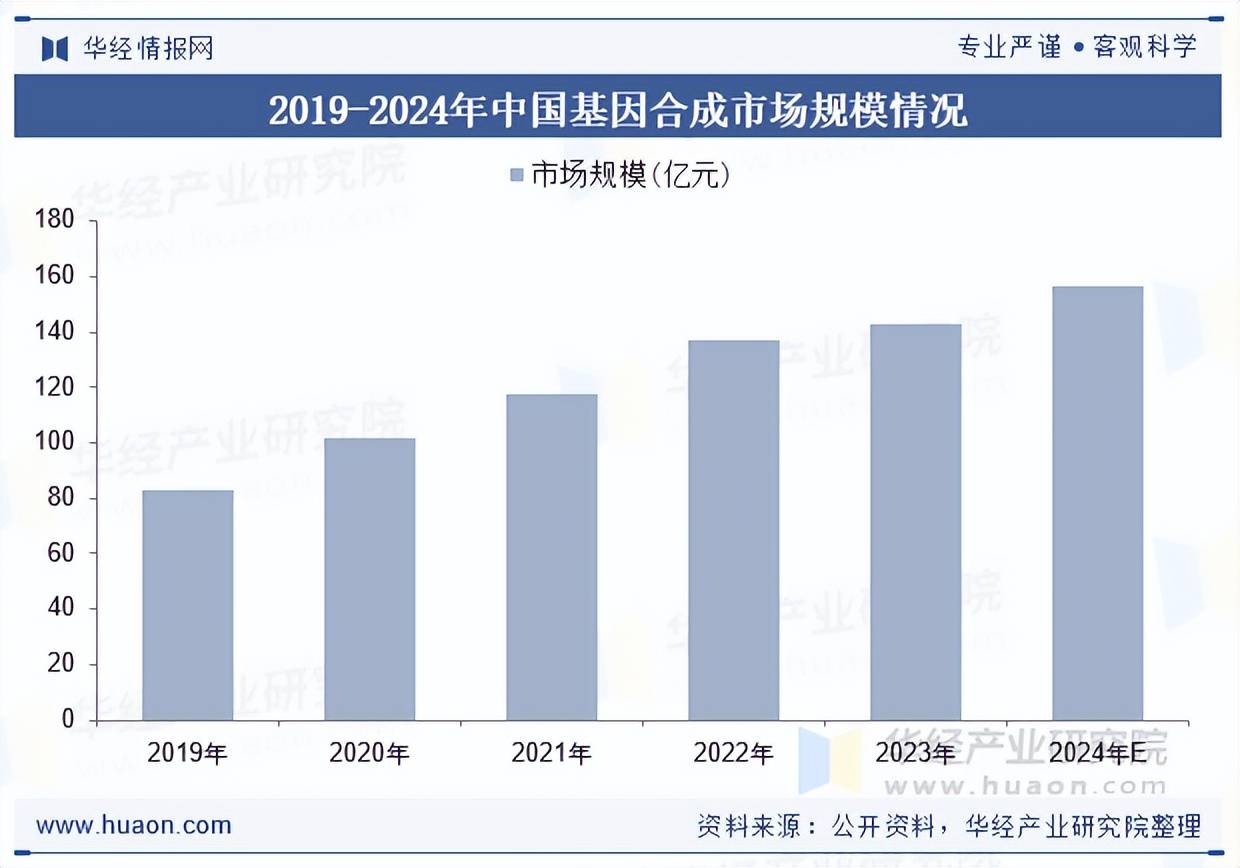
Core Insights - The gene synthesis industry is a subset of DNA synthesis, focusing on the artificial creation of long double-stranded DNA with specific sequences, which is crucial for synthetic biology [1][3] - The Chinese gene synthesis market is projected to reach approximately 14.3 billion yuan in 2023, reflecting significant growth driven by government support and technological advancements [1][5] - BGI Genomics, a leading company in the Chinese gene synthesis sector, has established a comprehensive marketing network and offers a wide range of gene synthesis services [5] Industry Overview - Gene synthesis involves the chemical or enzymatic methods to artificially create genes or specific DNA sequences, with applications in basic research, biotechnology, gene therapy, and synthetic biology [3] - The industry is increasingly supported by government policies, which have integrated synthetic biology into national strategic emerging industries, fostering innovation and providing a favorable environment for growth [1][5] Market Dynamics - The integration of gene editing technologies, standardization of gene components, and advancements in microbial chassis engineering are expected to enhance the application capabilities of gene synthesis [7] - The demand for gene synthesis in the pharmaceutical sector, particularly in gene therapy and vaccine development, is anticipated to grow significantly [7] Competitive Landscape - BGI Genomics is recognized as a pioneer in the Chinese gene synthesis industry, providing various services including optimized cDNA synthesis and gene mutation services [5] - The industry analysis employs various research models such as SCP, SWOT, and PEST to evaluate market conditions, policies, competition, and technological innovations [7] Future Outlook - The report forecasts the development trends of the gene synthesis industry in China from 2025 to 2031, focusing on driving factors, constraints, and demand prospects [15][16] - The ongoing integration of artificial intelligence and machine learning is expected to significantly reduce design times and enhance the precision and efficiency of gene synthesis methods [7]