全息光栅

Search documents
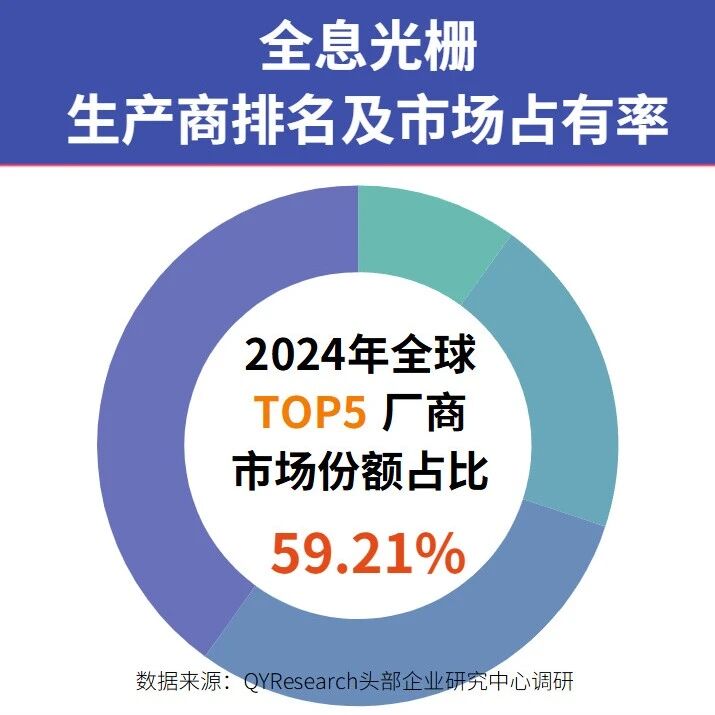
全息光栅行业洞察:2024年TOP5 企业占据全球59.21%的市场份额
QYResearch· 2025-10-14 02:16
Core Viewpoint - The holographic grating market is an emerging segment in advanced optics, driven by the increasing demand for high-precision optical components in fields such as spectroscopy, laser systems, telecommunications, and optical storage. The advantages of holographic gratings over traditional mechanical techniques include lower diffraction light scattering, higher diffraction efficiency, and more precise wavelength control, although high production costs and complex manufacturing processes remain challenges [3][4]. Market Overview - The holographic grating market is characterized by steady growth, with expanding applications in high-precision optics and continuous innovation in manufacturing technologies. Leading manufacturers are investing in advanced lithography, nanofabrication, and coating technologies to enhance diffraction efficiency and spectral resolution [4]. - North America and Europe maintain market leadership due to established research infrastructures, while the Asia-Pacific region is rapidly emerging as the fastest-growing market, driven by advancements in photonic technology and electronic manufacturing [4]. Future Trends - Integration with photonic devices is expected to increase, supporting applications in telecommunications, quantum computing, and next-generation data transmission [5]. - Advances in nanofabrication technologies will enable the production of higher precision and more flexible holographic gratings, lowering barriers for broader commercial applications [5]. - The Asia-Pacific market is projected to grow rapidly due to industrialization and increased investment in photonics technology [5]. SWOT Analysis - **Strengths**: Holographic gratings exhibit high precision and efficiency compared to ruled gratings, with broad applications in spectroscopy, laser tuning, and communication [6]. - **Weaknesses**: High production costs and low market awareness compared to traditional optical components limit widespread adoption [7]. - **Opportunities**: The growth of photonics and quantum technologies, along with expanding applications in medical and environmental monitoring, present significant opportunities [7]. - **Threats**: Competition from alternative technologies and supply chain risks related to specialized substrates and coatings could impact market share [7]. Market Size and Projections - According to QYResearch, the global holographic grating market is expected to reach USD 298.40 million by 2031, with a compound annual growth rate (CAGR) of 4.20% over the next few years [10]. - The leading manufacturers in the global holographic grating market include HORIBA, Newport Corporation, and Zeiss, with the top five companies holding approximately 59.21% of the market share [12]. Product Type and Application Segmentation - Currently, concave holographic gratings dominate the market, accounting for about 64.77% of the share, while laser applications represent the largest downstream market, comprising approximately 47.12% of the demand [15][16]. - Holographic gratings are essential components in laser systems, astronomical spectrometers, and optical communication systems, enhancing performance and reliability [16][17].