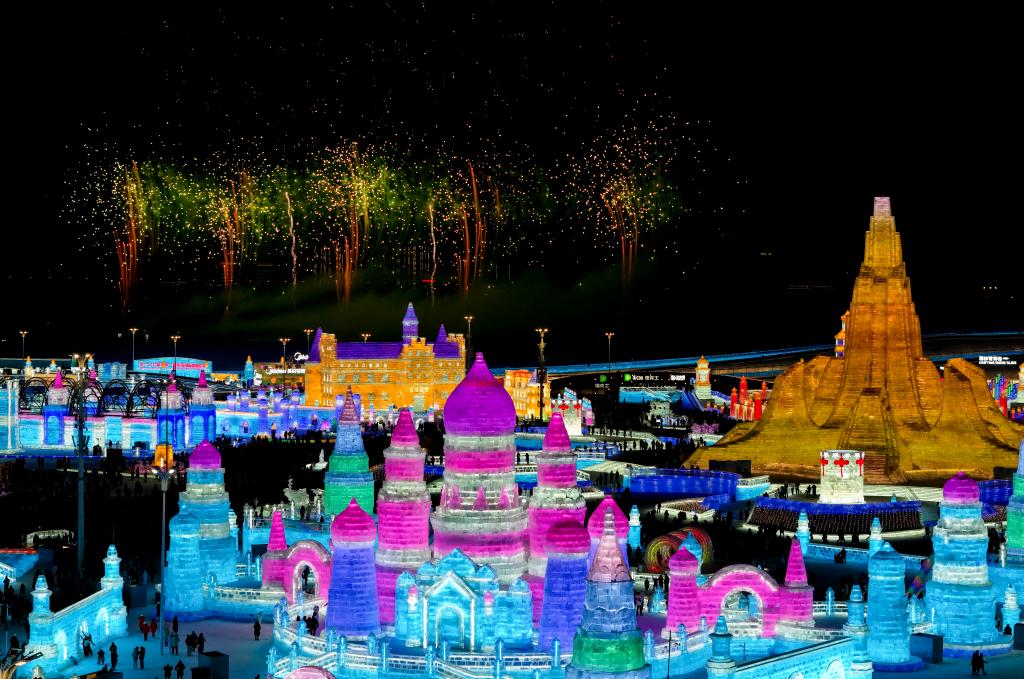
冰灯游园会

Search documents
气温升至零上 哈尔滨三大冰雪景区陆续“闭园”
Xin Lang Cai Jing· 2026-02-19 11:41
Core Viewpoint - The rising temperatures in Harbin have led to the temporary closure or adjustment of operations for major winter attractions, including the Harbin Ice and Snow World, the Harbin Songhua River Ice and Snow Carnival, and the Harbin Ice Lantern Art Expo, to ensure visitor safety and experience [1] Group 1: Harbin Ice and Snow World - Harbin Ice and Snow World, the largest ice and snow theme park globally, announced a temporary closure from February 20 to 21 due to rising temperatures affecting ice sculptures [1] - The park plans to resume operations on February 22 at 5 PM, extending its hours until midnight [1] Group 2: Harbin Songhua River Ice and Snow Carnival - The eighth Harbin Songhua River Ice and Snow Carnival will close at 9:30 PM on February 19, with safety concerns regarding ice activities cited as the reason for the early closure [1] Group 3: Harbin Ice Lantern Art Expo - The 52nd Harbin Ice Lantern Art Expo will officially close at 10 PM on February 19, as some ice sculptures have begun to melt due to the temperature increase [1] Group 4: General Observations - The closure of these attractions marks the end of the ice and snow tourism season in Harbin, reflecting the impact of weather changes on seasonal tourism [1] - A visitor's comment on social media highlights the enduring spirit of Harbin despite the seasonal changes, indicating a strong emotional connection to the city [1]
“尔滨风”吹向东南亚 中国冰雪引力不断增强
Xin Hua Wang· 2026-01-15 12:23
Core Viewpoint - The rising popularity of Harbin as a winter tourism destination among Southeast Asian tourists reflects the resilience and vitality of China's ice and snow economy, driven by visa-free policies and cultural exchanges [1][4]. Group 1: Tourism Trends - Southeast Asian tourists are increasingly attracted to Harbin due to the stark contrast between their warm climates and Harbin's cold weather, leading to a surge in visitors seeking unique experiences [3][4]. - The growth of indoor skiing facilities in Southeast Asia has cultivated a new generation of skiing enthusiasts, prompting many to travel to Northeast China for skiing and winter vacations [3][4]. - The influx of Southeast Asian tourists has led to a significant increase in the number of visitors to ice and snow attractions in regions like Harbin, Jilin, and Sichuan [4][6]. Group 2: Economic Impact - China's ice and snow industry has expanded from 364.7 billion yuan in 2016 to 980 billion yuan by 2024, with a notable increase in foreign tourist numbers attributed to relaxed visa policies [6][10]. - The introduction of visa facilitation measures has lowered barriers for cross-border travel, making it easier for tourists from Southeast Asia to visit China [6][7]. - The demand for direct flights from cities like Bangkok to Harbin has surged, with travel agencies reporting over 3,000 Thai tourists since the start of the ice season [6][7]. Group 3: Cultural Experience - Southeast Asian tourists are increasingly seeking immersive cultural experiences, with a growing interest in local customs, winter fishing, and ice sculpture art in Northeast China [9][10]. - The trend of "living like locals" is becoming popular among tourists, who appreciate the opportunity to engage with the local culture and environment [9][10]. - Enhancements in service quality and market regulation are necessary to cater to the preferences of Southeast Asian tourists, including dining and accommodation options [10].