冰雪列车

Search documents
冰雪列车为何能持续走红?
Xin Lang Cai Jing· 2026-02-01 00:44
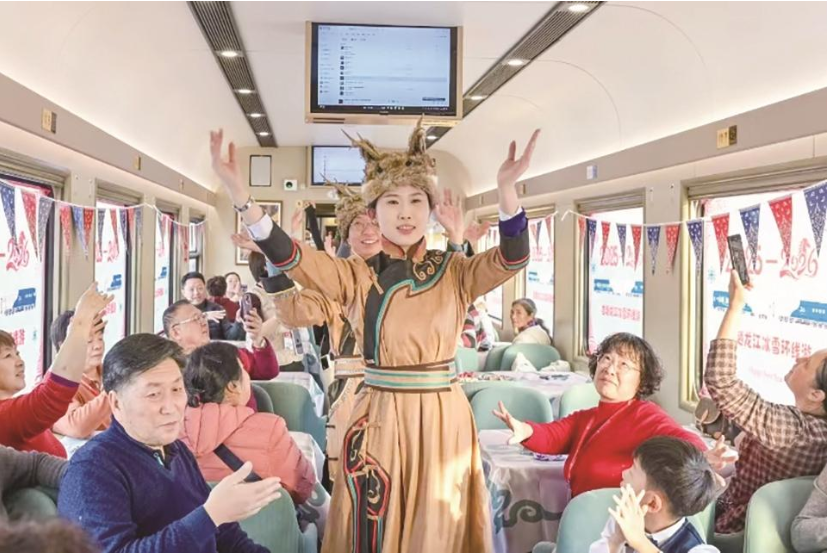
Core Insights - The popularity of ice and snow tourism trains is attributed to their ability to connect various scenic spots and provide a unique travel experience, enhancing winter tourism consumption [1][4][9] Group 1: Market Demand and Trends - The "Lindu" tourism train has achieved a 60% booking rate for the Spring Festival, with 40% of its passengers being inbound tourists from Southeast Asia [2] - The introduction of new routes, including Changbai Mountain, aims to cater to the interests of inbound tourists who prioritize specific destinations [2] - The ice and snow tourism market is experiencing a surge in popularity, with trains like "China Snow City: My Altay" attracting many skiing enthusiasts [2][4] Group 2: Unique Travel Experience - Ice and snow trains offer a seamless travel experience, allowing passengers to enjoy beautiful winter landscapes without the fatigue of traditional travel methods [4][5] - The design of these trains incorporates local cultural elements, creating a mobile cultural exhibition that enhances the travel experience [5][8] - The immersive experience provided by these trains fosters emotional connections between tourists and local cultures [4][5] Group 3: Operational Efficiency and Collaboration - Effective collaboration between railway services and local tourism industries is crucial for the success of ice and snow trains [5][8] - The integration of on-board activities with local attractions ensures a smooth transition for tourists from the train to the destination [7][8] - Operators are focusing on enhancing ground services and ensuring seamless connections to local attractions to maximize tourist engagement [7][8] Group 4: Future Development and Challenges - Continuous operation of ice and snow trains is planned, as they serve as mobile "image windows" that enhance the attractiveness of destinations [9][10] - Challenges include high operational costs, especially in extreme cold conditions, and the need for a sustainable business model [9][10] - Suggestions for improvement include dynamic pricing strategies, partnerships with local businesses, and enhanced safety measures to ensure a positive experience for tourists [10][12]