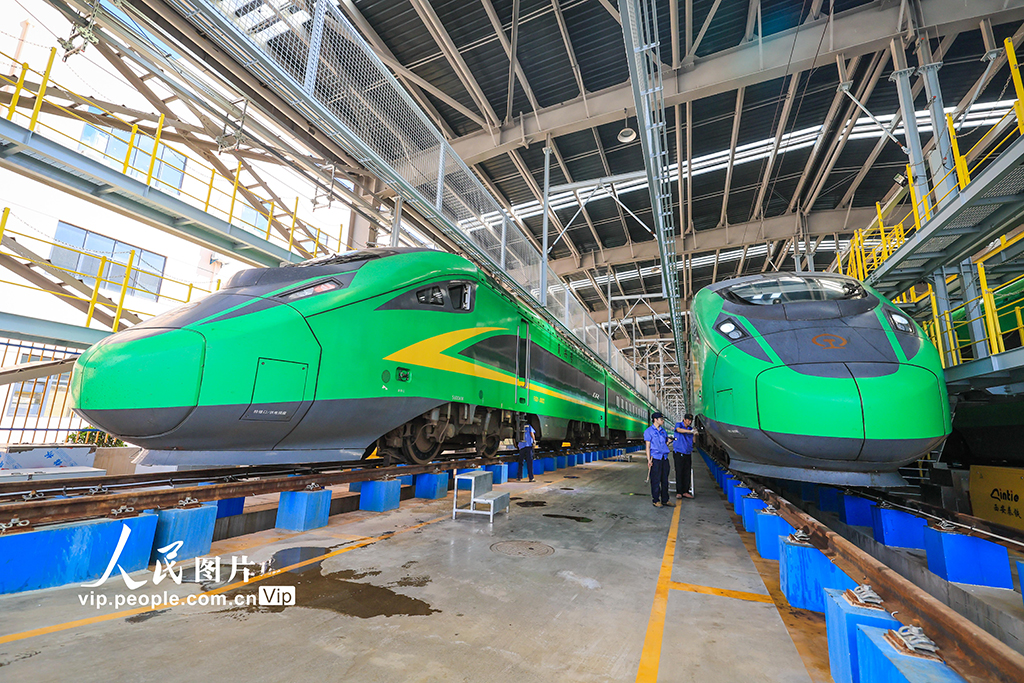
列车组

Search documents
逐步淘汰日系车厢,印尼青睐中国制造
Huan Qiu Shi Bao· 2026-02-08 22:37
Core Viewpoint - The Indonesian National Railway Company (KAI) is shifting from using primarily Japanese second-hand trains to introducing new trains manufactured in China and locally in Indonesia, reflecting a significant change in the country's railway operations [1][2]. Group 1: Train Procurement and Operations - KAI has already put into operation 11 train sets manufactured in China and has ordered an additional 16 new train sets from local manufacturers [1]. - The Jakarta commuter train network serves approximately 1 million passengers daily, making it the largest railway network in Indonesia, crucial for daily commuting and education [1]. - Currently, over 800 Japanese second-hand train cars (approximately 67 sets) are still in operation, many of which date back to the 1970s and 1980s, featuring original Japanese signage and design elements [1]. Group 2: Government Policy and Future Plans - The Indonesian government has initiated a policy shift to promote local manufacturing by restricting the import of second-hand trains, which began around 2020, culminating in a complete ban in 2023 [2]. - KAI plans to procure 30 new train sets for the commuter railway by 2027, indicating a strong commitment to modernizing the fleet and reducing reliance on older Japanese trains [2]. - Despite the ongoing presence of Japanese second-hand trains, their numbers are expected to decline as new trains are introduced [2].

上海:配属列车组秋季整修
Ren Min Wang· 2025-09-27 03:21
Core Viewpoint - The article discusses the autumn maintenance of train sets assigned to Shanghai, highlighting the importance of regular upkeep for operational efficiency and safety [1][2][3][4][5][6][7]. Group 1: Maintenance Details - The autumn maintenance program is aimed at ensuring the reliability and safety of the train sets [1][2]. - Specific procedures and checks will be conducted during this maintenance period to address wear and tear [3][4]. - The maintenance is part of a broader strategy to enhance service quality and operational performance [5][6]. Group 2: Operational Impact - The maintenance activities are expected to minimize disruptions in train services during peak travel times [1][3]. - By conducting these repairs, the company aims to maintain a high standard of service for passengers [2][4]. - The initiative reflects the company's commitment to infrastructure investment and long-term operational sustainability [5][6].